 NL·0422
Herbarium of the Nature Library
- Name
- Bungarus caeruleus
- Family
- Elapidae
- Native to
- Pakistan, India, Nepal, Bangladesh and Sri Lanka
- Habitat
- Farmland, Scrub, Tropical dry forest, Villages and towns
Common krait
Bungarus caeruleus
Also calledIndian krait · Karait (Hindi) · Kattu viriyan (Tamil) · Kalach / Chiti (Bengali) · Thel karawala (Sinhala) · Manyar (Marathi)
A glossy, night-hunting member of the Big Four with one of the most potent venoms of any Asian land snake. Many bites happen to people asleep on the floor, often cause little pain, and can lead to paralysis hours later.
The common krait is a highly venomous snake species belonging to the genus Bungarus in the family Elapidae. It has a black or bluish-black body with narrow white crossbands, typically reaching a length of 0.91 to 1.22 m. It is widely distributed across India, Pakistan, Bangladesh, Sri Lanka and Nepal, inhabiting grasslands, agricultural fields, and human settlements. It is known for its potent neurotoxic venom and responsible for the majority of medically significant snakebites in the Indian subcontinent. Wikipedia
What it can do
- iIts neurotoxins, including beta-bungarotoxin, stop nerve signals from reaching muscles
- iiHunts other snakes, including other kraits, at night
- iiiBites often cause almost no pain or swelling, so victims may not realise they have been bitten
In the field
Field marks
- aGlossy steel-blue to black body with narrow, paired white crossbands, clearest towards the tail and faint or missing on the neck
- bRow of enlarged hexagonal scales along the spine, giving a slight ridge
- cRounded head barely wider than the neck; small black eyes
- dPlain white belly
- Not to be confused with
- Often confused with the harmless common wolf snake (Lycodon aulicus) and barred wolf snake (L. striatus). Wolf snakes are brown and dull rather than glossy blue-black. Their white bands start right behind a flattened head, they have no enlarged ridge scales along the spine, and they often have a pale collar. A banded snake that is black and shiny with bands fading towards the head should be treated as a krait.
- Where to see it
- Widespread across lowland India and Sri Lanka; most often met at night on paths and in houses during the monsoon
- When
- Resident; bites peak in the monsoon (June–September), when snakes are flooded out of burrows
Life & habits
- Diet
- Mainly other snakes; also rodents, lizards and frogs
- Habitat
- Fields, scrub, termite mounds, rat holes and houses; often near water
- Size
- Usually ~1 m; up to ~1.75 m
By day it is timid and hides its head under its coils, but at night it is active and comes into homes. Signs of envenoming are drooping eyelids, double vision, trouble swallowing and abdominal pain, followed by breathing failure, so anyone who might have been bitten needs hospital care even if they feel fine. In first aid, keep the person still, immobilise the limb and transport them urgently. Breathing support and antivenom save lives. Sleeping on a raised bed under a tucked-in mosquito net prevents many bites.
Where it lives
Recorded sightings
—
geo-referenced records in GBIF, from museums, herbaria and field observers.
Native range
Pakistan, India, Nepal, Bangladesh and Sri Lanka
Drag the globe to turn it. Dots are where records exist, not a range map; darker means more records.
In the stacks
Searching the stacks…
Every page naming Bungarus caeruleus in the Biodiversity Heritage Library →
Marginalia
The English word 'krait' comes from the Hindi karait. Joseph Fayrer's 'The Thanatophidia of India' (1872), with its hand-coloured plates of the krait and other deadly snakes, first recorded the scale of snakebite deaths across British India.
Curiosity
Bungarotoxin from the krait's relative, the many-banded krait, became a standard laboratory tool for mapping the receptors through which nerves trigger muscles.
Kinship
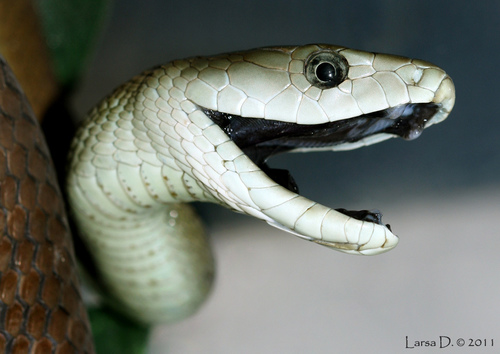

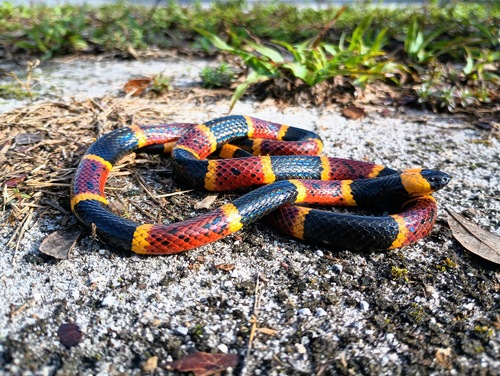
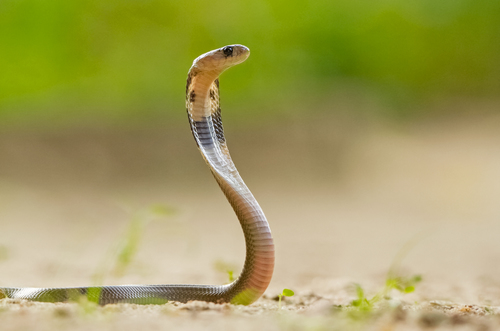
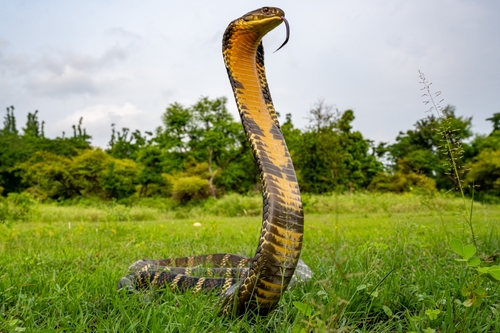

Photographs: iNaturalist contributors under the licences shown. Records: GBIF.org. Historical plates: Source Library (CC BY-SA 4.0; originals public domain). Summary text: Nature Library editors and Wikipedia (CC BY-SA). Medicinal and edibility notes are historical and educational, not advice. iNaturalist taxon 96224.