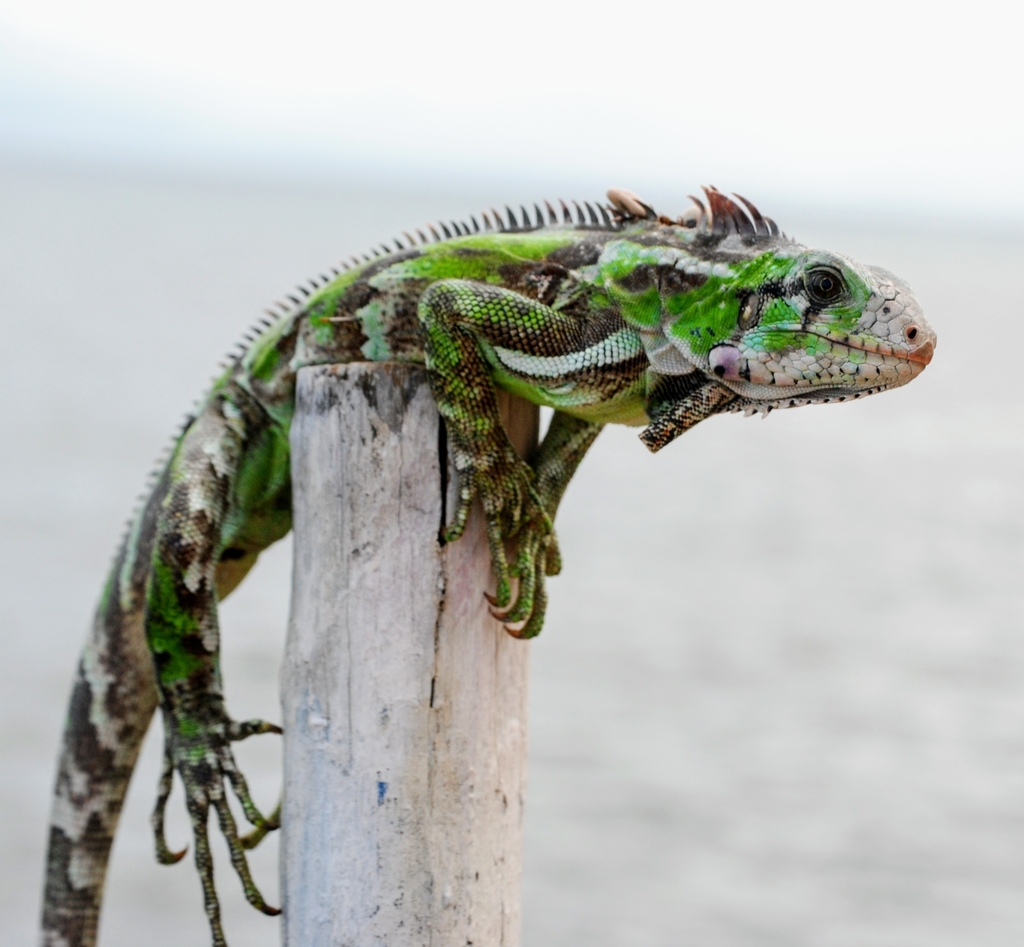
Snakes and Lizards
Squamata
Squamata (, Latin squamatus, 'scaly, having scales') is the largest order of reptiles; most members are commonly known as lizards, with the group also including snakes. With over 11,991 species, it is also the second-largest order of extant (living) vertebrates, after the perciform fish. Squamates are distinguished by their skins, which bear horny scales or shields, and periodically undergo molting. They also possess movable quadrate bones, making possible movement of the upper jaw relative to the neurocranium. This is particularly visible in snakes, which are able to open their mouths very widely to accommodate comparatively large prey. Squamates are the most variably sized living reptiles, ranging from the 16 mm (0.63 in) dwarf gecko (Sphaerodactylus ariasae) to the 6.5 m (21 ft) reticulated python (Malayopython reticulatus). The extinct mosasaurs reached lengths over 14 m (46 ft).
Among other reptiles, squamates are most closely related to the tuatara, the last surviving member of the once diverse Rhynchocephalia, with both groups being placed in the superorder Lepidosauria.
2 branches of this order, most-observed first · about 11,991 known species
See this branch on the Wheel of Life →

Where it lives
Recorded sightings
—
geo-referenced records in GBIF, from museums, herbaria and field observers.
Drag the globe to turn it. Dots are where records exist, not a range map; darker means more records.
In the old herbals & bestiaries

In the stacks
Searching the stacks…
Every page naming Squamata in the Biodiversity Heritage Library →
This page is assembled live from iNaturalist, GBIF, Wikipedia, the Source Library and the Internet Archive. It is not yet part of the hand-edited codex. iNaturalist taxon 26172.