
Elapid Snakes
Elapidae
Elapidae (, commonly known as elapids , from Ancient Greek: ἔλαψ élaps, variant of ἔλλοψ éllops "sea-fish") is a family of snakes characterized by their permanently erect fangs at the front of the mouth. Most elapids are venomous, with the exception of the genus Emydocephalus. Many members of this family exhibit a threat display of rearing upwards while spreading out a neck flap. Elapids are endemic to tropical and subtropical regions around the world, with terrestrial forms in Asia, Australia, Africa, and the Americas and marine forms in the Pacific and Indian Oceans. Members of the family have a wide range of sizes, from the 18 cm (7.1 in) white-lipped snake to the 5.85 m (19 ft 2 in) king cobra. Most species have neurotoxic venom that is channeled by their hollow fangs, and some may contain other toxic components in varying proportions. The family includes 55 genera with around 360 species and over 170 subspecies.
17 branches of this family, most-observed first · about 412 known species
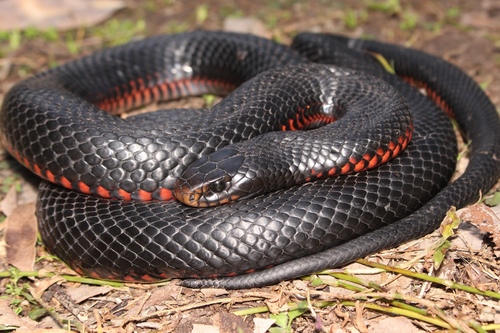
Australian Elapids (inc. Sea Snakes)
subfamilyHydrophiinae
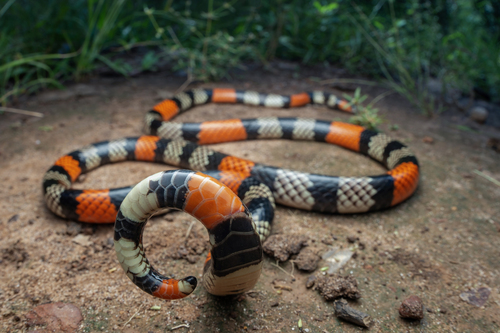
Coralsnakes
genusMicrurus

Cobras
genusNaja

Kraits
genusBungarus
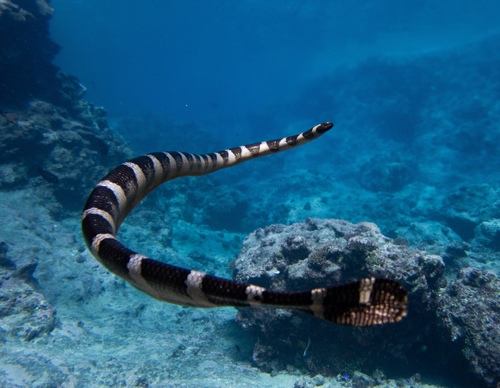
Sea Kraits
subfamilyLaticaudinae

Asian Coralsnakes
genusCalliophis

King Cobras
genusOphiophagus

Mambas
genusDendroaspis

Asian Coralsnakes
genusSinomicrurus
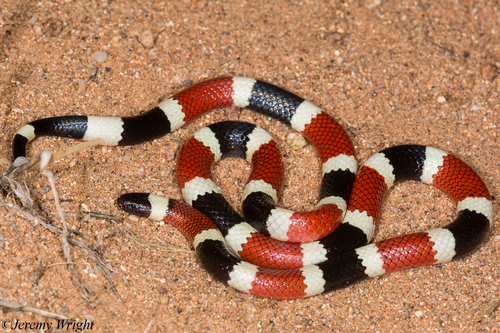
Sonoran Coralsnakes
genusMicruroides

Rinkhals
genusHemachatus
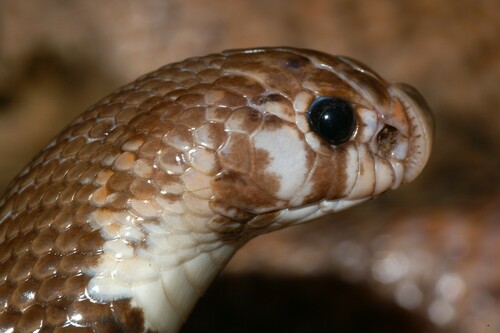
Shield-nosed Cobras
genusAspidelaps

African Garter Snakes
genusElapsoidea

Philippine Coralsnakes
genusHemibungarus

Black Desert Cobras
genusWalterinnesia
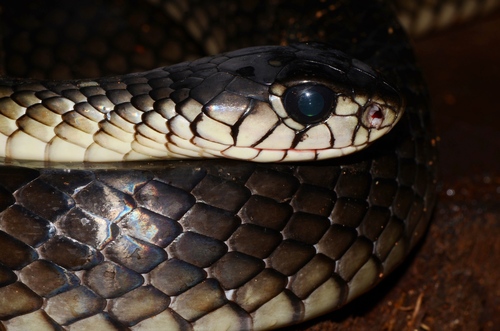
Tree Cobras
genusPseudohaje
Leptomicrurus
genusLeptomicrurus
Where it lives
Recorded sightings
—
geo-referenced records in GBIF, from museums, herbaria and field observers.
Drag the globe to turn it. Dots are where records exist, not a range map; darker means more records.
In the stacks
Searching the stacks…
Every page naming Elapidae in the Biodiversity Heritage Library →
This page is assembled live from iNaturalist, GBIF, Wikipedia, the Source Library and the Internet Archive. It is not yet part of the hand-edited codex. iNaturalist taxon 30403.