 NL·0279
Herbarium of the Nature Library
- Name
- Gymnorhina tibicen
- Family
- Artamidae
- Native to
- Australia and southern New Guinea; introduced to New Zealand
- Habitat
- Grassland, Open woodland, Farmland, Urban
On eBird ↗
Australian Magpie
Live sightings near you, the range map, bar charts of when it is seen, and Macaulay Library photos and recordings.
Australian magpie
Gymnorhina tibicen
Also calledKoolbardi (Noongar) · Makipai (Māori, loanword)
A black-and-white songbird whose rich, carolling song is one of the iconic sounds of Australia. It is notorious for swooping people during nesting season.
The Australian magpie is a black and white passerine bird native to Australia and southern New Guinea, and introduced to New Zealand, and the Fijian island of Taveuni. Although once considered to be three separate species, it is now considered to be one, with nine recognised subspecies. A member of the Artamidae, the Australian magpie is placed in its own genus Gymnorhina and is most closely related to the black butcherbird. It is not closely related to the Eurasian magpie or any other birds known as magpies, which are corvids. Wikipedia
What it can do
- iComplex warbling and carolling song with mimicry
- iiRemembers individual human faces
- iiiGroups defend territories year-round
- ivShows strong cooperation, including helping to remove tracking devices from one another
In the field
Field marks
- aBlack-and-white plumage
- bBlack head and underparts
- cWhite or grey nape and back (varies regionally)
- dPale bluish-grey bill with dark tip
- eRed-brown eye
- Voice
- A rich, flute-like carolling, often by groups; also complex warbles and mimicry.
- Not to be confused with
- Pied currawong is mostly black with a yellow eye and white tail tip. Magpie-lark is smaller, with a thin bill and white eyebrow or throat.
- Where to see it
- Common in parks and playing fields throughout Australia
- When
- Resident; swooping season August–October
Listen
Looking for field recordings…
Life & habits
- Diet
- Insects, grubs, worms and small vertebrates
- Habitat
- Open country with scattered trees, parks and farms
- Size
- 37–43 cm; 220–350 g
- Lifespan
- Up to 25 years
During nesting, some males swoop pedestrians and cyclists who come near.
Where it lives
Recorded sightings
—
geo-referenced records in GBIF, from museums, herbaria and field observers.
Native range
Australia and southern New Guinea; introduced to New Zealand
Drag the globe to turn it. Dots are where records exist, not a range map; darker means more records.
In the old herbals & bestiaries
No plate in the Source Library names this exact species, so these show its closest relatives as the old naturalists drew them: same genus, or the same kind of animal. Click a plate to read the page it came from, with translation.

Theater of Earthly Creatures
Relative · Anonymous · 1672 · p.230

History of Animals, Book I: On Viviparous Quadrupeds
Relative · Conrad Gessner · 1554 · p.853

Historiae Animalium Liber III: De Avium Natura
Relative · Conrad Gesner · 1555 · p.708

Ornithology
Relative · Ulisse Aldrovandi · 1599 · p.822

History of the Northern Peoples
Relative · Olaus Magnus · 1555 · p.769

Historiae Animalium Liber III: De Avium Natura
Relative · Conrad Gesner · 1555 · p.808

Ornithology: The History of Birds
Relative · Ulisse Aldrovandi · 1599 · p.818

Ornithology: The History of Birds
Relative · Ulisse Aldrovandi · 1599 · p.819

Ornithologiae: de avibus historiae libri XII
Relative · Ulisse Aldrovandi · 1599 · p.804

Ornithology
Relative · Ulisse Aldrovandi · 1599 · p.820
In the stacks
Searching the stacks…
Every page naming Gymnorhina tibicen in the Biodiversity Heritage Library →
Marginalia
Noongar stories tell of Koolbardi the magpie and Wardong the crow. The magpie is the emblem of many Australian sports teams.
Curiosity
In 2022 researchers reported that magpies removed tracking harnesses from one another, an unusual example of cooperative rescue.
Kinship
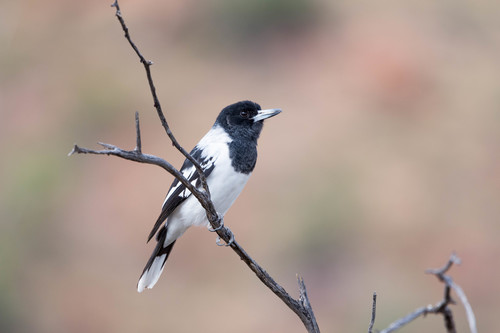
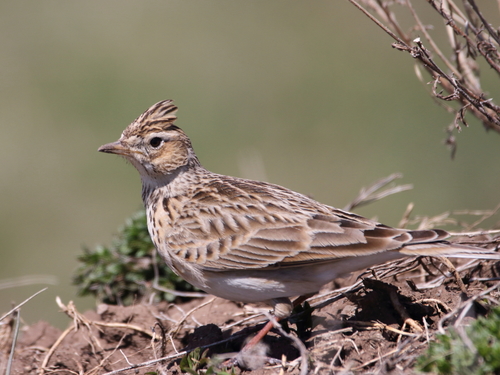
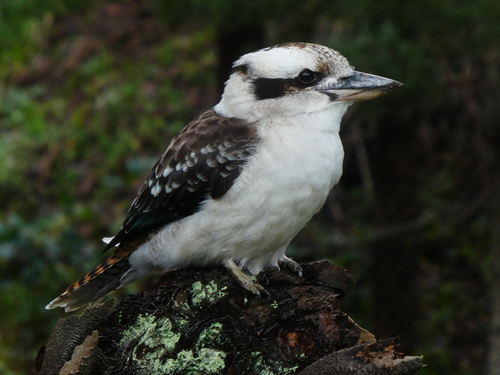
Photographs: iNaturalist contributors under the licences shown. Records: GBIF.org. Historical plates: Source Library (CC BY-SA 4.0; originals public domain). Summary text: Nature Library editors and Wikipedia (CC BY-SA). Medicinal and edibility notes are historical and educational, not advice. iNaturalist taxon 8575.