 NL·0749
Herbarium of the Nature Library
- Name
- Nipponia nippon
- Family
- Threskiornithidae
- Native to
- Formerly Japan, Korea, eastern China and the Russian Far East; now wild mainly in Shaanxi province, China, with reintroduced populations on Sado Island (Japan) and in South Korea
- Habitat
- Wetland, Farmland, Temperate forest
On eBird ↗
Crested Ibis
Live sightings near you, the range map, bar charts of when it is seen, and Macaulay Library photos and recordings.
Crested ibis
Nipponia nippon
Also calledToki 朱鷺 (Japanese) · Zhū huán 朱鹮 (Chinese) · Japanese crested ibis
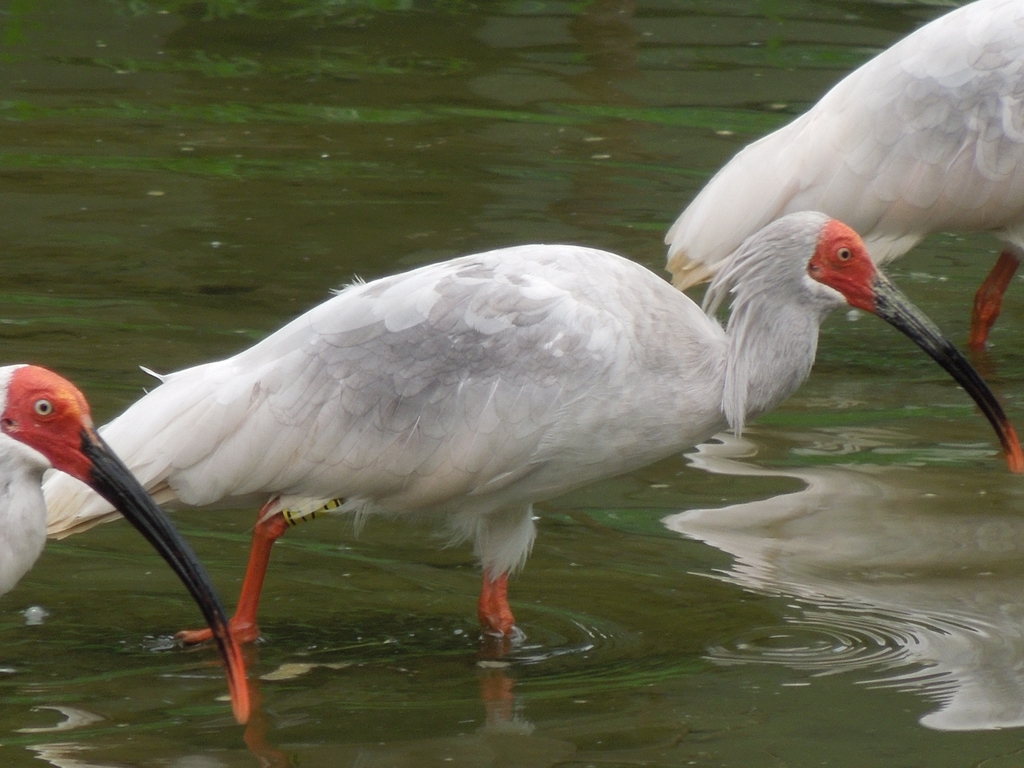
A white ibis blushed with salmon-pink, with a shaggy nape crest and a bare red face, that came within seven birds of extinction. From a handful found in Shaanxi in 1981, careful protection has rebuilt a population of thousands.
The crested ibis, also called the Japanese crested ibis, Asian crested ibis or toki (トキ), is a species of bird in the ibis family, Threskiornithidae. It is the only species in the genus Nipponia. Wikipedia
What it can do
- iProbes rice paddies and streams for loaches, frogs and invertebrates
- iiSmears a dark secretion from its neck onto its plumage, turning it grey in the breeding season
- iiiRecovered from a wild population of seven birds
In the field
Field marks
- aWhite plumage with a salmon-pink flush to the wings and tail, strongest underneath in flight
- bBare red face and red legs
- cLong, down-curved black bill with red tip
- dShaggy crest at the back of the head; grey head and back in breeding season
- Voice
- A harsh, crow-like 'aaa' call
- Not to be confused with
- Black-headed ibis has a black head and neck and lacks the pink; spoonbills have a flat, spoon-shaped bill; egrets have straight bills.
- Where to see it
- Yangxian County, Shaanxi, China; Sado Island, Niigata Prefecture, Japan
- When
- Resident
Listen
Looking for field recordings…
Life & habits
- Diet
- Small fish, loaches, frogs, crabs, snails and insects
- Habitat
- Rice paddies, streams and wetlands near tall trees used for nesting and roosting
- Size
- About 55–79 cm long
Feeds by probing its long curved bill into mud and water; nests in tall trees on wooded slopes near paddies.
Where it lives
Recorded sightings
—
geo-referenced records in GBIF, from museums, herbaria and field observers.
Native range
Formerly Japan, Korea, eastern China and the Russian Far East; now wild mainly in Shaanxi province, China, with reintroduced populations on Sado Island (Japan) and in South Korea
Drag the globe to turn it. Dots are where records exist, not a range map; darker means more records.
In the stacks
Searching the stacks…
Every page naming Nipponia nippon in the Biodiversity Heritage Library →
Marginalia
The toki gave its colour name 'toki-iro' (a soft pink) to Japanese, and it is the symbol of Niigata Prefecture. Japan's last native-born crested ibis, Kin, died in 2003, and the species was reintroduced to Sado from Chinese stock in 2008.
Curiosity
Its genus name Nipponia and species name nippon both mean 'Japan', making it one of the most emphatically Japanese names in zoology.
Kinship
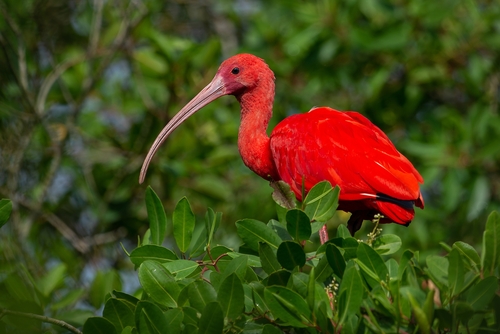
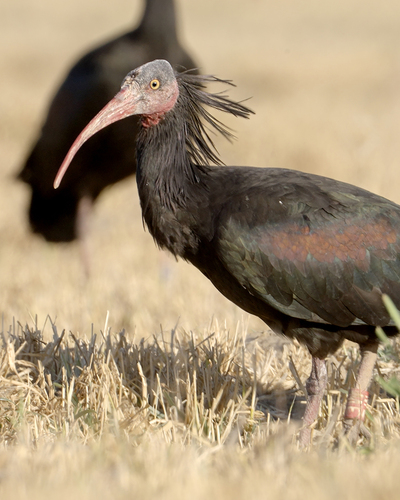
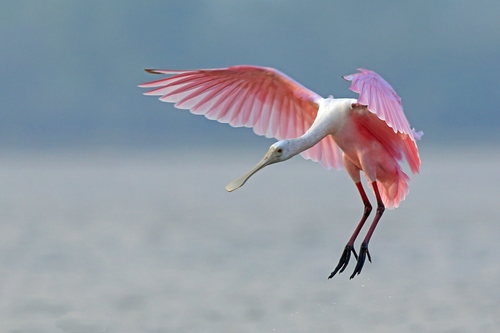

Photographs: iNaturalist contributors under the licences shown. Records: GBIF.org. Historical plates: Source Library (CC BY-SA 4.0; originals public domain). Summary text: Nature Library editors and Wikipedia (CC BY-SA). Medicinal and edibility notes are historical and educational, not advice. iNaturalist taxon 3774.