 NL·0747
Herbarium of the Nature Library
- Name
- Eudocimus ruber
- Family
- Threskiornithidae
- Native to
- Northern coasts of South America from Colombia and Venezuela through the Guianas to north-eastern Brazil; Trinidad and Tobago
- Habitat
- Mangrove, Mudflats, Coastal lagoons, Llanos wetlands
On eBird ↗
Scarlet Ibis
Live sightings near you, the range map, bar charts of when it is seen, and Macaulay Library photos and recordings.
Scarlet ibis
Eudocimus ruber
Also calledGuará (Portuguese, from Tupi) · Corocoro rojo (Spanish, Venezuela) · Ibis rouge (French)
An intensely scarlet ibis of South American mangroves and mudflats whose colour comes from carotenoids in its crab and shrimp diet. At dusk, flocks returning to roost in Trinidad's Caroni Swamp turn the mangroves red.
The scarlet ibis, sometimes called red ibis, is a species of ibis in the bird family Threskiornithidae. It inhabits tropical South America and part of the Caribbean. In form, it resembles most of the other twenty-seven extant species of ibis, but its remarkably brilliant scarlet coloration makes it unmistakable. It is one of the two national birds of Trinidad and Tobago, and its Tupi–Guarani name, guará, is part of the name of several municipalities along the coast of Brazil. Wikipedia
What it can do
- iProbes mud with a long decurved bill to find crabs and molluscs by touch
- iiGathers in roosts of thousands in mangrove islands
- iiiHybridises with the American White Ibis where they meet in Venezuela
In the field
Field marks
- aEntirely scarlet plumage
- bBlack tips to the outer primaries
- cLong, decurved, dark-reddish bill
- dFlies with neck outstretched in lines or V-formations
- Voice
- Generally quiet; hoarse, nasal honks and grunts in flocks.
- Not to be confused with
- Roseate Spoonbill is pink with a flat spoon bill. American Flamingo is far larger with a long neck. White Ibis is white with black wingtips.
- Where to see it
- Caroni Swamp, Trinidad (dusk boat tours); the Venezuelan Llanos; coastal Amapá and Maranhão, Brazil.
- When
- Resident year-round
Listen
Looking for field recordings…
Life & habits
- Diet
- Crabs, shrimp, molluscs, insects and small fish
- Habitat
- Mangroves, tidal mudflats, estuaries and flooded savanna
- Size
- 55–63 cm; wingspan 90–100 cm
Young birds are grey-brown and white and gradually turn scarlet over their first two years.
Where it lives
Recorded sightings
—
geo-referenced records in GBIF, from museums, herbaria and field observers.
Native range
Northern coasts of South America from Colombia and Venezuela through the Guianas to north-eastern Brazil; Trinidad and Tobago
Drag the globe to turn it. Dots are where records exist, not a range map; darker means more records.
In the old herbals & bestiaries
Woodcuts and engravings matched from the Source Library’s scanned books by name. Plates marked “relative” show a close kin rather than this exact species. Click a plate to read the page it came from, with translation.


In the stacks
Searching the stacks…
Every page naming Eudocimus ruber in the Biodiversity Heritage Library →
Marginalia
The Tupinambá of coastal Brazil made ceremonial feather mantles from guará plumes; one held in Copenhagen's National Museum since the 17th century was returned to Brazil in 2024. It is the national bird of Trinidad and Tobago.
Curiosity
Captive scarlet ibises fade to pink unless their food contains carotenoids.
Kinship
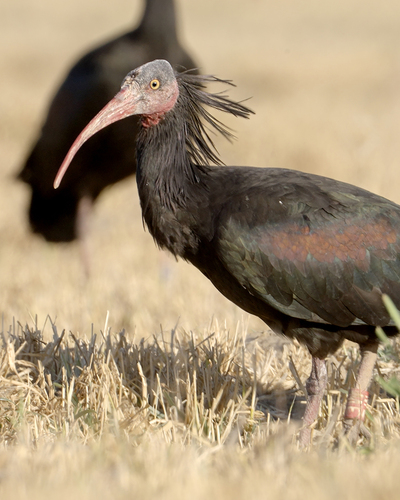
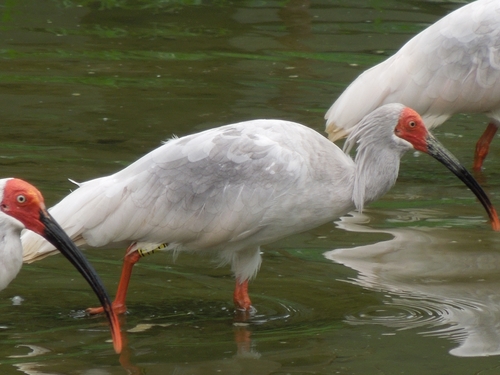
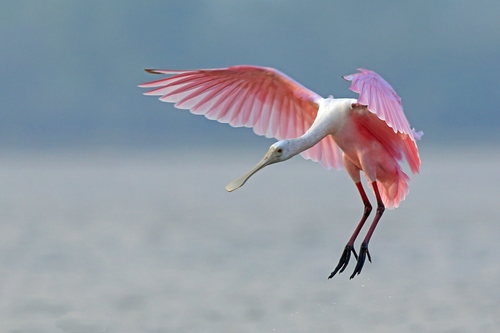
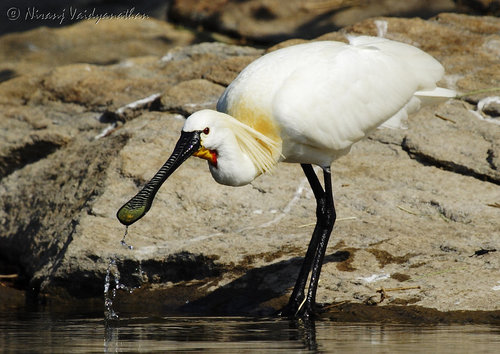


Photographs: iNaturalist contributors under the licences shown. Records: GBIF.org. Historical plates: Source Library (CC BY-SA 4.0; originals public domain). Summary text: Nature Library editors and Wikipedia (CC BY-SA). Medicinal and edibility notes are historical and educational, not advice. iNaturalist taxon 3750.