 NL·0367
Herbarium of the Nature Library
- Name
- Opheodrys aestivus
- Family
- Colubridae
- Native to
- Eastern and southern United States, from New Jersey to Florida, west to Kansas and Texas, and into northeastern Mexico
- Habitat
- Forest edge, Wetland margins, Shrubland
Rough green snake
Opheodrys aestivus
Also calledRough greensnake · Grass snake (US regional) · Vine snake (US regional)
A slender, bright green snake of the eastern US that eats insects and disappears among leaves and vines. It is harmless and rarely bites.
Opheodrys aestivus, commonly known as the rough green snake, is a species of nonvenomous North American snake in the subfamily Colubrinae of the family Colubridae. The species is sometimes called grass snake or green grass snake, but these names are more commonly applied to the smooth green snake. The European colubrid called grass snake is not closely related. The rough green snake is docile, often allowing close approach by humans, and rarely bites. Even when bites occur, they have no venom and are harmless. Wikipedia
What it can do
- iCamouflaged in vegetation, it sways in the breeze like a vine
- iiEats mostly insects and spiders, unusual among snakes
- iiiFemales sometimes lay their eggs together in tree hollows
In the field
Field marks
- aUniform bright green above with a white, yellow or pale green belly
- bKeeled scales (giving the 'rough' feel)
- cVery long, thin body and tail
- dRound pupils and a rounded head
- Not to be confused with
- The smooth green snake (Opheodrys vernalis) is smaller, more northern and has smooth scales. Green vine snakes in Mexico and further south have long pointed heads. No venomous snake in its US range is bright green.
- Where to see it
- Lake and river edges across the southeastern US, e.g. Okefenokee Swamp, Everglades, Ozarks
- When
- Active April–October; hibernates in winter
Life & habits
- Diet
- Caterpillars, crickets, grasshoppers, dragonflies, spiders
- Habitat
- Shrubs and trees beside lakes, streams and forest edges
- Size
- Usually 55–80 cm; very slender
- Lifespan
- ~5–8 years
Sleeps coiled on outer branches over water at night, where it can be found by torchlight.
Where it lives
Recorded sightings
—
geo-referenced records in GBIF, from museums, herbaria and field observers.
Native range
Eastern and southern United States, from New Jersey to Florida, west to Kansas and Texas, and into northeastern Mexico
Drag the globe to turn it. Dots are where records exist, not a range map; darker means more records.
In the stacks
Searching the stacks…
Every page naming Opheodrys aestivus in the Biodiversity Heritage Library →
Marginalia
Linnaeus described it in 1766 as Coluber aestivus, the 'summer snake'.
Curiosity
The pigment that colours it green breaks down after death, so preserved specimens and dead snakes on roads turn blue.
Kinship
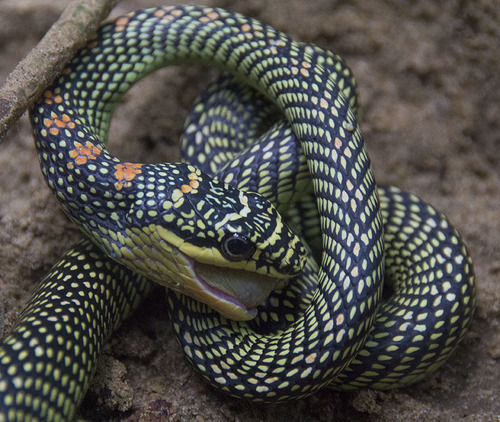

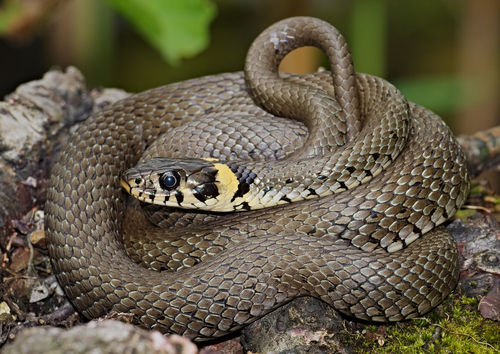

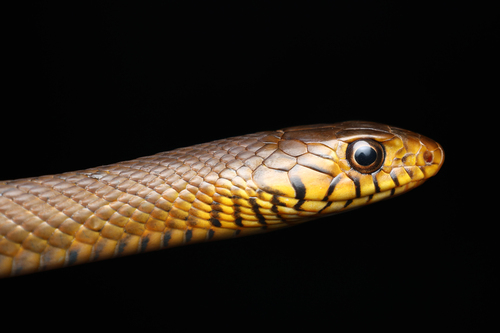
Photographs: iNaturalist contributors under the licences shown. Records: GBIF.org. Historical plates: Source Library (CC BY-SA 4.0; originals public domain). Summary text: Nature Library editors and Wikipedia (CC BY-SA). Medicinal and edibility notes are historical and educational, not advice. iNaturalist taxon 29200.