 NL·0369
Herbarium of the Nature Library
- Name
- Ptyas mucosa
- Family
- Colubridae
- Native to
- From Iran, Afghanistan and Turkmenistan across Pakistan, India, Nepal, Bangladesh and Sri Lanka to southern China, Taiwan, Indochina and Java
- Habitat
- Farmland, Scrub, Forest edge, Towns
Indian rat snake
Ptyas mucosa
Also calledOriental rat snake · Dhaman (Hindi, Urdu) · Sarai pambu (Tamil) · Chera (Malayalam) · Gerandiya (Sinhala) · Daras (Bengali)
A large, fast, non-venomous snake common in fields and towns across South and Southeast Asia, often killed because it is mistaken for a cobra. It eats large numbers of rats and is among the most useful snakes to farmers.
Ptyas mucosa, commonly known as the Oriental rat snake, or Indian rat snake, is a common non-venomous species of colubrid snake found in parts of South and Southeast Asia. These are large snakes. Typical mature total length is around 1.5 to 1.95 m though some exceed 2 m. The record length for this species was 3.7 m, second only to their cousin Ptyas carinata among living colubrid snakes. Despite their large size, oriental ratsnakes are usually quite slender with even a specimen of 2 m commonly measuring 4 to 6 cm only around in diameter. Furthermore, the average weight of ratsnakes caught in Java was around 877 to 940 g, though larger males of over 2.3 m may easily weigh over 2.5 kg (5.5 lb). Their color varies from pale browns in dry regions to nearly black in moist forest areas. Rat snakes are diurnal, semi-arboreal, non-venomous, and fast-moving. Rat snakes eat a variety of prey and are frequently found in urban areas where rodents thrive. Wikipedia
What it can do
- iMoves very quickly and climbs trees and walls
- iiWhen cornered, puffs out its throat and makes a growling sound
- iiiHolds prey down with its body rather than constricting it
In the field
Field marks
- aLarge, prominent eyes with round pupils
- bBlack edges to the lip scales, like vertical bars
- cBody brownish-olive to black, with dark crossbars or a net pattern towards the rear and tail
- dLong, slender body tapering into a very long tail; no hood
- Not to be confused with
- The spectacled cobra has a hood with markings, a shorter tail, smaller eyes, and rears up and hisses rather than fleeing. The rat snake may inflate its throat but cannot form a broad hood. The banded-tail pattern and large eyes are the key signs of a rat snake.
- Where to see it
- Rice fields, gardens and city edges across India and Sri Lanka; often seen crossing roads in the day
- When
- Resident; most active in the monsoon
Life & habits
- Diet
- Rats, frogs, toads, birds, lizards, other snakes
- Habitat
- Rice paddies, scrub, open forest, gardens and suburbs
- Size
- Usually 1.5–2 m; occasionally ~2.5 m or more
- Lifespan
- ~10–15 years
Active by day. In the breeding season males wrestle in tall, swaying twists, and this is often mistaken for mating between a rat snake and a cobra. It is harmless, but it bites hard if handled.
Where it lives
Recorded sightings
—
geo-referenced records in GBIF, from museums, herbaria and field observers.
Native range
From Iran, Afghanistan and Turkmenistan across Pakistan, India, Nepal, Bangladesh and Sri Lanka to southern China, Taiwan, Indochina and Java
Drag the globe to turn it. Dots are where records exist, not a range map; darker means more records.
In the stacks
Searching the stacks…
Every page naming Ptyas mucosa in the Biodiversity Heritage Library →
Marginalia
In rural India the dhaman is falsely said to suck milk from cows, and is thought to be the cobra's mate. Before the Wildlife Protection Act of 1972, huge numbers of rat snake skins were exported from India for leather.
Curiosity
Linnaeus named it Coluber mucosus in 1758, so it was among the first Asian snakes to receive a scientific name.
Kinship
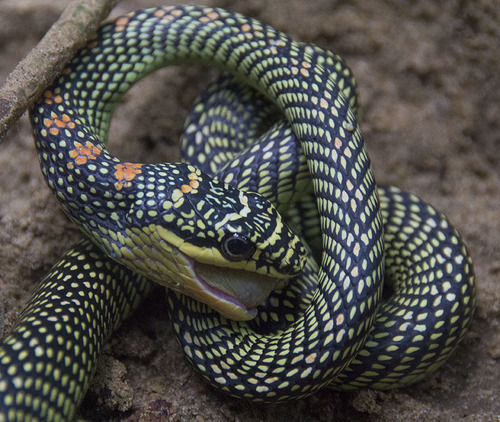

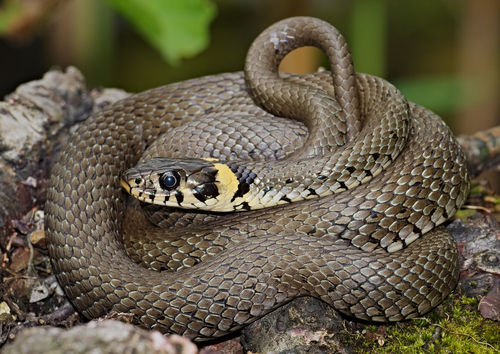


Photographs: iNaturalist contributors under the licences shown. Records: GBIF.org. Historical plates: Source Library (CC BY-SA 4.0; originals public domain). Summary text: Nature Library editors and Wikipedia (CC BY-SA). Medicinal and edibility notes are historical and educational, not advice. iNaturalist taxon 28868.