 NL·0720
Herbarium of the Nature Library
- Name
- Strix aluco
- Family
- Strigidae
- Native to
- Europe, North Africa, Turkey, the Levant, northern Iran and western Central Asia; Himalayan birds are now treated as a separate species
- Habitat
- Temperate forest, Woodland, Gardens and parks
On eBird ↗
Tawny Owl
Live sightings near you, the range map, bar charts of when it is seen, and Macaulay Library photos and recordings.
Tawny owl
Strix aluco
Also calledAlaca baykuş (Turkish) · Waldkauz (German) · Chouette hulotte (French) · Cárabo común (Spanish) · Bosuil (Dutch)
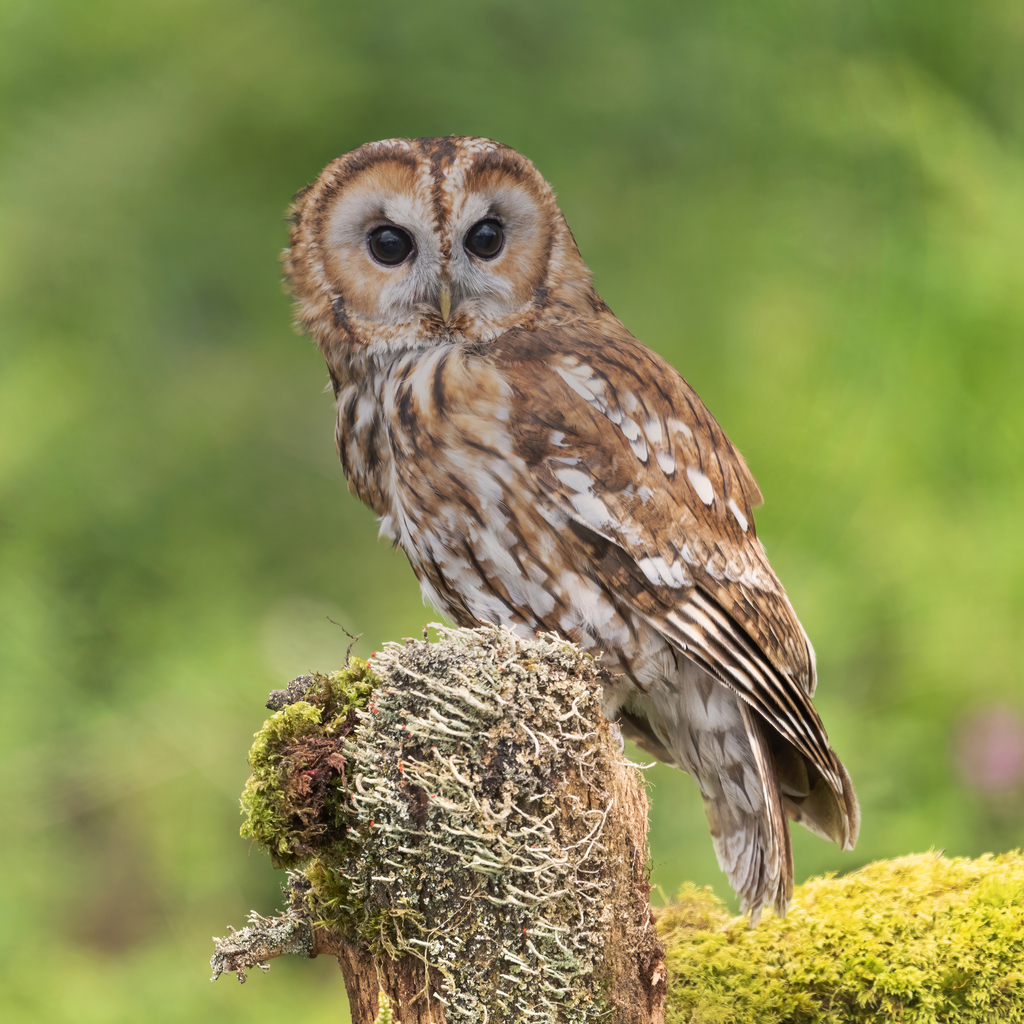
A round-headed, dark-eyed woodland owl whose hooting is the classic night sound of European parks and woods. It is strictly territorial, with pairs occupying the same patch for life.
The tawny owl, also called the brown owl, is a stocky, medium-sized owl in the family Strigidae. It is commonly found in woodlands across Europe, as well as western Siberia, and has seven recognized subspecies. The tawny owl's underparts are pale with dark streaks, whilst its upper body may be either brown or grey. The tawny owl typically makes its nest in a tree hole where it can protect its eggs and young against potential predators. It is non-migratory and highly territorial: as a result, when young birds grow up and leave the parental nest, if they cannot find a vacant territory to claim as their own, they will often starve. Wikipedia
What it can do
- iKnows its territory so well it can hunt in near-total darkness
- iiHears prey moving under leaf litter and pinpoints it with asymmetrically placed ears
- iiiFringed flight feathers make its flight almost silent
- ivDefends its nest fiercely, striking intruders at the head
In the field
Field marks
- aRounded head with no ear tufts
- bLarge dark eyes in a pale-edged facial disc
- cMottled plumage in rufous-brown or grey morphs
- dStocky, broad-winged and short-tailed
- Voice
- Male gives a long, quavering 'hooo... hu-hu-hu-hooooo'; female and young give a sharp 'ke-wick'. The 'twit-twoo' of legend is a female 'ke-wick' answered by a male hoot.
- Not to be confused with
- Ural owl (Scandinavia, eastern Europe) is larger and paler with a long tail and small dark eyes. Barn owl is white below with a heart-shaped face. Long-eared owl has ear tufts and orange eyes.
- Where to see it
- Mature woods and city parks throughout Europe; often found by listening at dusk in autumn when young disperse.
- When
- Resident; most vocal in autumn and late winter
Listen
Looking for field recordings…
Life & habits
- Diet
- Woodmice, voles and shrews; also birds, frogs and earthworms
- Habitat
- Deciduous and mixed woodland, parks, large gardens and churchyards
- Size
- 37–46 cm; wingspan 81–105 cm; 385–800 g
- Lifespan
- Typically about 4–5 years; record over 20
Young owlets leave the nest before they can fly and clamber about branches as 'branchers', calling to be fed.
Where it lives
Recorded sightings
—
geo-referenced records in GBIF, from museums, herbaria and field observers.
Native range
Europe, North Africa, Turkey, the Levant, northern Iran and western Central Asia; Himalayan birds are now treated as a separate species
Drag the globe to turn it. Dots are where records exist, not a range map; darker means more records.
In the old herbals & bestiaries
Woodcuts and engravings matched from the Source Library’s scanned books by name. Plates marked “relative” show a close kin rather than this exact species. Click a plate to read the page it came from, with translation.

History of Animals, Book I: On Viviparous Quadrupeds
Conrad Gessner · 1554 · p.926

Historiae Animalium Liber III: De Avium Natura
Conrad Gesner · 1555 · p.781

Ornithology
Ulisse Aldrovandi · 1599 · p.571

Ortus sanitatis
1491 · p.671

François Bouchard — Recueil de cent-trente-trois oiseaux des plus belles especes (1775)
François Bouchard · 1775 · p.119

François Bouchard — Recueil de cent-trente-trois oiseaux des plus belles especes (1775)
François Bouchard · 1775 · p.125
In the stacks
Searching the stacks…
Every page naming Strix aluco in the Biodiversity Heritage Library →
Marginalia
Bird photographer Eric Hosking lost his left eye to a tawny owl defending its nest in 1937 and titled his autobiography 'An Eye for a Bird'.
Curiosity
A tawny owl pair will often stay in one territory for life and rarely leave it, so many young starve if they fail to find a vacant patch.
Kinship
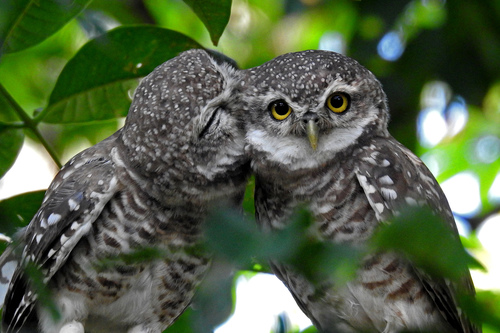
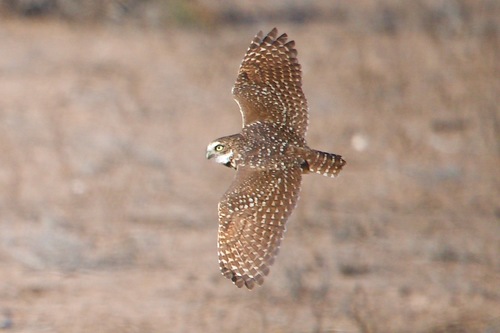
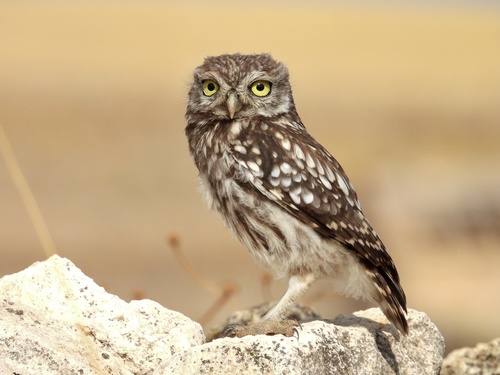
Fact-checked: 2 corrections made to this sheet. Photographs: iNaturalist contributors under the licences shown. Records: GBIF.org. Historical plates: Source Library (CC BY-SA 4.0; originals public domain). Summary text: Nature Library editors and Wikipedia (CC BY-SA). Medicinal and edibility notes are historical and educational, not advice. iNaturalist taxon 19898.