 NL·0609
Herbarium of the Nature Library
- Name
- Gallus lafayettii
- Family
- Phasianidae
- Native to
- Endemic to Sri Lanka
- Habitat
- Tropical forest, Scrub, Dry forest
On eBird ↗
Sri Lanka Junglefowl
Live sightings near you, the range map, bar charts of when it is seen, and Macaulay Library photos and recordings.
Sri Lanka junglefowl
Gallus lafayettii
Also calledWali kukula (Sinhala) · Ceylon junglefowl
Sri Lanka's national bird, a wild relative of the chicken whose rooster glows orange-red and gold with a red comb marked by a yellow centre. It is endemic to the island and common in its national parks.
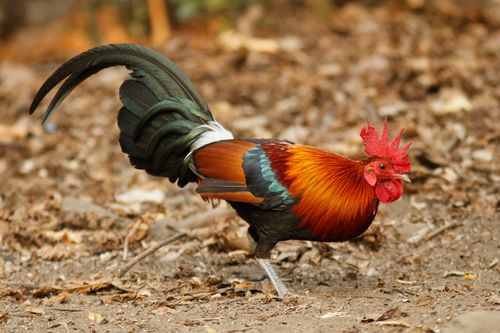
The Sri Lankan junglefowl, also known as the Ceylon junglefowl or Lafayette's junglefowl, is a member of the Galliformes bird order. It is a common endemic bird in Sri Lanka, where it is the national bird. It is closely related to the red junglefowl, the wild junglefowl from which the chicken was domesticated. However, it is even more closely related to the gray junglefowl. Sri Lankan junglefowl and red junglefowl diverged about 2.8 million years ago, whereas time of divergence between the Sri Lankan junglefowl and grey junglefowl was 1.8 million years ago. Wikipedia
What it can do
- iHybridises occasionally with domestic chickens
- iiLives in both the wet and dry zones of Sri Lanka, from sea level to the hills
- iiiForages by scratching leaf litter for seeds and insects
In the field
Field marks
- aMale: orange-red body with golden neck hackles
- bMale: red comb with a central yellow patch; red wattles
- cMale: dark purple-black wings and arching tail
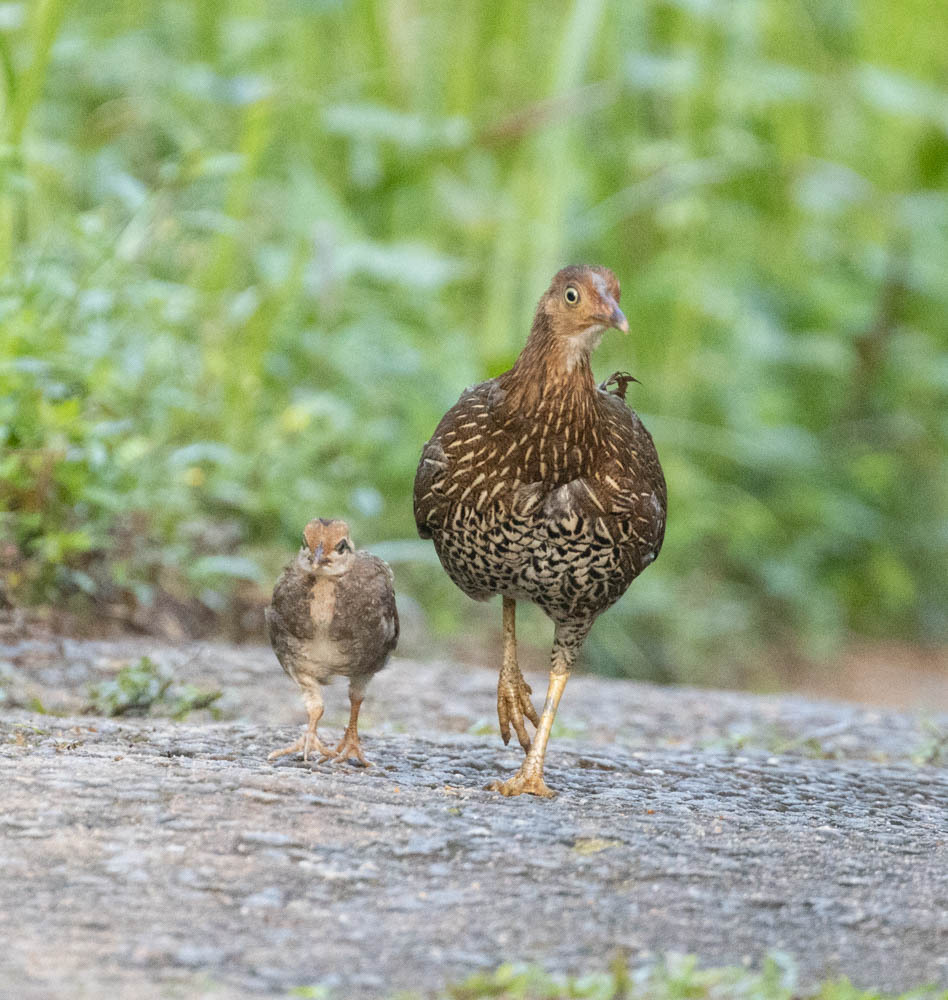
- dFemale: mottled brown with patterned wings
- Voice
- A distinctive crow 'chuck-chraw-choyik', quite unlike the domestic cockerel's crow
- Not to be confused with
- Red junglefowl and domestic chickens have an all-red comb and a different crow; feral chickens near villages can cause confusion.
- Where to see it
- Sinharaja, Yala, Udawalawe and Horton Plains national parks
- When
- Resident year-round
Listen
Looking for field recordings…
Life & habits
- Diet
- Seeds, grain, berries, insects and other invertebrates
- Habitat
- Forest, scrub jungle and plantations
- Size
- Males about 66–73 cm; females about 35 cm
Roosters crow at dawn and dusk from perches; birds often feed in the open along park roads in the early morning.
Where it lives
Recorded sightings
—
geo-referenced records in GBIF, from museums, herbaria and field observers.
Native range
Endemic to Sri Lanka
Drag the globe to turn it. Dots are where records exist, not a range map; darker means more records.
In the old herbals & bestiaries
No plate in the Source Library names this exact species, so these show its closest relatives as the old naturalists drew them: same genus, or the same kind of animal. Click a plate to read the page it came from, with translation.

Serpentum et Draconum Historiae
Relative · Ulisse Aldrovandi · 1640 · p.80

Mundus Subterraneus
Relative · Athanasius Kircher · 1678 · p.562

History of Serpents and Dragons
Relative · Ulisse Aldrovandi · 1640 · p.72

Introductory Book
Relative · Michael Scot · 1350 · p.196

Garden of Health (Hortus Sanitatis)
Relative · Jacob Meydenbach · 1491 · p.575

History of Animals, Book I: On Viviparous Quadrupeds
Relative · Conrad Gessner · 1554 · p.958

Historiae Animalium Liber III: De Avium Natura
Relative · Conrad Gesner · 1555 · p.813

Noah's Ark
Relative · Athanasius Kircher · 1675 · p.130

History of Monsters
Relative · Ulisse Aldrovandi · 1642 · p.338

A voyage to the islands Madera Barbados Jamaica Vol. 1
Relative · Hans Sloane · 1707 · p.624
In the stacks
Searching the stacks…
Every page naming Gallus lafayettii in the Biodiversity Heritage Library →
Marginalia
It is the national bird of Sri Lanka and appears on Sri Lankan postage stamps.
Curiosity
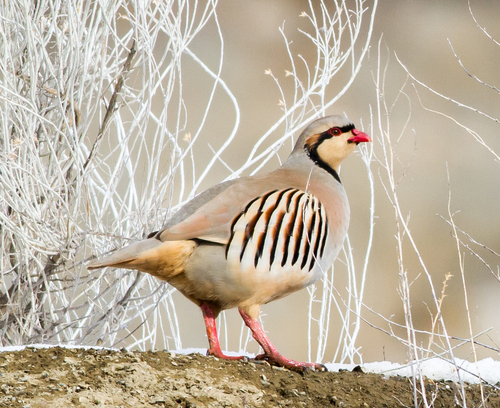
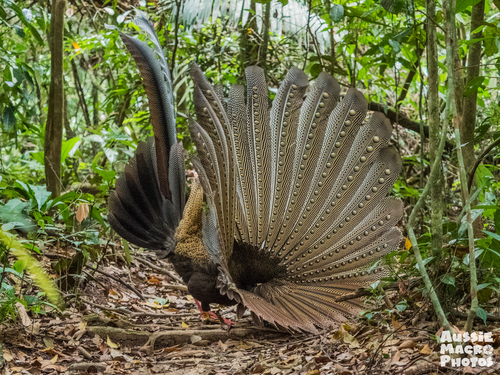
It is one of four wild Gallus species; the domestic chicken descends mainly from the Red junglefowl, but genes from the Grey and Sri Lanka junglefowl have been found in some domestic breeds.
Kinship


Photographs: iNaturalist contributors under the licences shown. Records: GBIF.org. Historical plates: Source Library (CC BY-SA 4.0; originals public domain). Summary text: Nature Library editors and Wikipedia (CC BY-SA). Medicinal and edibility notes are historical and educational, not advice. iNaturalist taxon 367470.