 NL·0608
Herbarium of the Nature Library
- Name
- Gallus gallus
- Family
- Phasianidae
- Native to
- Wild form from northern India to southern China and Indonesia; domestic chickens worldwide
- Habitat
- Tropical forest edge, Bamboo thickets, Farmland
On eBird ↗
Red Junglefowl
Live sightings near you, the range map, bar charts of when it is seen, and Macaulay Library photos and recordings.
Red junglefowl (and domestic chicken)
Gallus gallus
Also calledMurgh / Murgi (Hindi/Urdu) · Dajāj (Arabic) · Jī (Chinese, 鸡) · Kuku (Swahili) · Gallo (Spanish) · Ban murgi (Hindi, junglefowl)
A wild forest pheasant of South and Southeast Asia and the ancestor of the domestic chicken. With over 20 billion alive at any time, chickens are the most numerous bird on Earth.
The red junglefowl, also known as the Indian red junglefowl, is a species of tropical, galliform bird in the phasianid family, found across much of Southeast Asia and parts of South Asia. Wikipedia
What it can do
- iProduces over a dozen distinct alarm and food calls, some referential (aerial vs ground predator)
- iiDomestic hens can lay over 300 eggs a year
- iiiRoosters perform 'tidbitting', calling hens to food
- ivCan run, roost in trees, and make short bursts of flight
In the field
Field marks
- aMale: orange-gold hackles, red comb and wattles, long dark green arching tail
- bFemale brown with a small comb
- cWild males have slate-grey legs
- dWild males moult into a dull eclipse plumage after breeding
- Voice
- Crow is like a domestic rooster's but shorter, ending abruptly
- Not to be confused with
- Feral and domestic chickens interbreed with it; mixed birds often have yellow or pale legs and lack the eclipse moult. Grey junglefowl of peninsular India has grey, spotted hackles.
- Where to see it
- Jim Corbett National Park (India), Khao Yai and Kaeng Krachan (Thailand)
- When
- Resident
Listen
Looking for field recordings…
Life & habits
- Diet
- Seeds, insects, fallen fruit and small animals
- Habitat
- Forest edges, scrub and clearings
- Size
- Males ~70 cm; females ~45 cm
- Lifespan
- Wild 3–5 years; domestic up to ~10
A rooster gives different alarm calls for hawks overhead and for ground predators, and hens respond appropriately.
Where it lives
Recorded sightings
—
geo-referenced records in GBIF, from museums, herbaria and field observers.
Native range
Wild form from northern India to southern China and Indonesia; domestic chickens worldwide
Drag the globe to turn it. Dots are where records exist, not a range map; darker means more records.
In the old herbals & bestiaries
Woodcuts and engravings matched from the Source Library’s scanned books by name. Plates marked “relative” show a close kin rather than this exact species. Click a plate to read the page it came from, with translation.

Serpentum et Draconum Historiae
Ulisse Aldrovandi · 1640 · p.80

Mundus Subterraneus
Athanasius Kircher · 1678 · p.562

History of Animals, Book I: On Viviparous Quadrupeds
Conrad Gessner · 1554 · p.600

Kircher: China Illustrata (1667)
Athanasius Kircher · 1667 · p.267

History of Serpents and Dragons
Ulisse Aldrovandi · 1640 · p.72

Introductory Book
Michael Scot · 1350 · p.196

Garden of Health (Hortus Sanitatis)
Jacob Meydenbach · 1491 · p.575

History of Animals, Book I: On Viviparous Quadrupeds
Conrad Gessner · 1554 · p.958

Historiae Animalium Liber III: De Avium Natura
Conrad Gesner · 1555 · p.813

Noah's Ark
Athanasius Kircher · 1675 · p.130
In the stacks
Searching the stacks…
Every page naming Gallus gallus in the Biodiversity Heritage Library →
Marginalia
Domesticated in Southeast Asia around 3,500 years ago, chickens were first kept for cockfighting and ritual before food. Roman generals consulted sacred chickens before battle, and Socrates' last words asked that a rooster be offered to Asclepius.
Curiosity
Most of the world's influenza vaccines are still grown in fertilised chicken eggs.
Kinship
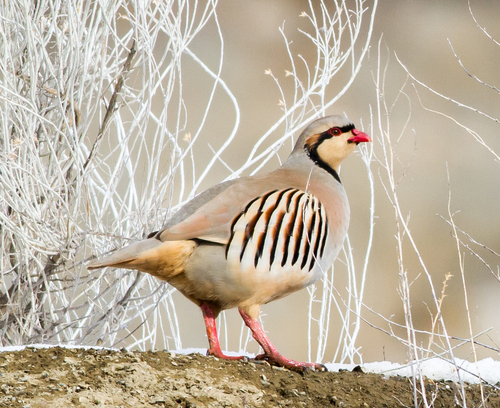
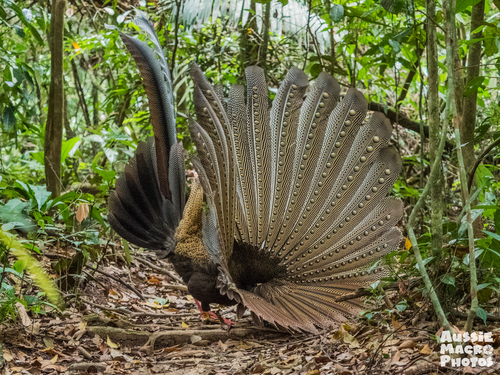


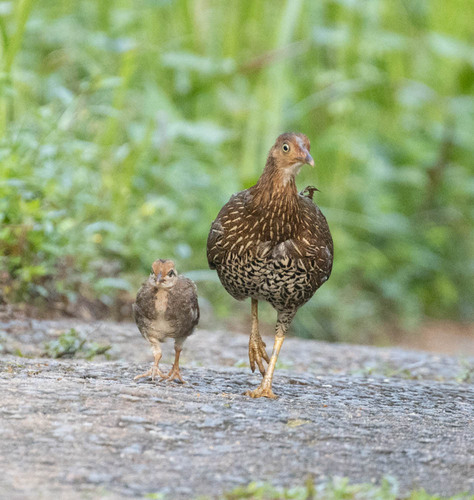
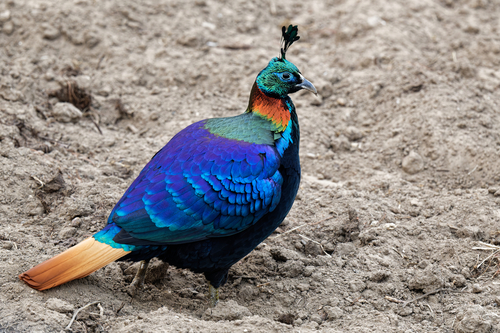
Photographs: iNaturalist contributors under the licences shown. Records: GBIF.org. Historical plates: Source Library (CC BY-SA 4.0; originals public domain). Summary text: Nature Library editors and Wikipedia (CC BY-SA). Medicinal and edibility notes are historical and educational, not advice. iNaturalist taxon 882.