 NL·0612
Herbarium of the Nature Library
- Name
- Meleagris gallopavo
- Family
- Phasianidae
- Native to
- Much of the United States, southern Canada and northern Mexico; introduced elsewhere, including Hawaii and New Zealand
- Habitat
- Deciduous forest, Open woodland, Farmland, Grassland edge
On eBird ↗
Wild Turkey
Live sightings near you, the range map, bar charts of when it is seen, and Macaulay Library photos and recordings.
Wild turkey
Meleagris gallopavo
Also calledGuajolote (Spanish, Mexico, from Nahuatl) · Huehxōlōtl (Nahuatl, male turkey) · Pavo (Spanish) · Dindon sauvage (French)
North America's largest gamebird and the wild ancestor of the domestic turkey, first domesticated in Mesoamerica over 2,000 years ago. Hunted to near-extinction by the early 1900s, it now numbers in the millions.
The wild turkey is an upland game bird native to North America, one of two extant species of turkey and the heaviest member of the order Galliformes. It is the ancestor to the domestic turkey, which was originally derived from a southern Mexican subspecies of wild turkey. Wikipedia
What it can do
- iDomesticated independently in Mesoamerica and by Ancestral Puebloans in the American Southwest
- iiCan burst into flight and roosts high in trees at night
- iiiMales gobble to attract females; calls carry over a kilometre
- ivBare head and neck change colour from red to white and blue with excitement
In the field
Field marks
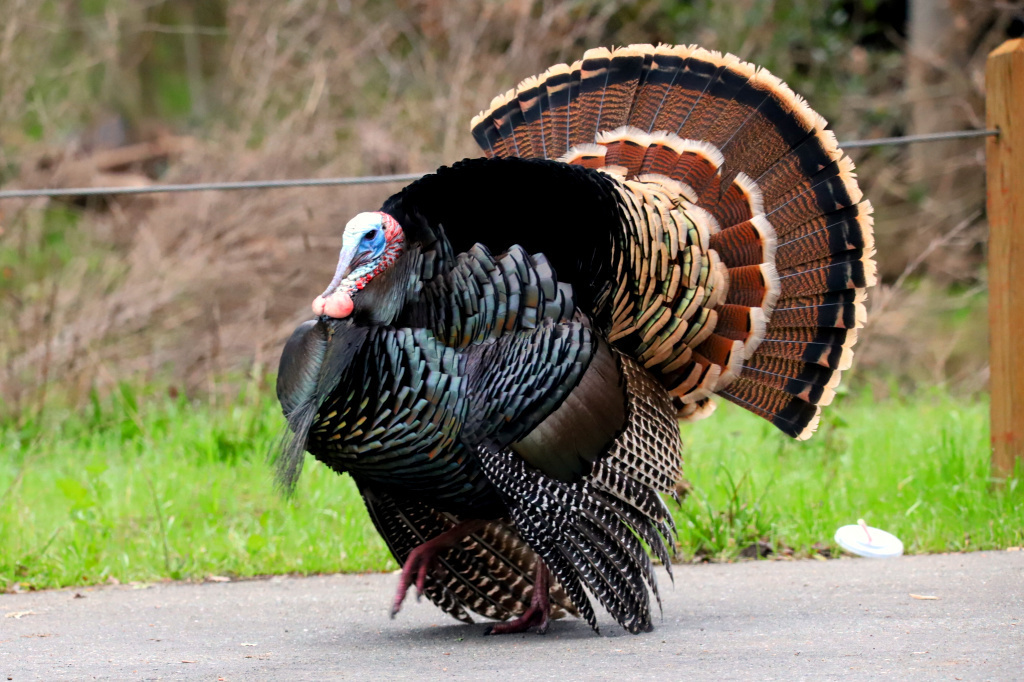
- aVery large, dark, iridescent bronze-green plumage
- bBare blue-and-red head with a fleshy snood over the bill and wattles at the throat
- cMales carry a hair-like 'beard' on the breast and leg spurs
- dTail tipped rusty or buff (varies by subspecies), fanned in display
- Voice
- Males' rolling gobble; also yelps, clucks, purrs and a sharp 'putt' alarm.
- Not to be confused with
- Ocellated Turkey (Yucatán) has a blue head with orange knobs and eyespots on the tail. Domestic turkeys are usually white or patchy and heavier.
- Where to see it
- Open woods and field edges across the eastern US; often seen in suburbs and along rural roads.
- When
- Resident year-round; gobbling peaks Mar–May
Listen
Looking for field recordings…
Life & habits
- Diet
- Acorns, nuts, seeds, berries, insects and small reptiles
- Habitat
- Mixed forest with clearings, oak woods, farm edges, and increasingly suburbs
- Size
- Males 100–125 cm and 5–11 kg; females much smaller
- Lifespan
- Usually 3–5 years in the wild; records over 13
Males strut in spring with tails fanned, wings dragged and feathers puffed.
Where it lives
Recorded sightings
—
geo-referenced records in GBIF, from museums, herbaria and field observers.
Native range
Much of the United States, southern Canada and northern Mexico; introduced elsewhere, including Hawaii and New Zealand
Drag the globe to turn it. Dots are where records exist, not a range map; darker means more records.
In the old herbals & bestiaries
Woodcuts and engravings matched from the Source Library’s scanned books by name. Plates marked “relative” show a close kin rather than this exact species. Click a plate to read the page it came from, with translation.

In the stacks
Searching the stacks…
Every page naming Meleagris gallopavo in the Biodiversity Heritage Library →
Marginalia
In a 1784 letter to his daughter, Benjamin Franklin called the Bald Eagle 'a Bird of bad moral Character' and the turkey 'a much more respectable Bird'; for the Aztecs turkeys were important ritual and food animals, associated with the god Tezcatlipoca in the form Chalchiuhtotolin.
Curiosity
Europeans called it 'turkey' because they confused it with guineafowl imported through Turkish lands.
Kinship


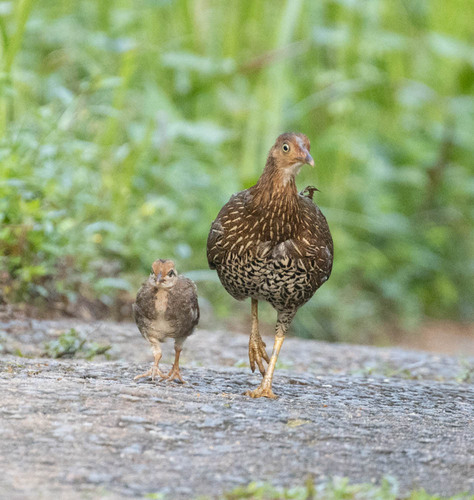
Photographs: iNaturalist contributors under the licences shown. Records: GBIF.org. Historical plates: Source Library (CC BY-SA 4.0; originals public domain). Summary text: Nature Library editors and Wikipedia (CC BY-SA). Medicinal and edibility notes are historical and educational, not advice. iNaturalist taxon 906.