- Animals
- ›Arthropods
- ›Hexapods
- ›Insects
- ›Winged and Once-winged Insects
- ›Ants, Bees, Wasps, and Sawflies
- ›Narrow-waisted Wasps, Ants, and Bees
- ›Ants, Bees, and Stinging Wasps
- ›Bees and Apoid Wasps
- ›Bees
- ›Honey Bees, Bumble Bees, and Allies
- ›Apine Bees
- ›Bombini
- ›Bombus
- ›Alpigenobombus
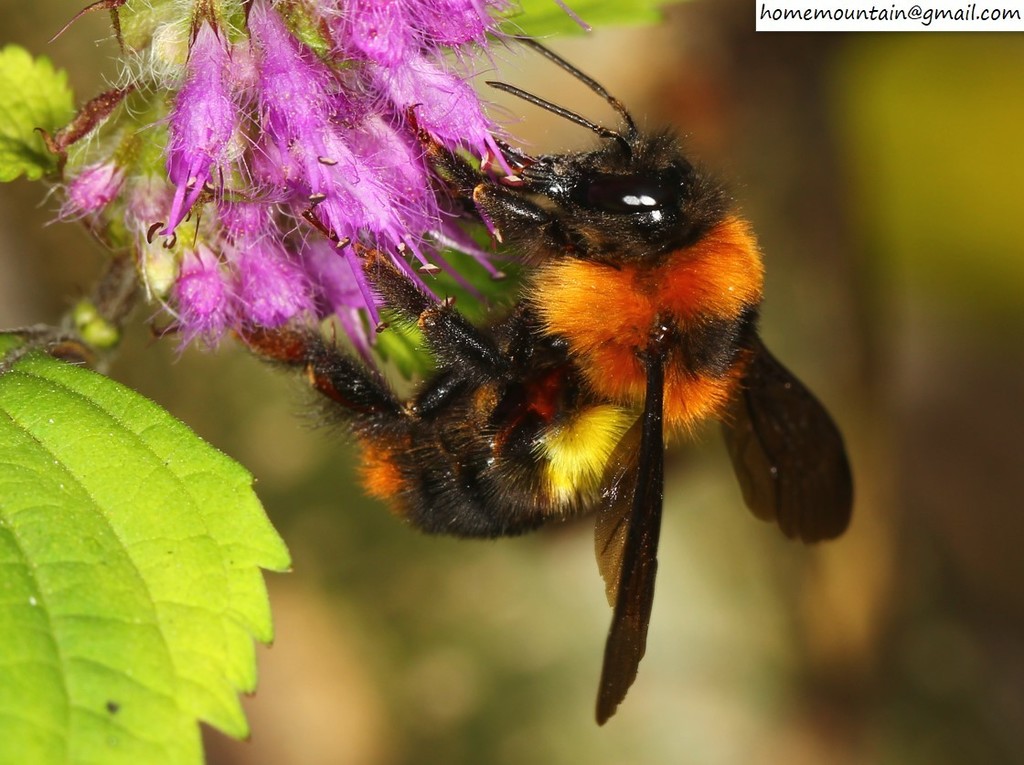
Short-faced Bumble Bee
Bombus breviceps
Bombus breviceps, also known as Short-faced Bumblebee, is a species of bumblebee found in Himalaya, Southeast Asia and China. This species often lives alongside other bumblebees and is frequently one of the most numerous species in the area.
From the article Bombus breviceps on Wikipedia (CC BY-SA), quoted section by section
Description
This species has very dark, brownish wings with dark brown veins and short hair. Females have black hair on their back, often with orange bands at the front and rear. The first tail segment is yellow. B. breviceps color pattern changes across its range to mimic different, more common bees. In the western and central parts of its range, like the Himalaya, it has a black thorax. In the southeastern parts, like Southeast Asia, it has an orange-banded thorax. These variations allow it to resemble other abundant bumblebee species local to each area. Some populations also have a black tail.
Wikipedia: “Appearance”
Range & habitat
This species is present in Bhutan, China, northernmost parts of India, Laos, eastern Myanmar, Nepal, Thailand and northwestern Vietnam.
Wikipedia: “Distribution”
What it does
B. breviceps is polylectic, meaning it collects pollen from many different types of plants. It has been recorded visiting 47 plant species, most common are Crotalaria assamica and the common bramble, Rubus alceaefolius. This species is a main pollinator of black cardamom (Amomum subulatum) crops in India. Queen B. breviceps bees begin to form new colonies in late March, whereas worker bees forage from early May until mid-December. The B. breviceps are able to use their small body size to fit in the flower and extract pollen that they then carry in their thorax and distribute to different plants and crops to contribute to cross-pollination.
Wikipedia: “Pollination”
Listen
Looking for field recordings…
Where it lives
Recorded sightings
—
geo-referenced records in GBIF, from museums, herbaria and field observers.
Drag the globe to turn it. Dots are where records exist, not a range map; darker means more records.
In the stacks
Searching the stacks…
Every page naming Bombus breviceps in the Biodiversity Heritage Library →
This page is assembled live from iNaturalist, GBIF, Wikipedia, the Source Library and the Internet Archive. It is not yet part of the hand-edited codex. iNaturalist taxon 859189.