 NL·0309
Herbarium of the Nature Library
- Name
- Canis aureus
- Family
- Canidae
- Native to
- South and Southeast Asia, Middle East, Caucasus, Central Asia and southeastern Europe, expanding north and west
- Habitat
- Scrub, Farmland, Dry forest, Wetland edge, Urban fringe
Golden jackal
Canis aureus
Also calledGīdaṛ (Urdu/Hindi) · Shṛgāla (Sanskrit) · Shaghal (Persian) · Ibn āwā (Arabic) · Chacal dorado (Spanish) · Chacal-dourado (Portuguese)
A medium-sized wild dog of South Asia, the Middle East and southeastern Europe, known for its wailing dusk chorus. It is spreading rapidly across Europe, now reaching the Baltic states and beyond. Since 2015 the African populations once called golden jackals are treated as a separate species, the African golden wolf.
The golden jackal, also called the common jackal, is a wolf-like canid that is native to Eurasia. The golden jackal's coat varies in color from a pale creamy yellow in summer to a dark tawny beige in winter. It is smaller and has shorter legs, a shorter tail, a more elongated torso, a less-prominent forehead, and a narrower and more pointed muzzle than the Arabian wolf. It is listed as Least Concern on the IUCN Red List due to its widespread distribution and high density in areas with plenty of available food and optimum shelter. Wikipedia
What it can do
- iScavenges and hunts, cleaning up carcasses and refuse around villages
- iiCoordinates in pairs to hunt rodents, hares and young deer
- iiiExpanding its range rapidly as wolves decline and farmland spreads
In the field
Field marks
- aMedium dog shape, golden to tawny-grey coat with darker saddle
- bBushy tail with a black tip, held low
- cPale throat; narrow muzzle and pointed ears
- dTracks: dog-like, about 5–6 cm, with the two middle toes' pads often fused at the rear
- Voice
- A rising chorus of wails and yips at dusk and night, often set off by sirens; one call starts others across a village.
- Not to be confused with
- Indian wolf is larger, longer-legged and greyer. Red fox is smaller with a white tail tip and black-backed ears. Feral dogs vary in colour and lack the black tail tip.
- Where to see it
- Keoladeo (Bharatpur) and Ranthambore (Rajasthan); Velavadar (Gujarat); Sundarbans; outskirts of Lahore, Karachi and Delhi; Danube Delta (Romania)
- When
- Resident; most vocal in winter
Listen
Looking for field recordings…
Life & habits
- Diet
- Omnivore: rodents, hares, birds, fish, insects, carrion, fruit (ber, figs) and human food waste
- Habitat
- Dry open country, scrub, farmland, wetlands and forest edges, often near settlements
- Size
- Body 70–85 cm, tail 20–30 cm; 7–15 kg
- Lifespan
- About 8–9 years in the wild
Mated pairs are long-lasting and defend a territory; older pups may stay to help raise the next litter.
Where it lives
Recorded sightings
—
geo-referenced records in GBIF, from museums, herbaria and field observers.
Native range
South and Southeast Asia, Middle East, Caucasus, Central Asia and southeastern Europe, expanding north and west
Drag the globe to turn it. Dots are where records exist, not a range map; darker means more records.
In the old herbals & bestiaries
No plate in the Source Library names this exact species, so these show its closest relatives as the old naturalists drew them: same genus, or the same kind of animal. Click a plate to read the page it came from, with translation.

History of Animals, Book II: On Oviparous Quadrupeds
Relative · Conrad Gessner · 1586 · p.520

Garden of Health (Hortus Sanitatis)
Relative · Jacob Meydenbach · 1491 · p.613

Garden of Health
Relative · Jacob Meydenbach · 1491 · p.681

Garden of Health
Relative · 1507 · p.555

History of Animals, Book I: On Viviparous Quadrupeds
Relative · Conrad Gessner · 1554 · p.137

History of Animals, Book I: On Viviparous Quadrupeds
Relative · Conrad Gessner · 1554 · p.137

History of Animals, Book II: On Oviparous Quadrupeds
Relative · Conrad Gessner · 1586 · p.512

The Secrets of Albertus Magnus on the Nature of Women and the Virtues of Herbs
Relative · Albertus, Magnus, Heiliger · 1604 · p.75

Thesaurus of Medical Things of New Spain, or History of Mexican Plants, Animals, and Minerals
Relative · Francisco Hernández; Nardo Antonio Recchi (ed.) · 1651 · p.502
In the stacks
Searching the stacks…
Every page naming Canis aureus in the Biodiversity Heritage Library →
Marginalia
The two jackals Karataka and Damanaka narrate the first book of the Panchatantra; its Arabic translation is titled Kalila wa-Dimna after them. In Hindu iconography jackals accompany the goddess Chamunda.
Curiosity
The word 'jackal' comes via Turkish from Persian shaghāl, ultimately from Sanskrit śṛgāla.
Kinship
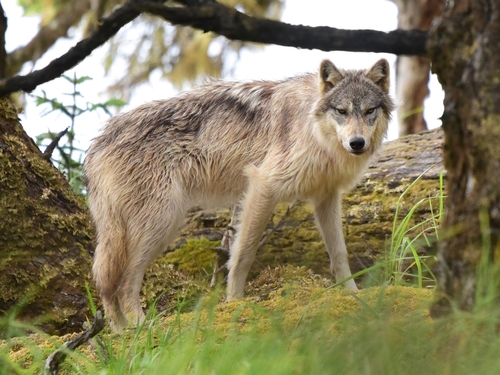
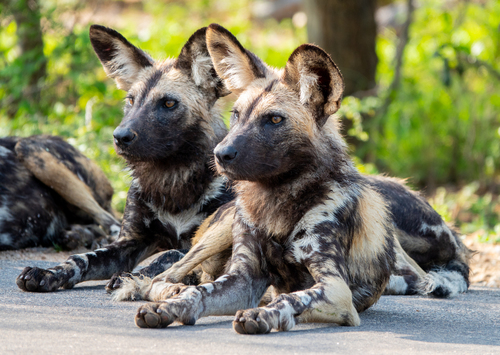
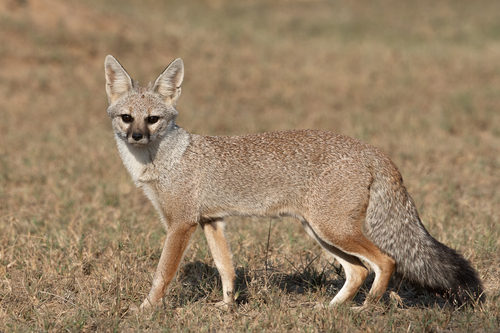
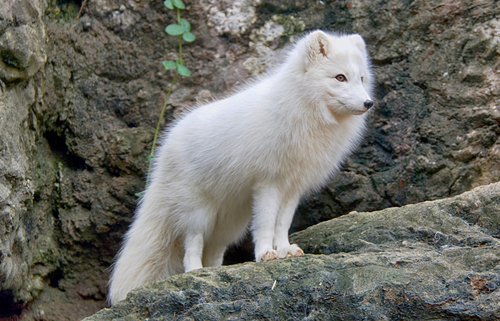

Photographs: iNaturalist contributors under the licences shown. Records: GBIF.org. Historical plates: Source Library (CC BY-SA 4.0; originals public domain). Summary text: Nature Library editors and Wikipedia (CC BY-SA). Medicinal and edibility notes are historical and educational, not advice. iNaturalist taxon 851014.