- Animals
- ›Arthropods
- ›Hexapods
- ›Insects
- ›Winged and Once-winged Insects
- ›True Bugs, Hoppers, Aphids, and allies
- ›True Hoppers
- ›Spittlebugs, Cicadas, Leafhoppers and Treehoppers
- ›Spittlebugs and Froghoppers
- ›Tube Spittlebugs
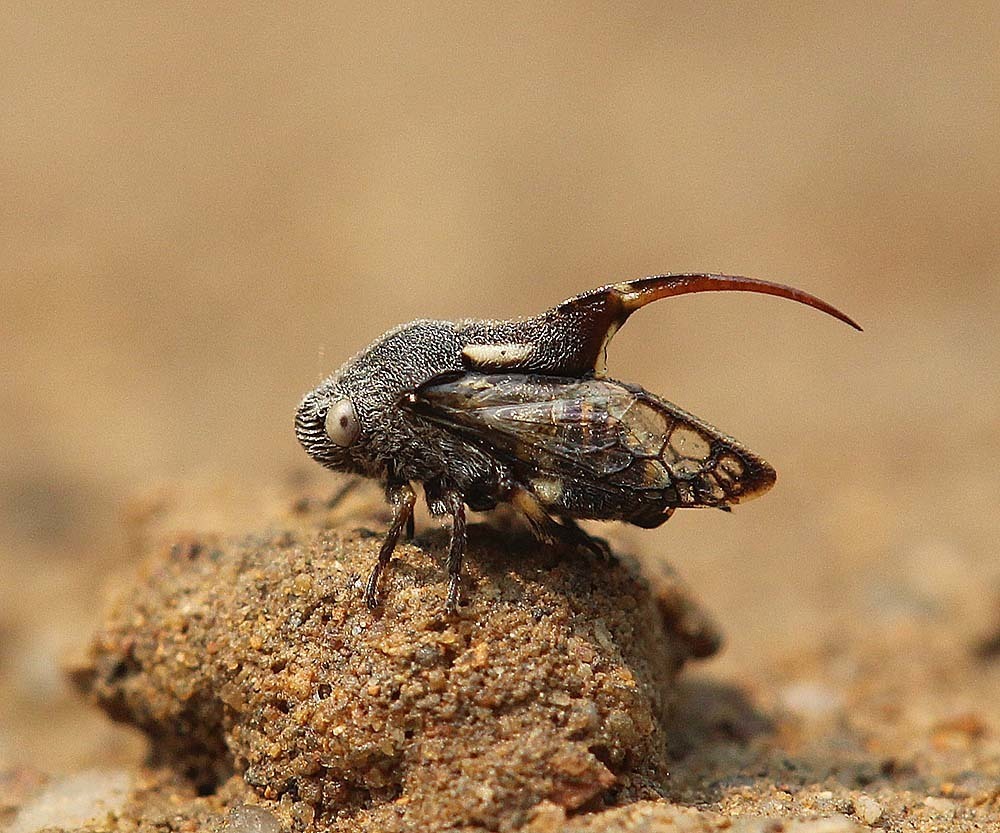
Machaerotinae
Machaerotidae are a family of bugs in the superfamily Cercopoidea which were formerly placed within Cercopidae. They are sometimes called tube-forming spittle-bugs as the nymphs form a calcareous tube within which they live. These bugs are mainly found in the Old World tropics. The adults of many genera have a long, free and spine-like process originating from the scutellum and thus superficially similar to the tree-hoppers, Membracidae. The tegmen or forewing, like typical bugs of the suborder Heteroptera, always has a distinct, membranous apical area.
Like other cercopoids, these are xylem-sap feeders. The nymph extracts calcium from the xylem fluid and constructs a calcareous tube from Malphigian gland secretions. They typically feed on woody dicots and immerse themselves in a rather clear fluid excretion inside the tube. The tubes strongly resemble the shells of certain serpulid sea worms or helicoid land snails and contain no less than 75% calcium carbonate. This habit is quite uncommon in the class Insecta and markedly different from that of typical spittlebugs, which make and live in a froth mass. Machaerotids produce foam only when they emerge from the tube to moult. There are about 115 species in 31 genera placed in 4 tribes. The majority of species are found in Southeast Asia with a small number in Africa. They were traditionally separated into two subfamilies; Machaerotinae which have the scutellar spine, and Enderleiniinae which lack it. A third subfamily, also lacking the spine, Apomachaerotinae, was recognized in 2014.
2 branches of this subfamily, most-observed first
See this branch on the Wheel of Life →
Where it lives
Recorded sightings
—
geo-referenced records in GBIF, from museums, herbaria and field observers.
Drag the globe to turn it. Dots are where records exist, not a range map; darker means more records.
In the stacks
Searching the stacks…
Every page naming Machaerotinae in the Biodiversity Heritage Library →
This page is assembled live from iNaturalist, GBIF, Wikipedia, the Source Library and the Internet Archive. It is not yet part of the hand-edited codex. iNaturalist taxon 787453.