- Animals
- ›Arthropods
- ›Hexapods
- ›Insects
- ›Winged and Once-winged Insects
- ›Butterflies and Moths
- ›Butterflies
- ›Brush-footed Butterflies
- ›Satyrs, Morphos, and Allies
- ›Alpines, Arctics, Nymphs and Satyrs
- ›Ypthimina
- ›Ypthima
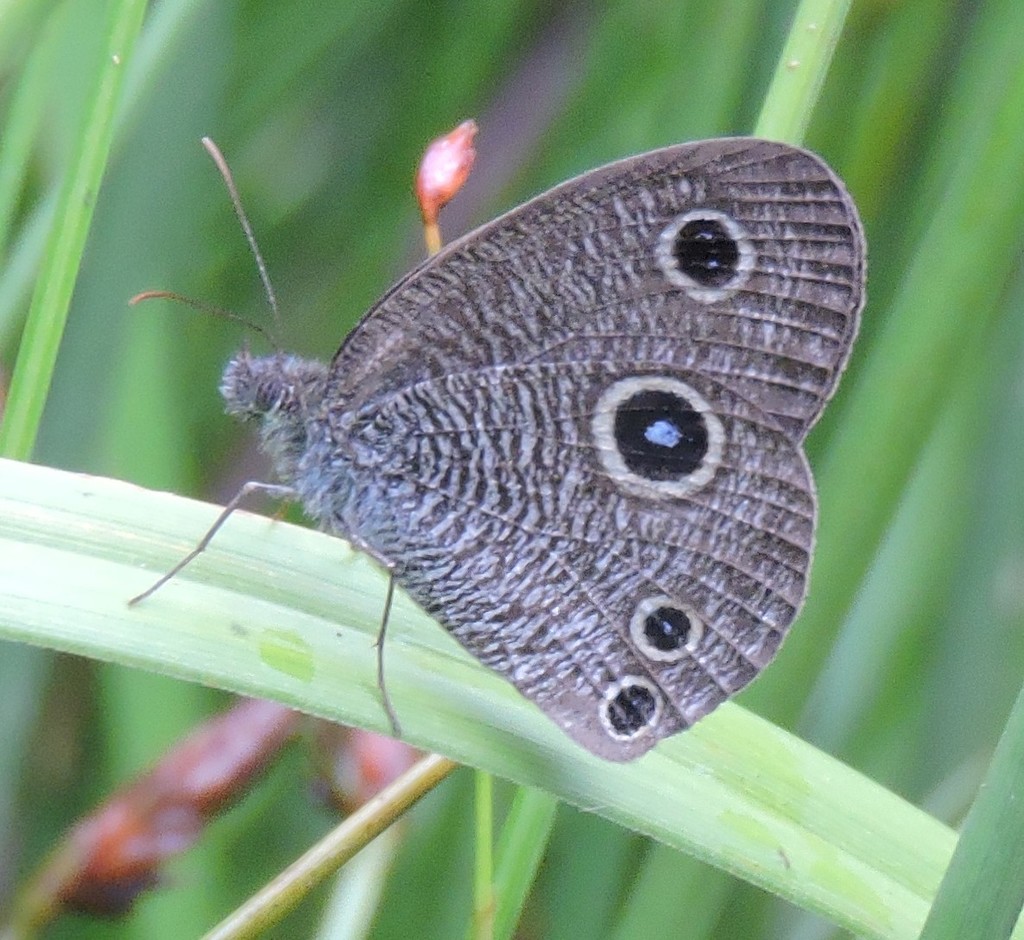
Newar Three Ring
Ypthima newara
Ypthima newara, also known as the Newar threering, is a butterfly in the family Nymphalidae. It is found in the Himalayas from Pakistan to China. It was described by Frederic Moore in 1875.
From the article Ypthima newara on Wikipedia (CC BY-SA), quoted section by section
Description
The upperside of the male is brown. The forewing has a single subapical ocellus, while the hindwing has two ocelli, one of which is bipupiled and the other has a single pupil. The upperside of the female is similar to the male except it has one ocellus on both wings. The underside is yellowish grey and partly covered with numerous short strigae. The forewing has a single bipupiled ocelli while the hindwing has three. The apical ocellus is very large, the anal ocellus is bipupiled while the rest have a single pupil. Both sexes have the same underside. This species is separated from the similar Ypthima nareda by being larger and by having the position of the ocellus on the forwing less inwardly oblique.
Listen
Looking for field recordings…
Where it lives
Recorded sightings
—
geo-referenced records in GBIF, from museums, herbaria and field observers.
Drag the globe to turn it. Dots are where records exist, not a range map; darker means more records.
In the stacks
Searching the stacks…
Every page naming Ypthima newara in the Biodiversity Heritage Library →
This page is assembled live from iNaturalist, GBIF, Wikipedia, the Source Library and the Internet Archive. It is not yet part of the hand-edited codex. iNaturalist taxon 746729.