- Animals
- ›Arthropods
- ›Hexapods
- ›Insects
- ›Winged and Once-winged Insects
- ›Flies
- ›Brachyceran Flies
- ›Cyclorrhaphan Flies
- ›Schizophoran Flies
- ›Acalyptrate Flies
- ›Kelp, Marsh, Thick-headed Flies and Allies
- ›Thick-headed Flies
- ›Sicinae
- ›Sicus
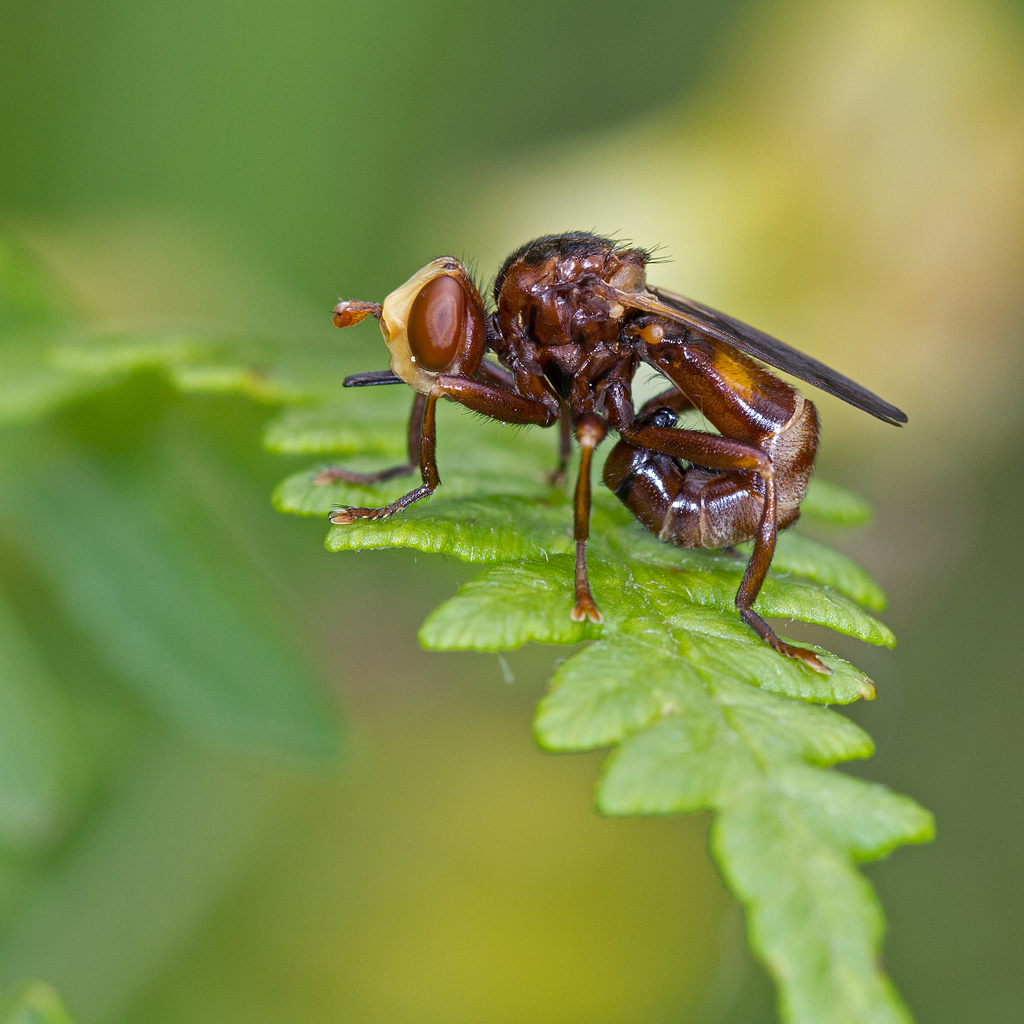
Ferruginous Bee-Grabber
Sicus ferrugineus
Sicus ferrugineus is a species of fly from the genus Sicus in the family Conopidae....
From the article Sicus ferrugineus on Wikipedia (CC BY-SA), quoted section by section
Description
The adults grow up to 8–13 millimetres (0.31–0.51 in) long. The body is mainly reddish-brown or yellow-brown. The head is yellow, quite large and inflated-looking, with a kind of bubble at the front and narrow cheeks. The short antennae are brown, their second segment has the same length or it is longer than the third. The large eyes are reddish. The legs and also the last abdomen segments are often darkened. The abdomen is long, round in cross-section, the seventh segment is oblong and conical. When in resting position the abdomen is usually folded forward. In the females theca is hardly distinguishable. The wings are transparent, but reddish-yellow colored at the base.
Range & habitat
This species is common throughout much of Europe. These conopids mainly inhabit hedgerows and flower meadows.
Wikipedia: “Distribution and habitat”
Listen
Looking for field recordings…
Where it lives
Recorded sightings
—
geo-referenced records in GBIF, from museums, herbaria and field observers.
Drag the globe to turn it. Dots are where records exist, not a range map; darker means more records.
In the stacks
Searching the stacks…
Every page naming Sicus ferrugineus in the Biodiversity Heritage Library →
This page is assembled live from iNaturalist, GBIF, Wikipedia, the Source Library and the Internet Archive. It is not yet part of the hand-edited codex. iNaturalist taxon 70175.