 NL·0672
Herbarium of the Nature Library
- Name
- Oncorhynchus nerka
- Family
- Salmonidae
- Native to
- North Pacific: rivers and lakes from the Columbia (USA) to Alaska and Kamchatka to northern Japan; landlocked kokanee widely
- Habitat
- North Pacific, Lakes, Cold rivers
Sockeye salmon
Oncorhynchus nerka
Also calledNerka нерка (Russian) · Benizake 紅鮭 (Japanese) · Red salmon · Kokanee (landlocked form) · Sθə́qəy̓ (Halkomelem, source of 'sockeye')
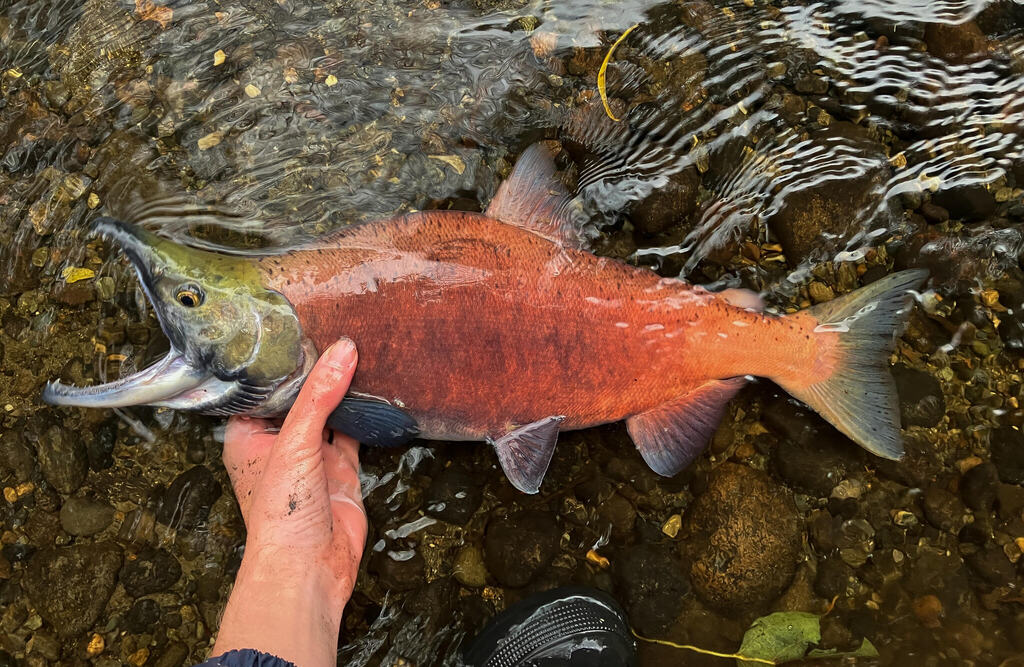
A silver ocean salmon that turns scarlet with a green head when it returns to spawn. Its runs in Bristol Bay, Alaska, number in the tens of millions, and the dying salmon carry ocean nutrients deep into lakes and forests.
The sockeye salmon, also called red salmon, kokanee salmon, blueback salmon, or simply sockeye, is an anadromous species of salmon found in the Northern Pacific Ocean and rivers discharging into it. This species is a Pacific salmon that is primarily red in hue during spawning. They can grow up to 84 cm in length and weigh 2.3 to 7 kg (5–15 lb). Juveniles remain in freshwater until they are ready to migrate to the ocean, over distances of up to 1,600 km (1,000 mi). Their diet consists primarily of zooplankton. Sockeye salmon are semelparous, dying after they spawn. Some populations, referred to as kokanee, do not migrate to the ocean and live their entire lives in fresh water. Wikipedia
What it can do
- iNavigates thousands of kilometres of ocean back to its natal river, using the Earth's magnetic field and then smell
- iiYoung spend 1–3 years in a nursery lake, a stage most Pacific salmon skip
- iiiSpawns once and dies, and the carcasses feed bears, eagles, insects and even streamside trees with marine nitrogen
- ivFilter-feeds on plankton with many long gill rakers
In the field
Field marks
- aAt sea and fresh-run: metallic blue-green back, silver sides, no large black spots on back or tail
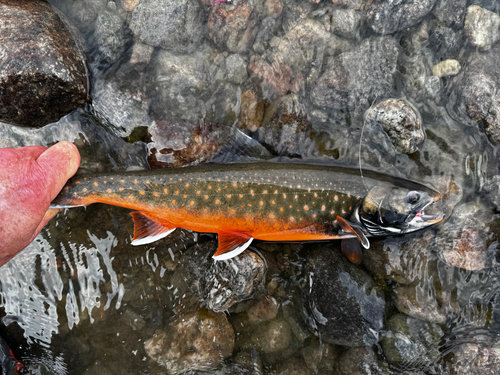
- bSpawning: bright red body, olive-green head, white lower jaw
- cSpawning males with a hooked jaw (kype) and humped back
- dMany (about 30–40) long, fine gill rakers on the first gill arch
- Not to be confused with
- Spawning coho is red-sided with a dark head but keeps spots on the upper tail lobe and white gums. Chum has calico-like vertical purple and green bars. Chinook is much larger, with black gums and spots on both tail lobes.
- Where to see it
- Brooks Falls, Katmai National Park, Alaska (with brown bears); Adams River, British Columbia (dominant run every 4 years); Kuril Lake, Kamchatka
- When
- Spawning runs June–October; peak at Brooks Falls in July and at the Adams River in October
Life & habits
- Diet
- Zooplankton and insect larvae in lakes; at sea, krill, amphipods, copepods and small fish and squid
- Habitat
- North Pacific Ocean; rivers with nursery lakes for spawning
- Size
- Usually 55–70 cm and 2–3 kg; kokanee much smaller
- Lifespan
- Usually 3–5 years (dies after spawning)
Adults stop eating on entering fresh water and live on stored fat for the upstream run. Males grow a hump and hooked jaw and fight over females on the gravel.
Where it lives
Recorded sightings
—
geo-referenced records in GBIF, from museums, herbaria and field observers.
Native range
North Pacific: rivers and lakes from the Columbia (USA) to Alaska and Kamchatka to northern Japan; landlocked kokanee widely
Drag the globe to turn it. Dots are where records exist, not a range map; darker means more records.
In the old herbals & bestiaries
No plate in the Source Library names this exact species, so these show its closest relatives as the old naturalists drew them: same genus, or the same kind of animal. Click a plate to read the page it came from, with translation.

Garden of Health
Relative · Jacob Meydenbach · 1491 · p.692

History of Animals, Book II: On Oviparous Quadrupeds
Relative · Conrad Gessner · 1586 · p.695

Theater of Earthly Creatures
Relative · Anonymous · 1672 · p.294

Books on Marine Fishes
Relative · Guillaume Rondelet · 1554 · p.801

De Piscibus Libri V et De Cetis Liber Unus
Relative · Ulisse Aldrovandi · 1661 · p.530

François Bouchard — Recueil de cent-trente-trois oiseaux des plus belles especes (1775)
Relative · François Bouchard · 1775 · p.159

Books on Marine Fishes
Relative · Guillaume Rondelet · 1554 · p.808

History of Animals, Book II: On Oviparous Quadrupeds
Relative · Conrad Gessner · 1586 · p.681

De Piscibus Libri V et De Cetis Liber Unus
Relative · Ulisse Aldrovandi · 1661 · p.531

Museum of the Royal Society
Relative · Nehemiah Grew · 1681 · p.522
In the stacks
Searching the stacks…
Every page naming Oncorhynchus nerka in the Biodiversity Heritage Library →
Marginalia
Many Pacific Northwest First Nations hold a First Salmon Ceremony each year, returning the first fish's bones to the river so the salmon will come back. The English name 'sockeye' is an anglicisation of the Halkomelem name used along the Fraser River.
Curiosity
Nitrogen from sockeye carcasses has been traced in streamside spruce trees, and studies found trees along salmon streams grow faster than those along streams without salmon.
Kinship


Photographs: iNaturalist contributors under the licences shown. Records: GBIF.org. Historical plates: Source Library (CC BY-SA 4.0; originals public domain). Summary text: Nature Library editors and Wikipedia (CC BY-SA). Medicinal and edibility notes are historical and educational, not advice. iNaturalist taxon 69922.