
Ray-finned Fishes
Actinopterygii
Actinopterygii ( ; from Ancient Greek ἀκτίς (aktís) 'ray, beam' and πτέρυξ (ptérux) 'wing, fins'), members of which are known as ray-finned fish or actinopterygians, is a class of bony fish that constitutes nearly 99% of the over 30,000 living species of fish. The vast majority of extant actinopterygian species are teleosts, and by species count they dominate the subphylum Vertebrata, comprising over 50% of all living vertebrates. They are the most abundant nektonic aquatic animals and are ubiquitous throughout freshwater, brackish and marine environments from the deep sea to subterranean waters to the highest mountain streams. Extant species can range in size from Paedocypris, at 8 mm (0.3 in), to the giant sunfish, at 2,700 kg (6,000 lb), and the giant oarfish, at 8 m (26 ft) (or possibly 11 m (36 ft)). The largest ever known ray-finned fish, the extinct Leedsichthys from the Jurassic, is estimated to have grown to 16.5 m (54 ft).
Ray-finned fish are so called because of their lightly built fins made of webbings of skin supported by radially extended thin bony spines called lepidotrichia, as opposed to the bulkier, fleshy fins of the sister clade Sarcopterygii (lobe-finned fish). Resembling folding fans, the actinopterygian fins can easily change shape, orientation and wetted area, providing superior thrust-to-weight ratios per movement compared to sarcopterygian and chondrichthyian fins.
21 branches of this class, most-observed first · about 35,686 known species

Spiny-rayed fishes
superorderAcanthomorpha

Carps, Characins, Catfishes and Allies
superorderOstariophysi

Salmons, Pikes and Mudminnows
orderSalmoniformes
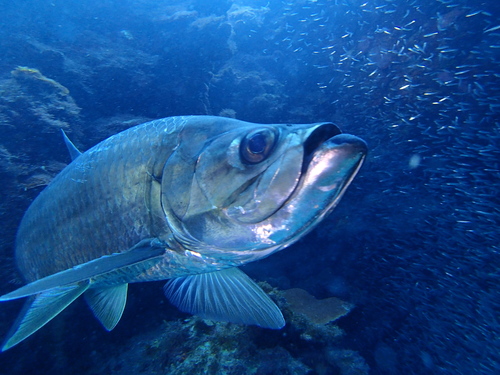
Tarpons, Eels, and Allies
superorderElopomorpha
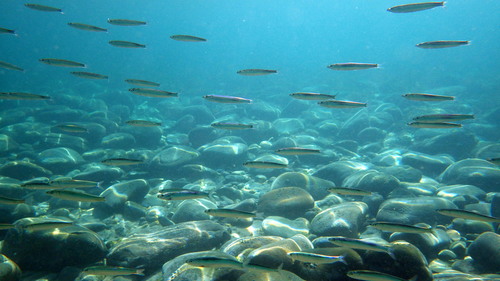
Herrings
orderClupeiformes

Gars and bowfins
infraclassHolostei

Grinners, Lizardfishes, and Allies
orderAulopiformes

Sturgeons and Paddlefishes
orderAcipenseriformes

Bonytongues and mooneyes
superorderOsteoglossomorpha

Galaxiids
orderGalaxiiformes

Smelts and Allies
orderOsmeriformes

Lanternfishes
orderMyctophiformes

Dragonfishes and Allies
orderStomiiformes
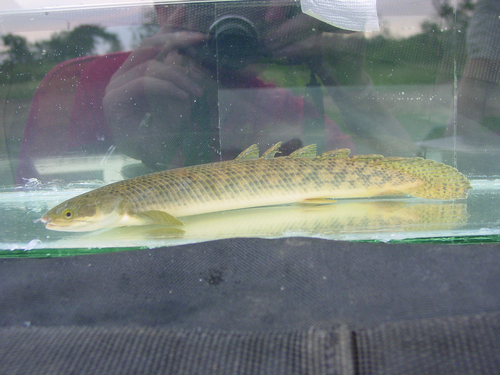
Bichirs
orderPolypteriformes

Marine Smelts
orderArgentiniformes
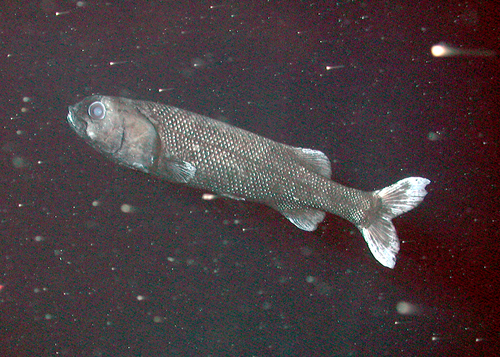
Slickheads and tubeshoulders
orderAlepocephaliformes

Jellynose Fishes
orderAteleopodiformes
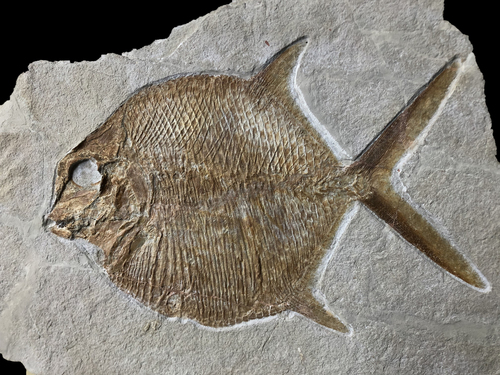
Pycnodontiformes
orderPycnodontiformes
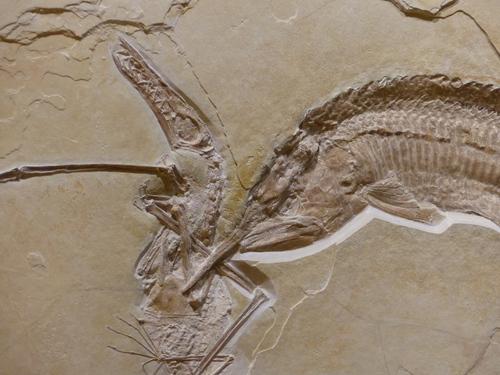
Aspidorhynchiformes
orderAspidorhynchiformes
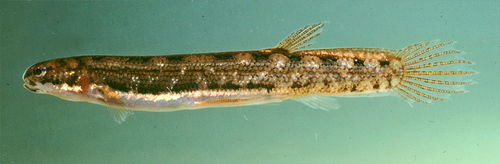
Salamanderfishes
orderLepidogalaxiiformes
Aesopichthyidae
familyAesopichthyidae
Where it lives
Recorded sightings
—
geo-referenced records in GBIF, from museums, herbaria and field observers.
Drag the globe to turn it. Dots are where records exist, not a range map; darker means more records.
In the stacks
Searching the stacks…
Every page naming Actinopterygii in the Biodiversity Heritage Library →
This page is assembled live from iNaturalist, GBIF, Wikipedia, the Source Library and the Internet Archive. It is not yet part of the hand-edited codex. iNaturalist taxon 47178.