- Animals
- ›Arthropods
- ›Hexapods
- ›Insects
- ›Winged and Once-winged Insects
- ›Butterflies and Moths
- ›Butterflies
- ›Brush-footed Butterflies
- ›Emperors
- ›Asterocampa
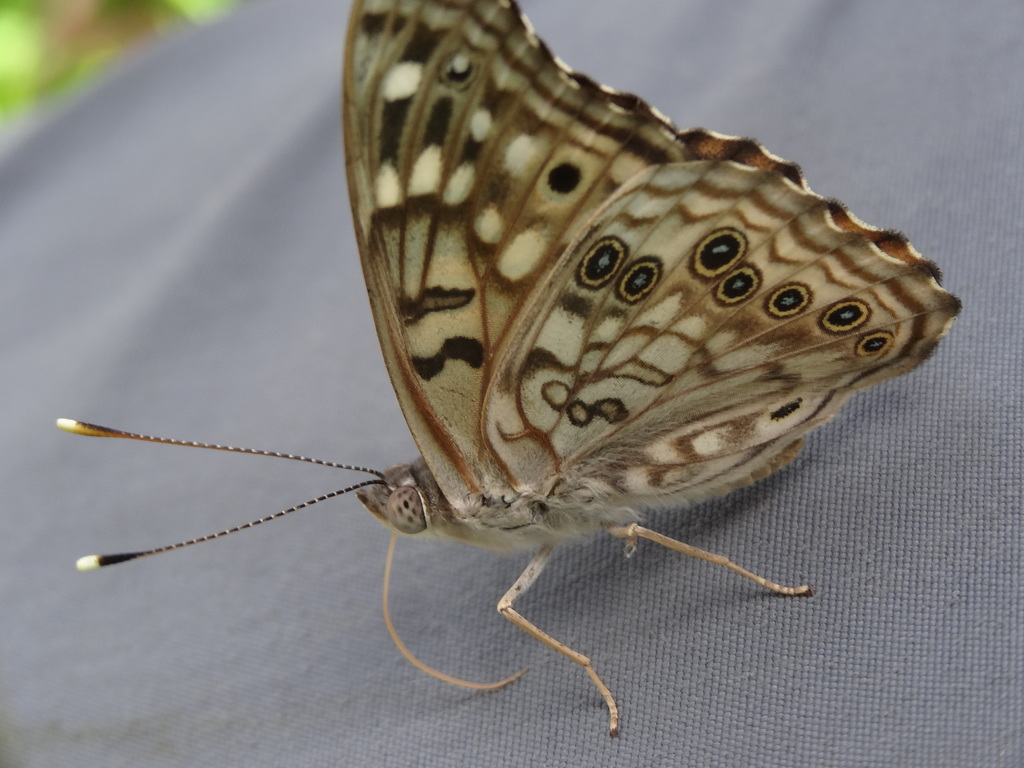
Hackberry Emperor
Asterocampa celtis
Asterocampa celtis, the hackberry emperor, is a North American butterfly that belongs to the brushfooted butterfly family, Nymphalidae. It gets its name from the hackberry tree (Celtis occidentalis and others in the genus Celtis) upon which it lays its eggs. The hackberry tree is the only host plant for A. celtis and is the food source for larvae.
The hackberry emperor is known for being a quick, mercurial butterfly. It often is found along water sources and lowlands, although it lives in a broad range of habitats. Another notable characteristic is that it rarely is spotted visiting a flower, which is considered unusual for a butterfly.
From the article Asterocampa celtis on Wikipedia (CC BY-SA), quoted section by section
Range & habitat
The hackberry emperor is found across a wide range within North America. It has been observed as far south as central Mexico and north into parts of Eastern Canada. Its range extends to the southwest into regions like Arizona, New Mexico, and other parts of the Rockies, as shown by the map. It can commonly be found across the Midwest and especially along the east coast from Florida up to New England.
Wikipedia: “Geographic range”
What it does
Male searching behavior in butterflies generally falls into two different strategies. One strategy is to actively patrol an area for females. Patrollers are attracted to still objects that resemble a mate. The other strategy is to perch. Perchers typically spend only part of the day actively looking for a mate. They sit perched upon a branch waiting for a female to fly by. When a male sees movement nearby it will quickly fly out to attempt to mate, but stay within a limited habitat. A. celtis exhibit perching behavior. The male rests on rocks, trees, or fallen branches often along streams from the afternoon until around sundown.
Wikipedia: “Mating behavior”
Listen
Looking for field recordings…
Where it lives
Recorded sightings
—
geo-referenced records in GBIF, from museums, herbaria and field observers.
Drag the globe to turn it. Dots are where records exist, not a range map; darker means more records.
In the stacks
Searching the stacks…
Every page naming Asterocampa celtis in the Biodiversity Heritage Library →
This page is assembled live from iNaturalist, GBIF, Wikipedia, the Source Library and the Internet Archive. It is not yet part of the hand-edited codex. iNaturalist taxon 68264.