- Animals
- ›Arthropods
- ›Hexapods
- ›Insects
- ›Winged and Once-winged Insects
- ›Butterflies and Moths
- ›Butterflies
- ›Brush-footed Butterflies
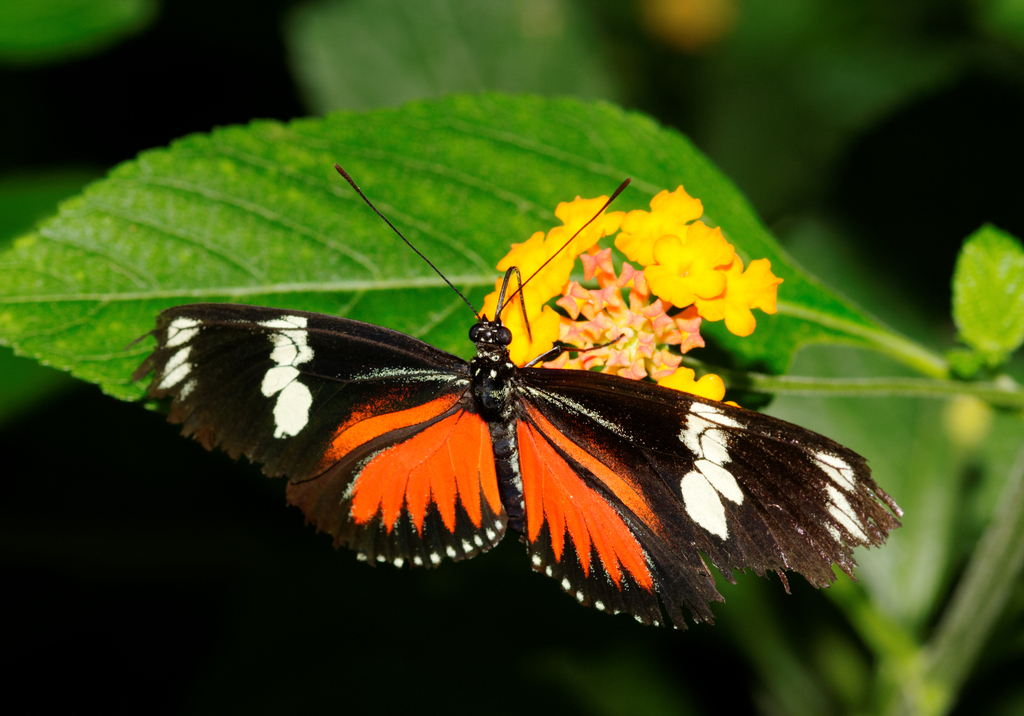
Fritillaries and Longwings
Heliconiinae
The Heliconiinae, commonly called heliconians or longwings, are a subfamily of the brush-footed butterflies (family Nymphalidae). They can be divided into 45–50 genera and were sometimes treated as a separate family Heliconiidae within the Papilionoidea. The colouration is predominantly reddish and black, and though of varying wing shape, the forewings are always elongated tipwards, hence the common name.
Most longwings are found in the Tropics, particularly in South America; only the Argynnini are quite diverse in the Holarctic. Especially tropical species feed on poisonous plants, characteristically Passifloraceae vines, as larvae, becoming poisonous themselves. The adult butterflies announce their acquired toxicity with strong aposematic colours, warning off would-be predators. There are several famous cases of Batesian and Müllerian mimicry both within this group and with other butterflies. Other commonly seen food plants are Fabaceae (which also contain several toxic species), and particularly among northerly species of Violaceae.
4 branches of this subfamily, most-observed first

Fritillaries
tribeArgynnini

Longwings
tribeHeliconiini

Acraeas, Actinotes, and Allies
tribeAcraeini

Vagrantini
tribeVagrantini
Where it lives
Recorded sightings
—
geo-referenced records in GBIF, from museums, herbaria and field observers.
Drag the globe to turn it. Dots are where records exist, not a range map; darker means more records.
In the stacks
Searching the stacks…
Every page naming Heliconiinae in the Biodiversity Heritage Library →
This page is assembled live from iNaturalist, GBIF, Wikipedia, the Source Library and the Internet Archive. It is not yet part of the hand-edited codex. iNaturalist taxon 60854.