- Animals
- ›Arthropods
- ›Hexapods
- ›Insects
- ›Winged and Once-winged Insects
- ›True Bugs, Hoppers, Aphids, and allies
- ›True Hoppers
- ›Spittlebugs, Cicadas, Leafhoppers and Treehoppers
- ›Spittlebugs and Froghoppers
- ›True Spittlebugs
- ›Aphrophorinae
- ›Philaenini
- ›Philaenus
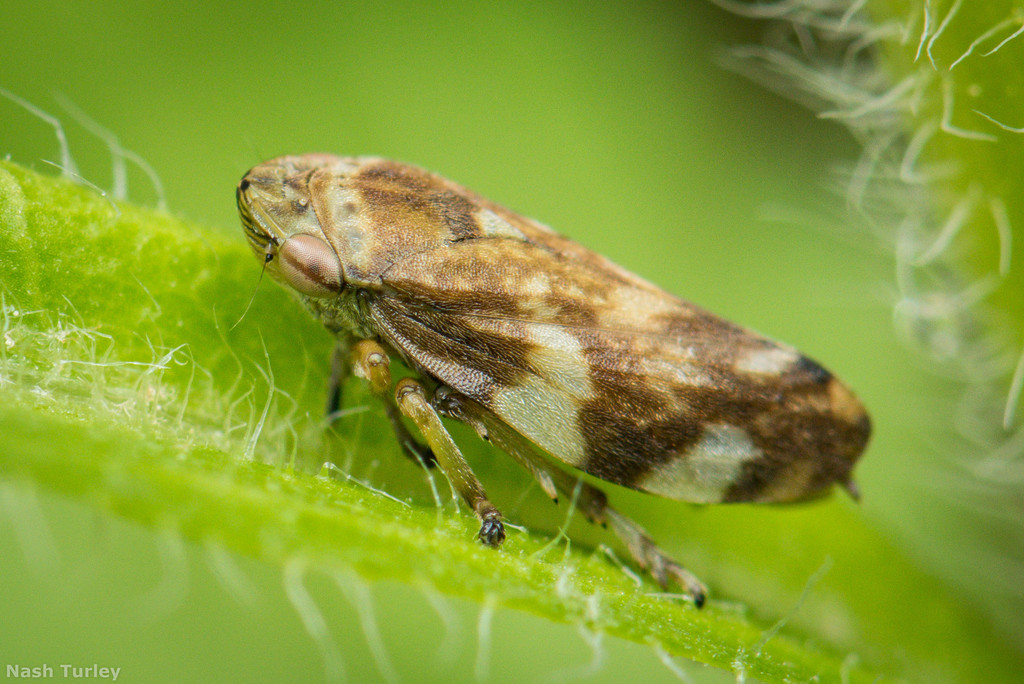
Meadow Spittlebug
Philaenus spumarius
Philaenus spumarius, the meadow froghopper or meadow spittlebug, is a species of insect belonging to the spittlebug family Aphrophoridae. In Italy and America, it is economically important as one of the vectors of Pierce's disease (Xylella fastidiosa).
From the article Philaenus spumarius on Wikipedia (CC BY-SA), quoted section by section
Range & habitat
Philaenus spumarius is quite common and widespread. The species' original distribution was restricted to the Palearctic realm. They are present in most of Europe, in North Africa, in part of Russia, in Afghanistan, and in Japan. They have also been introduced in North America. This is a very eurytopic species, meaning that it can tolerate a wide range of environmental factors and exist in many different habitats (parks, meadows, gardens, etc.). It lives in almost all open land habitats and in open forests. It is absent only in very wet and very dry habitats.
Wikipedia: “Distribution”
What it does
The seasonal nature, the phenology, of the species' life cycle varies because of the wide range of climatic conditions it can tolerate, but remains similar. In a temperate climate, the females lay eggs at the end of the summer. There are five instar larvae stages in the life span, after the egg hatching. he eggs are laid singly or in groups (1 to 30, average 7) on the food plants of the larvae. Egg-laying is triggered by a single female, which can produce up to 350–400 eggs. In unfavorable climatic periods, froghoppers can survive in the form of eggs. Eggs are approximately 1 mm long and 0.3 mm wide. They are white with an orange spot, which becomes darker and larger if the egg is fertilised. The larvae, also called nymphs, hatch after about 20 days and develop through five stages, known as instars. The larvae are known for the self-generated foam masses that can be observed during spring in meadows (especially on cuckoo flowers, Cardamine pratensis, and broom, Genista, species). The larvae in the foam masses are largely protected from predators and also get the necessary moisture for the appropriate development and temperature, so their mortality remains low even in bad weather. The larval stage lasts about 50 days. The adults leave the foam mass only when it is completely dried. This takes about ten days. …
Wikipedia: “Life cycle”
Listen
Looking for field recordings…
Where it lives
Recorded sightings
—
geo-referenced records in GBIF, from museums, herbaria and field observers.
Drag the globe to turn it. Dots are where records exist, not a range map; darker means more records.
In the stacks
Searching the stacks…
Every page naming Philaenus spumarius in the Biodiversity Heritage Library →
This page is assembled live from iNaturalist, GBIF, Wikipedia, the Source Library and the Internet Archive. It is not yet part of the hand-edited codex. iNaturalist taxon 56189.