- Animals
- ›Chordates
- ›Vertebrates
- ›Reptiles
- ›Snakes and Lizards
- ›Snakes
- ›Colubrid Snakes
- ›Natricine Snakes
- ›Liodytes
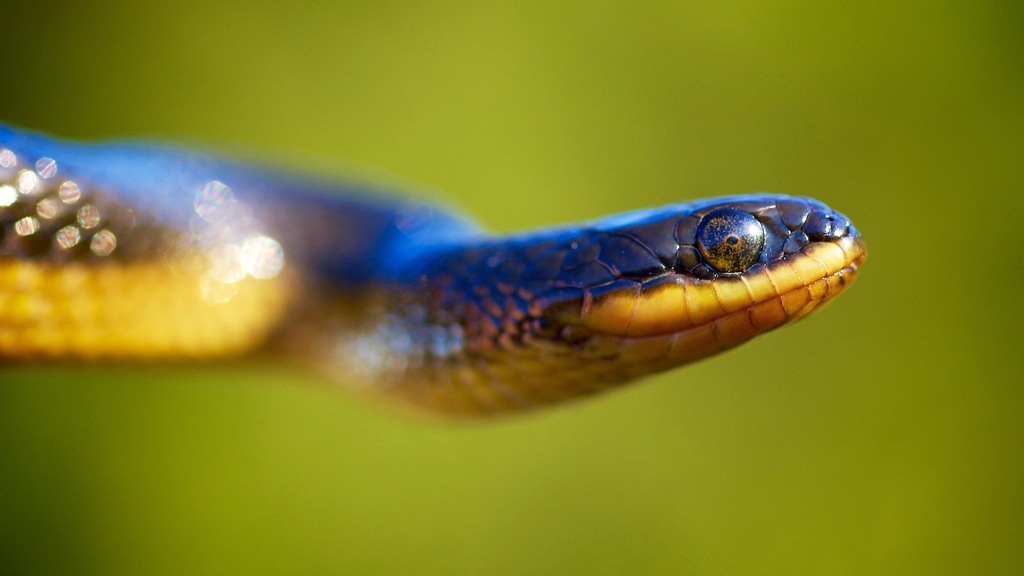
Striped Swampsnake
Liodytes alleni
The striped crayfish snake (Liodytes alleni) is a species of semiaquatic North American snake in the family Colubridae. The species derives its common name from its principal prey, crayfish. This snake is also called Allen's snake, the striped swamp snake, the striped swampsnake, or simply the swamp snake. It is endemic to peninsular Florida. Although rarely seen due to its secretive behavior, it can be found in large numbers in wet areas, with densities approaching 1,300 snakes per hectare (525 snakes per acre).
From the article Striped crayfish snake on Wikipedia (CC BY-SA), quoted section by section
Description
The striped crayfish snake is of "small medium" size, 33–50 centimetres (13–20 in) in total length (including tail), with a heavy body. The stripes which contribute to its common name are indistinct and located on the dark dorsal side. The ventral side is yellow with some dark spots. The dorsal scales, which are arranged in 19 rows at midbody, are smooth on the body, with some keeled scales in the anal region. There is a clear sexual dimorphism with the females being the larger sex. The striped crayfish snake is very similar to the glossy crayfish snake (Liodytes rigida rigida), but has one row of spots on the underside, whereas the glossy crayfish snake has two spots.
Range & habitat
The striped crayfish snake is a semiaquatic snake and is regularly found in swamps and open wetlands with heavy plant growth, cypress swamps, saw grass prairies, swamps, and roadside ditches. The snake has adapted well to the beds of water hyacinth that has taken over many waterways. Although the species is aquatic, it is rarely seen in moving water. The snake is primarily found in Florida. It is commonly found east of the central panhandle and in southeastern Georgia. The northern range limit is near the Florida-Georgia border.
Wikipedia: “Natural habitat”
What it does
The striped crayfish snake is active throughout the year except for the coldest months of winter. When active, it typically can be found among the roots of aquatic vegetation, and on land beneath logs or organic litter. It is active in still water during the day and probably at night. On cool days, it finds sunny areas on land to bask. The striped crayfish snake feeds primarily on crayfish. It uses its coils to hold its prey while consuming it alive. Its teeth are small and very sharp, allowing it to grab and hold the hard outer covering of the crayfish. It typically swallows the crustacean tail first. Juveniles feed on insect larvae, most commonly the larvae of dragonflies and shrimp.
Wikipedia: “Behavior and diet”
In human culture
The specific name, alleni, is in honor of American zoologist Joel Asaph Allen, who collected the type specimen.
Wikipedia: “Etymology”
Where it lives
Recorded sightings
—
geo-referenced records in GBIF, from museums, herbaria and field observers.
Drag the globe to turn it. Dots are where records exist, not a range map; darker means more records.
In the stacks
Searching the stacks…
Every page naming Liodytes alleni in the Biodiversity Heritage Library →
This page is assembled live from iNaturalist, GBIF, Wikipedia, the Source Library and the Internet Archive. It is not yet part of the hand-edited codex. iNaturalist taxon 539892.