- Animals
- ›Arthropods
- ›Hexapods
- ›Insects
- ›Winged and Once-winged Insects
- ›True Bugs, Hoppers, Aphids, and allies
- ›True Bugs
- ›Cimicomorph Bugs
- ›Miroidea
- ›Plant Bugs
- ›Mirinae
- ›Mirini
- ›Closterotomus
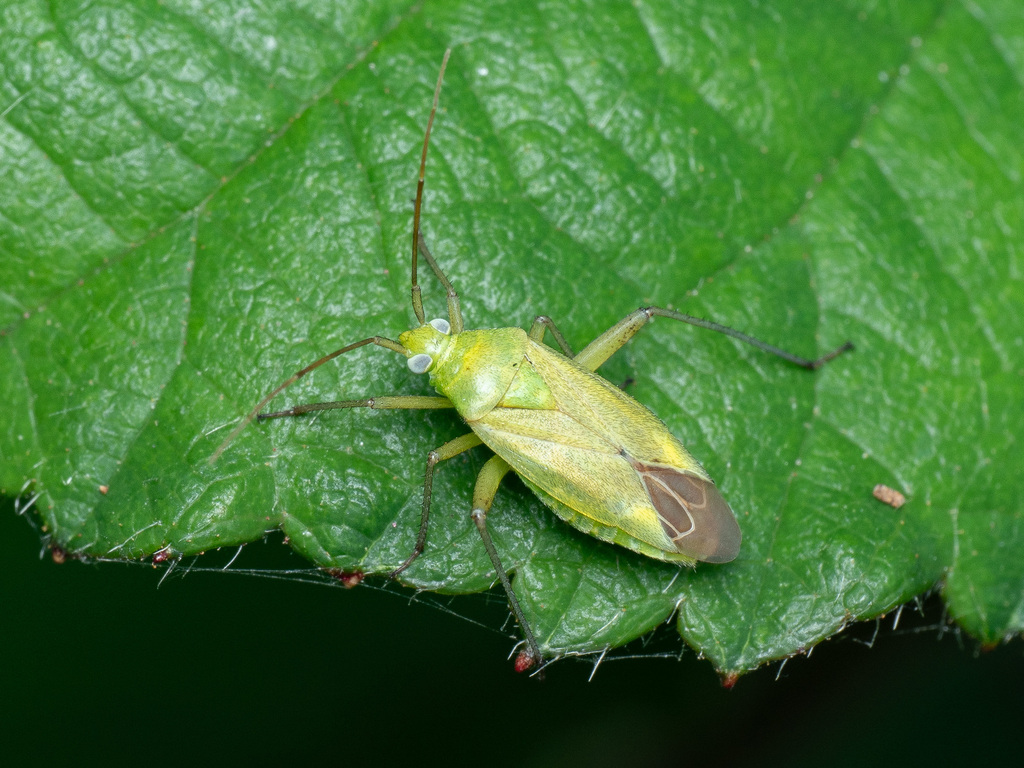
Potato Mirid
Closterotomus norwegicus
Closterotomus norvegicus (also known as the potato capsid) is a species of bugs belonging to the family Miridae, subfamily Mirinae. It can be found feeding on nettle, clover, and cannabis, as well as Compositae, potatoes, carrots and chrysanthemums. They prefer to feed on the flowers, buds and unripe fruit. The species occurs in the Palearctic-British Isles and east across continental Europe to Siberia. It also occurs in the Nearctic as an adventive species. In 1997 it was moved from the genus Calocoris to its current name.
From the article Closterotomus norvegicus on Wikipedia (CC BY-SA), quoted section by section
Description
The species is green coloured as a nymph, but when they get to adulthood the colour changes to reddish brown. It does however, vary by territory; for example, specimens from northern Britain are brownish black. The prothorax has two spots, while its scutellum has dark marks.
== References ==
Listen
Looking for field recordings…
Where it lives
Recorded sightings
—
geo-referenced records in GBIF, from museums, herbaria and field observers.
Drag the globe to turn it. Dots are where records exist, not a range map; darker means more records.
In the stacks
Searching the stacks…
Every page naming Closterotomus norwegicus in the Biodiversity Heritage Library →
This page is assembled live from iNaturalist, GBIF, Wikipedia, the Source Library and the Internet Archive. It is not yet part of the hand-edited codex. iNaturalist taxon 481260.