- Animals
- ›Arthropods
- ›Hexapods
- ›Insects
- ›Winged and Once-winged Insects
- ›True Bugs, Hoppers, Aphids, and allies
- ›True Bugs
- ›Cimicomorph Bugs
- ›Miroidea
- ›Plant Bugs
- ›Phylinae
- ›Cremnorrhini
- ›Cremnorrhina
- ›Harpocera
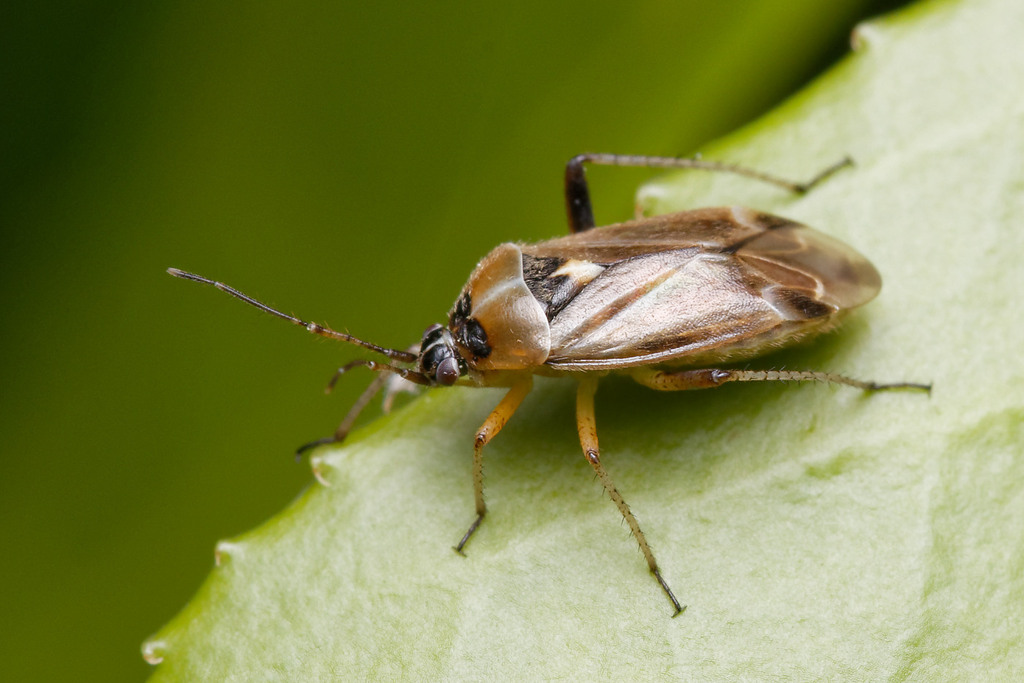
handsome plant bug
Harpocera thoracica
Harpocera thoracica is a species of bugs from Miridae family.
From the article Harpocera thoracica on Wikipedia (CC BY-SA), quoted section by section
Description
Harpocera thoracica can reach a length of about 6–6.4 millimetres (0.24–0.25 in) in males, of 6.4–6.8 millimetres (0.25–0.27 in) in females. An evident dimorphism exists between the males and the females of this species. Males show a more elongated body, longer tibiae and a characteristic inflated 2nd antennal segment. The basic body color of these bugs ranges from black, dark brown or orange to pale brown. The tips of hemelytra are black, surrounded by white markings. Legs are yellowish-brown and antennae are brown. The nymphs have dark hairs and thickened basal antennal segments. They are reddish or pinkish-white-coloured.
Range & habitat
This rather common species could be found anywhere in Europe except for the Baltic states, Canary Islands, Finland, Iceland, Malta, and Russia.
Wikipedia: “Distribution”
What it does
Adults can be found from late April or May to the middle of June at the latest and live for only one month, with females living a bit longer. These zoo phytophagous bugs suck on buds, feed on pollen and on juices of oaks (Quercus robur), feed on nectar of Anthriscus sylvestris and occasionally hunt small insects, especially aphids. After the eggs have been deposited, they remain for 10 months. After the species spend their time in the egg, larvae appear. The larva development takes no more than two weeks. As that time passes, nymphs appear. Males are victims of ultra-violet lights, and may be found in moth traps.
Wikipedia: “Ecology”
Listen
Looking for field recordings…
Where it lives
Recorded sightings
—
geo-referenced records in GBIF, from museums, herbaria and field observers.
Drag the globe to turn it. Dots are where records exist, not a range map; darker means more records.
In the stacks
Searching the stacks…
Every page naming Harpocera thoracica in the Biodiversity Heritage Library →
This page is assembled live from iNaturalist, GBIF, Wikipedia, the Source Library and the Internet Archive. It is not yet part of the hand-edited codex. iNaturalist taxon 464103.