 NL·0488
Herbarium of the Nature Library
- Name
- Pan paniscus
- Family
- Hominidae
- Native to
- Lowland rainforests of the Congo Basin south of the Congo River, DR Congo only
- Habitat
- Lowland rainforest, Swamp forest
Bonobo
Pan paniscus
Also calledPygmy chimpanzee · Bonobo (Spanish/Portuguese)
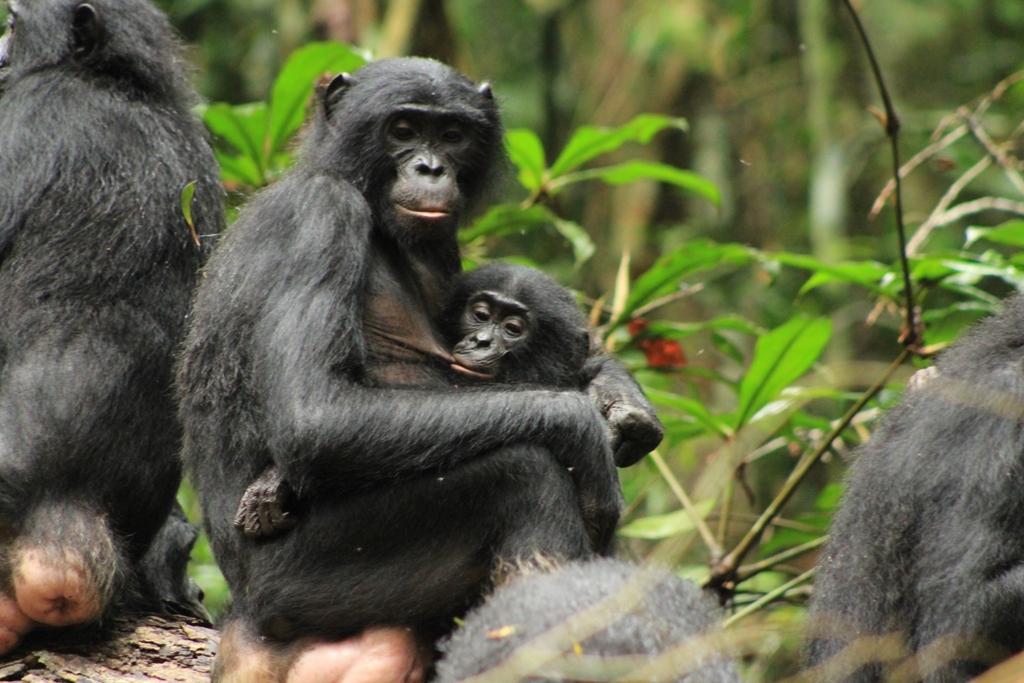
One of humans' two closest living relatives, found only south of the Congo River in DR Congo. Unlike chimpanzees, bonobo societies are led by alliances of females, and they defuse tension with sexual and social contact rather than violence. They will even share food with strangers.
The bonobo, also historically called the pygmy chimpanzee, is the smallest species of great ape and one of the two making up the genus Pan. While bonobos are today recognized as a distinct species, they were initially thought to be a subspecies of Pan troglodytes, because of the physical similarities between the two species. Taxonomically, members of the chimpanzee/bonobo subtribe Panina—composed entirely by the genus Pan—are collectively termed panins. Wikipedia
What it can do
- iShares DNA with humans at roughly the same level (about 98.7%) as chimpanzees
- iiShows empathy, consolation and sharing with unfamiliar individuals in experiments
- iiiCaptive bonobo Kanzi learned to communicate with hundreds of lexigram symbols
In the field
Field marks
- aSlender ape with long legs and a relatively small, round head
- bBlack face from birth and pink lips
- cLong black hair parted neatly in the middle on the crown
- dSigns: night nests high in trees; high-pitched calls distinguish them from chimpanzee pant-hoots
- Voice
- Higher-pitched hoots and whistles than chimpanzees, including a sharp, bird-like 'hi-hi' call.
- Not to be confused with
- Chimpanzee (north of the Congo River) is more robust, with a paler face in youth, larger ears and no central hair parting. Ranges do not overlap.
- Where to see it
- Lola ya Bonobo Sanctuary (near Kinshasa); Wamba and the Luo Scientific Reserve; LuiKotale and Salonga National Park; Lomako-Yokokala Faunal Reserve (all DR Congo)
- When
- Resident year-round
Listen
Looking for field recordings…
Life & habits
- Diet
- Fruit, leaves, pith, seeds, insects and occasionally small mammals
- Habitat
- Humid lowland forest and mosaic forest–savanna south of the Congo River
- Size
- 70–83 cm sitting; males about 39 kg, females about 31 kg
- Lifespan
- About 40 years
Lives in fission–fusion communities of 30–80. Females form strong bonds and collectively dominate males.
Where it lives
Recorded sightings
—
geo-referenced records in GBIF, from museums, herbaria and field observers.
Native range
Lowland rainforests of the Congo Basin south of the Congo River, DR Congo only
Drag the globe to turn it. Dots are where records exist, not a range map; darker means more records.
In the stacks
Searching the stacks…
Every page naming Pan paniscus in the Biodiversity Heritage Library →
Marginalia
The bonobo was recognised as a distinct species only in 1929, from a skull in a Belgian museum. In the Wamba region, a Mongandu taboo against eating bonobos, who are seen as ancestral kin, helped protect them.
Curiosity
Bonobos were not recognised as a species until 1929, more than 150 years after chimpanzees, because they look so similar.
Kinship
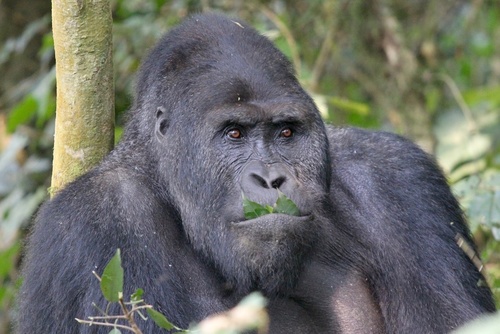
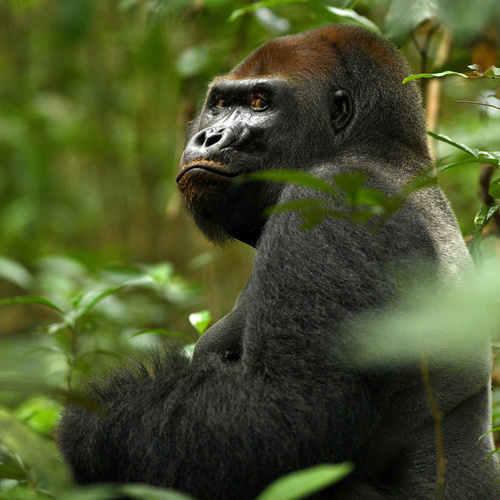

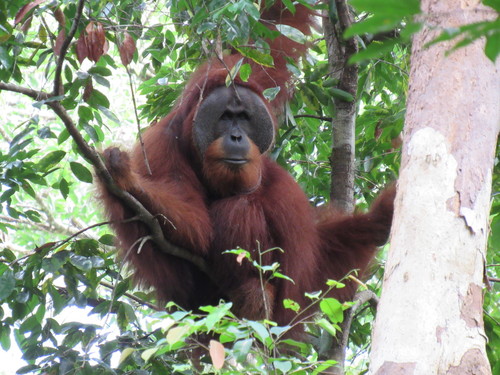


Photographs: iNaturalist contributors under the licences shown. Records: GBIF.org. Historical plates: Source Library (CC BY-SA 4.0; originals public domain). Summary text: Nature Library editors and Wikipedia (CC BY-SA). Medicinal and edibility notes are historical and educational, not advice. iNaturalist taxon 43578.