- Animals
- ›Chordates
- ›Vertebrates
- ›Mammals
- ›Therians
- ›Placental Mammals
- ›Primates, Rodents, and Allies
- ›Primates
- ›Monkeys, Apes, and Tarsiers
- ›Monkeys and Apes
- ›Apes and Old World Monkeys
- ›Apes

Great Apes
Hominidae
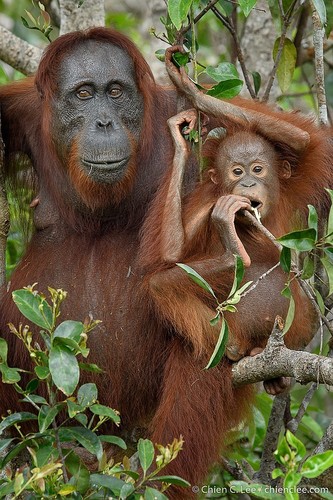
The Hominidae (/hɒˈmɪnɪdiː/), whose members are known as great apes or hominids, are a taxonomic family of primates that includes eight extant species in four genera: Pongo, the Bornean, Sumatran and Tapanuli orangutan; Gorilla, the eastern and western gorilla; Pan, the chimpanzee and the bonobo; and Homo, of whom only modern humans remain, with several extinct relatives (e.g., the Neanderthal) and ancestors, such as Homo erectus.
2 branches of this family, most-observed first · about 8 known species
See this branch on the Wheel of Life →
Where it lives
Recorded sightings
—
geo-referenced records in GBIF, from museums, herbaria and field observers.
Drag the globe to turn it. Dots are where records exist, not a range map; darker means more records.
In the stacks
Searching the stacks…
Every page naming Hominidae in the Biodiversity Heritage Library →
This page is assembled live from iNaturalist, GBIF, Wikipedia, the Source Library and the Internet Archive. It is not yet part of the hand-edited codex. iNaturalist taxon 43575.