 NL·0490
Herbarium of the Nature Library
- Name
- Pongo abelii
- Family
- Hominidae
- Native to
- Northern Sumatra, Indonesia (mainly Aceh and North Sumatra, including the Leuser Ecosystem)
- Habitat
- Tropical rainforest, Peat swamp forest
Sumatran orangutan
Pongo abelii
Also calledOrang hutan, 'person of the forest' (Malay/Indonesian) · Mawas (Acehnese/Malay) · Xīngxing 猩猩 (Chinese) · Orang-outan (French)
A red-haired great ape of northern Sumatra's rainforests, the most tree-bound of all great apes. Mothers raise each infant for about eight to nine years, and young orangutans learn which plants to eat and which tools to make by watching them.
The Sumatran orangutan is one of the three species of orangutans. Critically endangered, and found only in the north of the Indonesian island of Sumatra, it is rarer than the Bornean orangutan but more common than the recently identified Tapanuli orangutan, also found in Sumatra. Wikipedia
What it can do
- iUses sticks to pry nutritious seeds from spiny Neesia fruits without touching the irritating hairs
- iiBuilds a fresh sleeping nest of folded branches high in the canopy every night
- iiiA wild male, Rakus, was observed in 2022 chewing a medicinal liana and applying it to a facial wound, which then healed
- ivDisperses the seeds of many rainforest trees
In the field
Field marks
- aLarge ape with long, pale reddish-orange hair
- bVery long arms
- cAdult males develop broad cheek pads and a beard
- dBuilds nests in trees
- Voice
- Flanged males give a loud, booming 'long call'
- Not to be confused with
- Bornean orangutans are darker red with shorter hair; Tapanuli orangutans live in a small area of North Sumatra and have frizzier hair.
- Where to see it
- Bukit Lawang and Ketambe in Gunung Leuser National Park, Sumatra, with licensed guides
- When
- Resident
Listen
Looking for field recordings…
Life & habits
- Diet
- Mainly fruit (especially figs), plus leaves, bark, insects; occasionally slow lorises
- Habitat
- Lowland and hill rainforest and peat swamp forest
- Size
- Males 70–90 kg, ~1.4 m tall standing, arm span over 2 m; females ~35–45 kg
- Lifespan
- ~50 years or more
Adult males develop broad cheek pads and give 'long calls' that carry about a kilometre through the forest. Births come about every 8–9 years, the longest interval of any mammal.
Where it lives
Recorded sightings
—
geo-referenced records in GBIF, from museums, herbaria and field observers.
Native range
Northern Sumatra, Indonesia (mainly Aceh and North Sumatra, including the Leuser Ecosystem)
Drag the globe to turn it. Dots are where records exist, not a range map; darker means more records.
In the old herbals & bestiaries
Woodcuts and engravings matched from the Source Library’s scanned books by name. Plates marked “relative” show a close kin rather than this exact species. Click a plate to read the page it came from, with translation.

In the stacks
Searching the stacks…
Every page naming Pongo abelii in the Biodiversity Heritage Library →
Marginalia
The Dutch physician Jacobus Bontius described an 'Orang Outang' from the East Indies in 1658, and Linnaeus drew on such reports for his 'Homo troglodytes'. Sumatran orangutans were recognised as a species separate from Bornean ones in the late 20th century.
Curiosity
Rakus's wound treatment was the first systematically documented case of a wild animal treating its own wound with a plant known to contain medically active substances.
Kinship
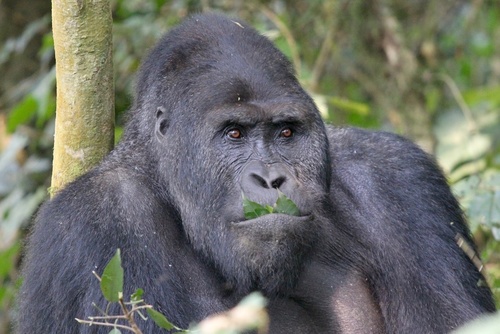
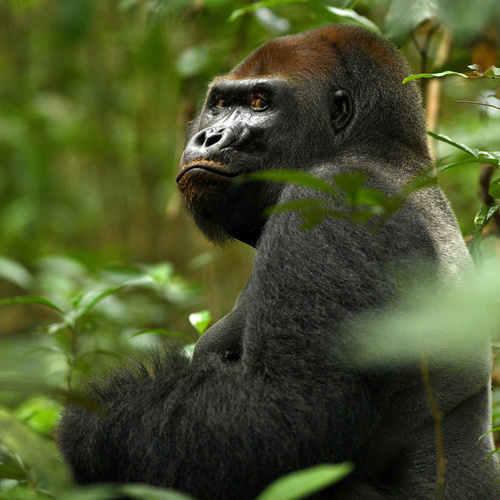
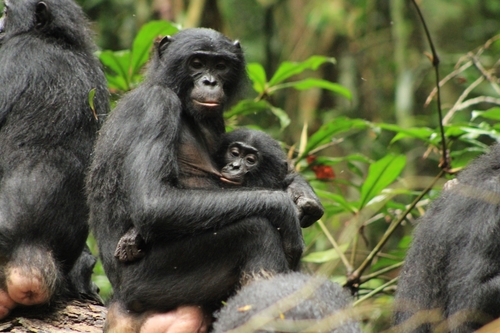


Fact-checked: 3 corrections made to this sheet. Photographs: iNaturalist contributors under the licences shown. Records: GBIF.org. Historical plates: Source Library (CC BY-SA 4.0; originals public domain). Summary text: Nature Library editors and Wikipedia (CC BY-SA). Medicinal and edibility notes are historical and educational, not advice. iNaturalist taxon 569678.