- Animals
- ›Chordates
- ›Vertebrates
- ›Mammals
- ›Therians
- ›Placental Mammals
- ›Primates, Rodents, and Allies
- ›Primates
- ›Monkeys, Apes, and Tarsiers
- ›Monkeys and Apes
- ›Apes and Old World Monkeys
- ›Apes
- ›Great Apes
- ›Orangutans

Orangutans
Pongo
Orangutans are great apes native to the rainforests of Indonesia and Malaysia. They are now found only in parts of Borneo and Sumatra, but during the Pleistocene they ranged throughout Southeast Asia and South China. Classified in the genus Pongo, orangutans were originally considered to be one species. In 1996, they were divided into two species: the Bornean orangutan (P. pygmaeus, with three subspecies) and the Sumatran orangutan (P. abelii); a third species, the Tapanuli orangutan (P. tapanuliensis), was identified definitively in 2017. The orangutans are the only surviving members of the subfamily Ponginae, which diverged genetically from the other hominids (gorillas, chimpanzees, and humans) between 19.3 and 15.7 million years ago.
The most arboreal of the great apes, orangutans spend most of their time in trees. They have proportionally long arms and short legs, and have reddish-brown hair covering their bodies. Dominant adult males develop distinctive cheek pads or flanges and make long calls that attract females and intimidate rivals; younger subordinate males do not and more resemble adult females. Orangutans are the most solitary of the great apes: social bonds occur primarily between mothers and their dependent offspring. Fruit is the most important component of an orangutan's diet, but they will also eat vegetation, bark, honey, insects and bird eggs. They can live over 30 years, both in the wild and in captivity.
3 branches of this genus, most-observed first · about 3 known species
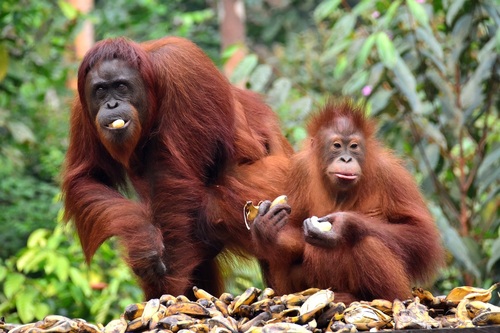
Bornean Orangutan
speciesPongo pygmaeus
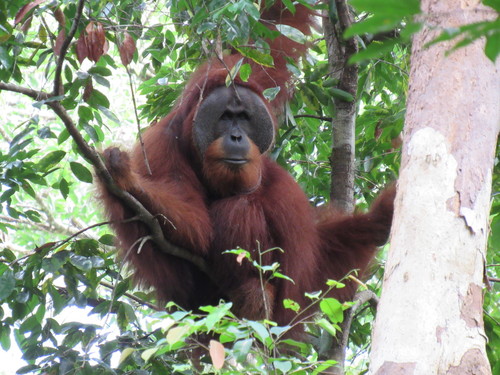
Sumatran Orangutan
speciesPongo abelii
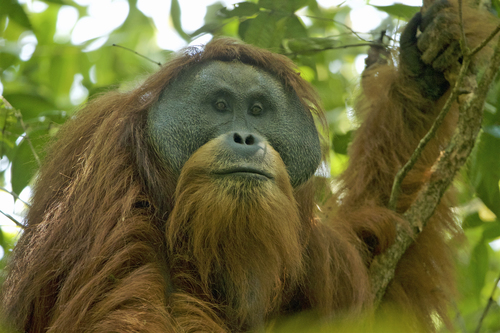
Tapanuli Orangutan
speciesPongo tapanuliensis
Where it lives
Recorded sightings
—
geo-referenced records in GBIF, from museums, herbaria and field observers.
Drag the globe to turn it. Dots are where records exist, not a range map; darker means more records.
In the old herbals & bestiaries

In the stacks
Searching the stacks…
Every page naming Pongo in the Biodiversity Heritage Library →
This page is assembled live from iNaturalist, GBIF, Wikipedia, the Source Library and the Internet Archive. It is not yet part of the hand-edited codex. iNaturalist taxon 43581.