 NL·0489
Herbarium of the Nature Library
- Name
- Pan troglodytes
- Family
- Hominidae
- Native to
- Equatorial Africa from Senegal and Guinea to Uganda and western Tanzania
- Habitat
- Tropical rainforest, Woodland savanna, Montane forest
Chimpanzee
Pan troglodytes
Also calledSokwe (Swahili) · Kivili-chimpenze (Tshiluba) · Hēixīngxing 黑猩猩 (Chinese) · Chimpanzé (French/Portuguese)
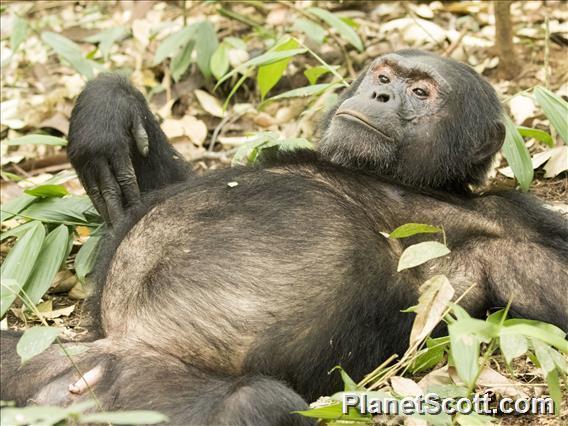
Along with the bonobo, the chimpanzee is humanity's closest living relative, sharing about 98–99% of our DNA. Different chimp communities have their own traditions of tool use, grooming and hunting, passed on by learning.
The chimpanzee, commonly abbreviated to chimp, is a medium-sized great ape species found in the forests and savannas of equatorial Africa. It has four confirmed subspecies and a fifth proposed one. The chimpanzee shares the genus Pan with the bonobo. Evidence from fossils and DNA sequencing shows that the two species are humans' closest living relatives. The chimpanzee is bigger and more robust than the bonobo. It is covered in coarse black hair but has a bare face, fingers, toes, palms of the hands, and soles of the feet. Wikipedia
What it can do
- iStrips twigs into probes to fish termites from mounds
- iiCracks hard nuts with stone or wooden hammers on anvils, a practice dated to at least 4,300 years ago in Côte d'Ivoire
- iiiAt Fongoli, Senegal, sharpens sticks into spears to stab bushbabies in tree hollows
- ivHunts colobus monkeys cooperatively and shares the meat
- vSwallows rough leaves whole and chews bitter pith, behaviours linked to fighting parasites
In the field
Field marks
- aApe with black hair and bare face, hands and feet
- bProminent ears
- cWalks on knuckles
- dLives in communities
- Voice
- Loud 'pant-hoots' that rise to a scream; drums on tree buttresses
- Not to be confused with
- Bonobo is slimmer with a smaller head, pink lips and hair parted in the middle; it lives only south of the Congo River.
- Where to see it
- Gombe and Mahale (Tanzania), Kibale (Uganda), with permit-led tracking groups
- When
- Resident
Listen
Looking for field recordings…
Life & habits
- Diet
- Omnivore: mainly ripe fruit, plus leaves, seeds, insects, honey and meat
- Habitat
- Rainforest, swamp forest and savanna woodland
- Size
- Males 40–70 kg, females 27–50 kg; ~1–1.7 m standing
- Lifespan
- 40–50 years in the wild; 60+ in captivity
Communities split into shifting subgroups by day and patrol their borders. Males form alliances, and violent conflicts between communities have been recorded.
Where it lives
Recorded sightings
—
geo-referenced records in GBIF, from museums, herbaria and field observers.
Native range
Equatorial Africa from Senegal and Guinea to Uganda and western Tanzania
Drag the globe to turn it. Dots are where records exist, not a range map; darker means more records.
In the old herbals & bestiaries
Woodcuts and engravings matched from the Source Library’s scanned books by name. Plates marked “relative” show a close kin rather than this exact species. Click a plate to read the page it came from, with translation.


In the stacks
Searching the stacks…
Every page naming Pan troglodytes in the Biodiversity Heritage Library →
Marginalia
Edward Tyson's 1699 anatomy of a 'Pygmie', titled Orang-Outang, sive Homo Sylvestris, was in fact a young chimpanzee and was the first scientific dissection of an ape. In 1960 Jane Goodall saw the Gombe chimpanzee David Greybeard fish for termites, overturning the idea that only humans make tools.
Curiosity
Chimpanzees outperform human students on some quick short-term memory tests for numbers flashed on a screen.
Kinship
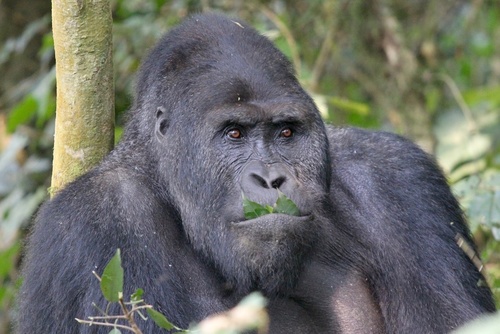
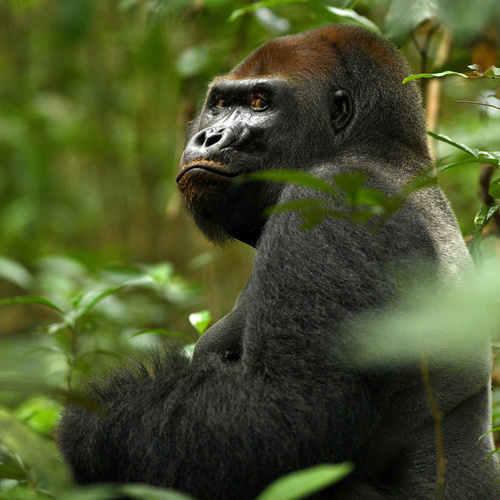
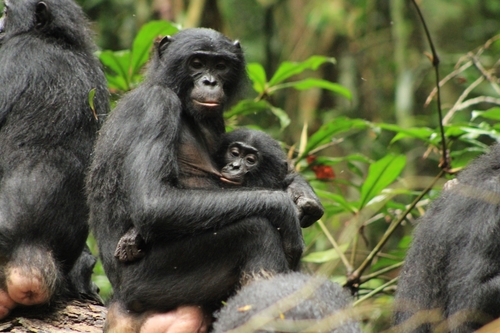


Photographs: iNaturalist contributors under the licences shown. Records: GBIF.org. Historical plates: Source Library (CC BY-SA 4.0; originals public domain). Summary text: Nature Library editors and Wikipedia (CC BY-SA). Medicinal and edibility notes are historical and educational, not advice. iNaturalist taxon 43577.