- Animals
- ›Arthropods
- ›Hexapods
- ›Insects
- ›Winged and Once-winged Insects
- ›True Bugs, Hoppers, Aphids, and allies
- ›True Hoppers
- ›Planthoppers
- ›Fulgoroidea
- ›Flatid Planthoppers
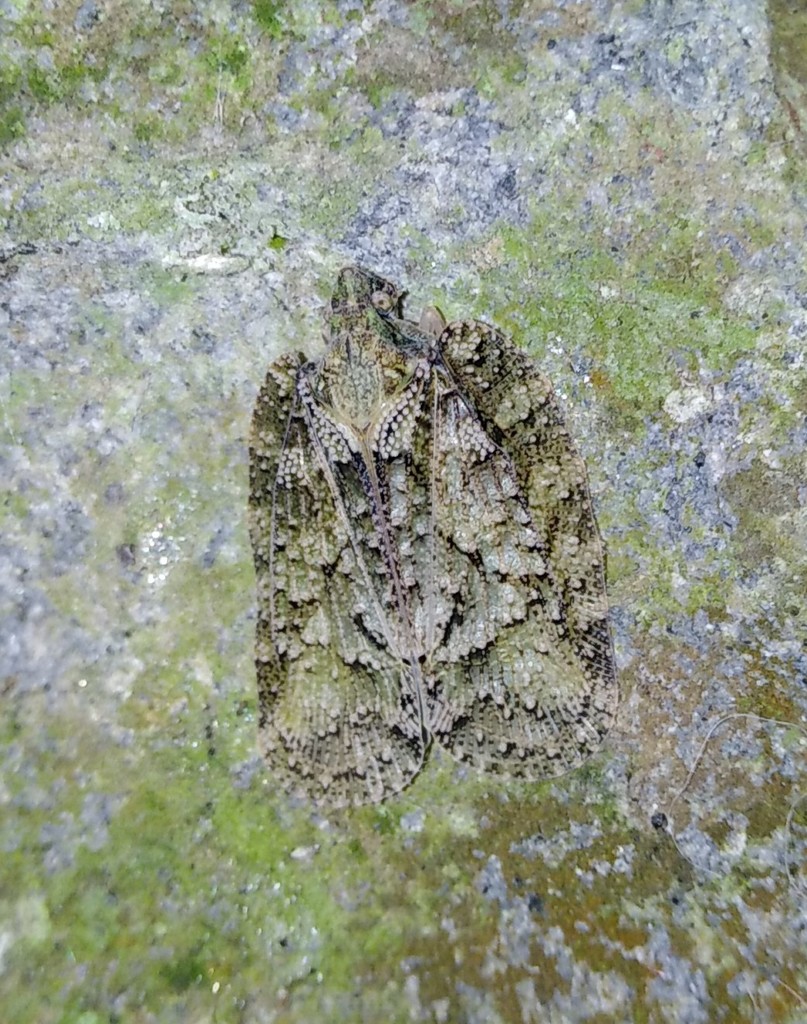
Flatoidinae
Flatidae are a family of fulgoroid planthoppers. They are cosmopolitan in distribution and are distinguished from others in the superfamily by a combination of characters. Like all other planthoppers, they suck phloem sap of plants. Some species are known to communicate with vibrations through the plant stems. Communication may be with mates, or with ants that tend the nymphs, protecting them and gathering honeydew secretions. Adults of some species have brightly coloured forewings which are tougher and known as tegmina unlike the membranous hindwings which are used for flight. Although a few can be identified by their coloration, most species requires dissection and examination under a microscope with access to literature on already described species.
There are two subfamilies within the family. In the subfamily Flatinae, the body of adults is flattened laterally and the tegmina are tent-like. In the Flatoidinae, the body is not laterally compressed and the tegmina are not as tent-like and sometimes held horizontally. The wing venation is distinctive in that the veins in the anal region are nodose, and the costal area has numerous cross veins. The antennae are small and the first segment is collar-like and small. The second segment is longer and ends in a bulge and a flagellum arises from it. They have two ocelli. Nymphs have a tail of waxy filaments.
1 branches of this subfamily, most-observed first
See this branch on the Wheel of Life →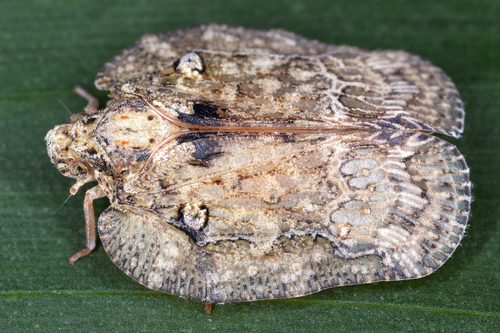
Where it lives
Recorded sightings
—
geo-referenced records in GBIF, from museums, herbaria and field observers.
Drag the globe to turn it. Dots are where records exist, not a range map; darker means more records.
In the stacks
Searching the stacks…
Every page naming Flatoidinae in the Biodiversity Heritage Library →
This page is assembled live from iNaturalist, GBIF, Wikipedia, the Source Library and the Internet Archive. It is not yet part of the hand-edited codex. iNaturalist taxon 428641.