 NL·0310
Herbarium of the Nature Library
- Name
- Canis lupus
- Family
- Canidae
- Native to
- North America, Europe, Asia and North Africa's edge; extirpated from much of its former range and returning in parts of Europe and the US
- Habitat
- Boreal forest, Tundra, Temperate forest, Steppe, Desert, Mountains
Grey wolf
Canis lupus
Also calledBheṛiyā (Hindi) · Gorg (Persian) · Dhiʾb (Arabic) · Láng 狼 (Chinese) · Ōkami (Japanese) · Börü (Turkic) · Maʼiitsoh (Navajo)
The largest wild member of the dog family and the ancestor of every domestic dog. Wolves live in family packs that cooperate to hunt animals far larger than themselves across the Northern Hemisphere.
The wolf, also known as the grey wolf or gray wolf, is a canine native to Eurasia and North America. More than thirty subspecies of Canis lupus have been recognized, including the dog and dingo, though grey wolves, as popularly understood, include only naturally occurring wild subspecies. The wolf is the largest wild extant member of the family Canidae, and is further distinguished from other Canis species by its less pointed ears and muzzle, as well as a shorter torso and a longer tail. The wolf is nonetheless related closely enough to smaller Canis species, such as the coyote and the golden jackal, to produce fertile hybrids with them. The wolf's fur is usually mottled white, brown, grey, and black, although subspecies in the arctic region may be nearly all white. Wikipedia
What it can do
- iHunts cooperatively in packs to bring down elk, moose and bison
- iiHowls that carry for kilometres and help scattered pack members regroup
- iiiCan travel tens of kilometres in a day at a steady trot
- ivAs an apex predator, shifts the behaviour and numbers of prey, with knock-on effects on vegetation
In the field
Field marks
- aLarge, long-legged dog-like animal
- bUsually grizzled grey, but can be white, black or tawny
- cBroad head and short, rounded ears
- dTail carried low; long straight-line trotting gait
- Voice
- A long, low howl, often joined by the pack in chorus
- Not to be confused with
- Coyote is much smaller with a narrow, pointed muzzle and larger, pointed ears. Large domestic dogs can look similar; wolves have longer legs and narrow chests. Never approach on foot; watch from a vehicle, boat or hide, or with a licensed guide.
- Where to see it
- Lamar Valley, Yellowstone; Algonquin Provincial Park (public howls in late summer)
- When
- Resident; Yellowstone sightings best in winter and spring
Listen
Looking for field recordings…
Life & habits
- Diet
- Carnivore: deer, elk, moose, caribou, bison, smaller mammals; scavenges carrion
- Habitat
- Almost any habitat with enough prey, from Arctic tundra to desert
- Size
- 25–80 kg; head-body 1–1.6 m
- Lifespan
- 6–8 years typical in the wild; up to ~13; longer in captivity
A typical pack is a breeding pair and their offspring from the past few years. Young wolves leave to find mates and found new packs, sometimes travelling hundreds of kilometres.
Where it lives
Recorded sightings
—
geo-referenced records in GBIF, from museums, herbaria and field observers.
Native range
North America, Europe, Asia and North Africa's edge; extirpated from much of its former range and returning in parts of Europe and the US
Drag the globe to turn it. Dots are where records exist, not a range map; darker means more records.
In the old herbals & bestiaries
Woodcuts and engravings matched from the Source Library’s scanned books by name. Plates marked “relative” show a close kin rather than this exact species. Click a plate to read the page it came from, with translation.

Ortus sanitatis
1491 · p.705

History of Animals, Book II: On Oviparous Quadrupeds
Conrad Gessner · 1586 · p.441

The Secrets of Albertus Magnus on the Nature of Women and the Virtues of Herbs
Albertus, Magnus, Heiliger · 1604 · p.75

Treasury of Medical Matters of New Spain
Francisco Hernández · 1651 · p.528

De Piscibus Libri V et De Cetis Liber Unus
Ulisse Aldrovandi · 1661 · p.539

Noah's Ark
Athanasius Kircher · 1675 · p.109

Louis Renard — Poissons, ecrevisses et crabes (1754)
Louis Renard · 1754 · p.129
In the stacks
Searching the stacks…
Every page naming Canis lupus in the Biodiversity Heritage Library →
Marginalia
Rome's founding legend tells of a she-wolf suckling Romulus and Remus, cast in the bronze Capitoline Wolf. Turkic tradition traces the Ashina dynasty to the she-wolf Asena, and Norse myth gives the end of the world to the wolf Fenrir.
Curiosity
The 1995–96 reintroduction of wolves to Yellowstone changed how elk used the park, a famous case study of how one predator can reshape an ecosystem.
Kinship
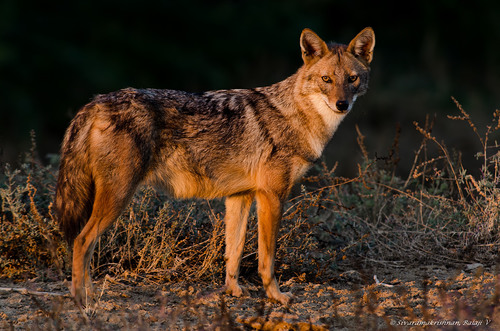
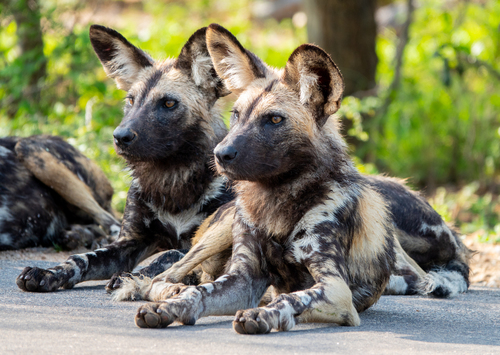
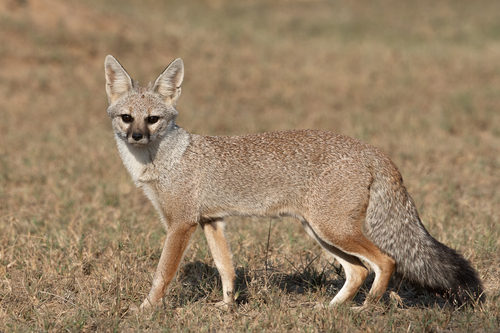
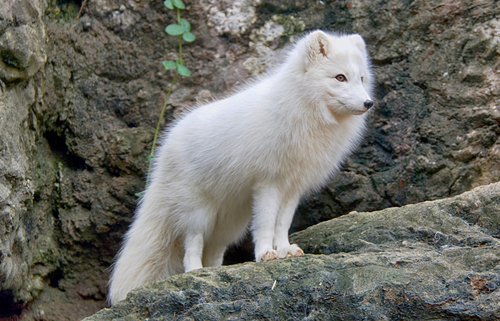

Photographs: iNaturalist contributors under the licences shown. Records: GBIF.org. Historical plates: Source Library (CC BY-SA 4.0; originals public domain). Summary text: Nature Library editors and Wikipedia (CC BY-SA). Medicinal and edibility notes are historical and educational, not advice. iNaturalist taxon 42048.