- Animals
- ›Arthropods
- ›Hexapods
- ›Insects
- ›Winged and Once-winged Insects
- ›True Bugs, Hoppers, Aphids, and allies
- ›Plant-parasitic Hemipterans
- ›Whiteflies
- ›Whiteflies
- ›Aleyrodinae
- ›Aleuroplatus
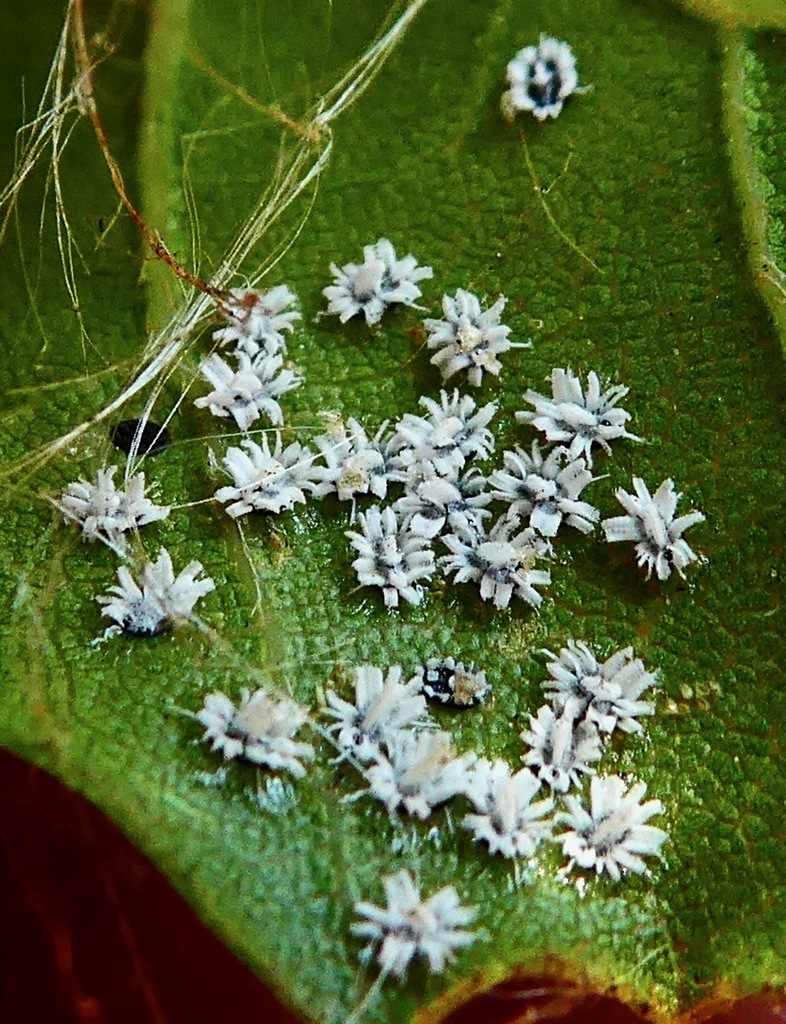
Crown Whitefly
Aleuroplatus coronata
Aleuroplatus coronata, the crown whitefly, is a species of whitefly in the family Aleyrodidae. It is native to the southern United States and Mexico, and it is now established in California, where it is associated with oak and chestnut trees.
From the article Aleuroplatus coronata on Wikipedia (CC BY-SA), quoted section by section
What it does
Adult crown whiteflies are small flying insects with pale yellow bodies, about 1 mm long. They have four white wings, which appear covered in a dusty wax, and somewhat resemble the wings of a small moth. The adult lays cigar-shaped eggs, which hatch into nymphs, with small, elliptical, semitransparent bodies and antennae, legs, and hairs extending laterally from their margins. The nymphs lose their legs in their second instar, attach themselves to the underside of leaves, and remain immobile into the pupal stage. The pupae are enclosed in puparium, or the exoskeleton of the final larval instar. The puparium is surrounded by a characteristic crown of waxy filaments or plates, inspiring the common name, crown whitefly.
Wikipedia: “Life cycle”
In human culture
Aleuroplatus coronata consumes sap from its hosts, and favors coast live oak in particular. Although heavy infestations may cause leaves to fall, the whitefly does not otherwise significantly harm its host trees. Crown whiteflies have natural predators in California, such as the Delphastus lady beetle. The nymphs and pupae can also be parasitized by parasitoid wasps from the family Aphelinidae, such as Eretmocerus haldemani, Encarsia aurantii, and Encarsia citrella, and Encarsia pergandiella. The presence of these parasitoids can be recognized by a change in color. Some parasitoids blacken the pupa, while E. pergandiella changes the pupa from white to bright yellow, then brown.
== References ==
Wikipedia: “Natural history”
Listen
Looking for field recordings…
Where it lives
Recorded sightings
—
geo-referenced records in GBIF, from museums, herbaria and field observers.
Drag the globe to turn it. Dots are where records exist, not a range map; darker means more records.
In the stacks
Searching the stacks…
Every page naming Aleuroplatus coronata in the Biodiversity Heritage Library →
This page is assembled live from iNaturalist, GBIF, Wikipedia, the Source Library and the Internet Archive. It is not yet part of the hand-edited codex. iNaturalist taxon 417217.