- Animals
- ›Arthropods
- ›Hexapods
- ›Insects
- ›Winged and Once-winged Insects
- ›Flies
- ›Brachyceran Flies
- ›Cyclorrhaphan Flies
- ›Schizophoran Flies
- ›Calyptrate Flies
- ›Bot Flies, Blow Flies, and Allies
- ›Flesh Flies and Satellite Flies
- ›Typical Flesh Flies
- ›Raviniini
- ›Oxysarcodexia
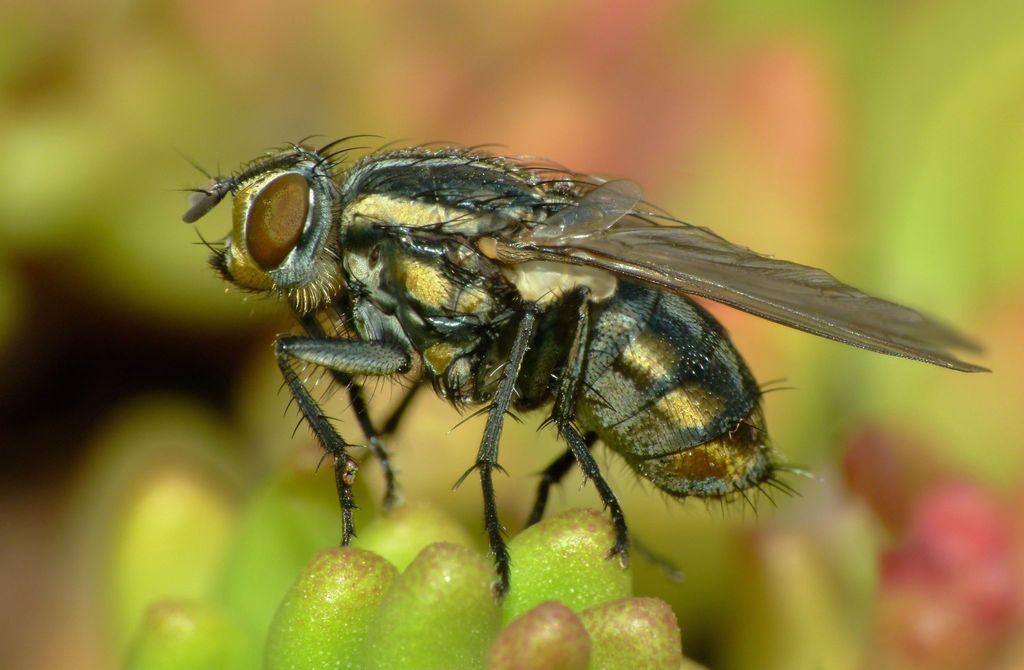
Striped Dung Fly
Oxysarcodexia varia
Oxysarcodexia varia, commonly known by the name striped dung fly, is a species of insect in the family Sarcophagidae. It is found in parts of South America, Polynesia, Norfolk Island, and New Zealand.
From the article Striped dung fly on Wikipedia (CC BY-SA), quoted section by section
Description
The thorax of the fly is stripped from the head to tail with black and yellow stripes, the fly's legs are bristly and almost look fluffy. They look very much like the European flesh fly and share similar traits.
Range & habitat
The Striped dung fly is considered to have originated South America and is now present across Oceania. It is found in Argentina, Brazil, Chile, Uruguay, Fiji, French Polynesia, Norfolk Island and New Zealand.
New Zealand range. The striped dung fly has been found throughout New Zealand and with a higher abundance of observations on the North Island. These sightings include Sutton Lake, Hurford, Otago, Kaikoura, Kerikeri, Tasman, Taranaki, Manawatū, Rotarua Island, Ruahine Ranges, Omaha Beach and Purakaunui.
Habitat preferences. The striped dung fly is found around the summer months and is commonly found in rubbish, long grasses and flowers. Their main habitat is open pastures and farms. This is due to the animal dung and compost they breed in. The striped dung fly prefers a habitat without large variations in temperature throughout the day.
Wikipedia: “Distribution and habitat”
What it does
Dung fly females lay their eggs in the dung and within a few days the eggs hatch into larvae the eat the dung that they are. After about 21 days of feeding on the dung they burrow into the soil beneath the dung and become pupae. Then they become adult flies. There can be many generations of flies within a year. This life cycle above is common among the dung fly family.
Wikipedia: “Life cycle”
Listen
Looking for field recordings…
Where it lives
Recorded sightings
—
geo-referenced records in GBIF, from museums, herbaria and field observers.
Drag the globe to turn it. Dots are where records exist, not a range map; darker means more records.
In the stacks
Searching the stacks…
Every page naming Oxysarcodexia varia in the Biodiversity Heritage Library →
This page is assembled live from iNaturalist, GBIF, Wikipedia, the Source Library and the Internet Archive. It is not yet part of the hand-edited codex. iNaturalist taxon 409309.