 NL·0703
Herbarium of the Nature Library
- Name
- Pygoscelis adeliae
- Family
- Spheniscidae
- Native to
- Coasts of Antarctica
- Habitat
- Antarctic coast, Pack ice, Marine
On eBird ↗
Adelie Penguin
Live sightings near you, the range map, bar charts of when it is seen, and Macaulay Library photos and recordings.
Adélie penguin
Pygoscelis adeliae
Also calledManchot Adélie (French) · Pingüino de Adelia (Spanish)
The classic tuxedoed penguin of the Antarctic coast, breeding in vast colonies on ice-free ground. Each winter it follows the pack ice on migrations of thousands of kilometres.
The Adélie penguin is a species of penguin common along the entire coast of the Antarctic continent. It is the most widespread penguin species in the Antarctic, and, along with the emperor penguin, is the most southerly distributed of all penguins. It is named after Adélie Land, in turn, named for Adèle Dumont d'Urville, who was married to French explorer Jules Dumont d'Urville, who first discovered this penguin in 1840. Adélie penguins obtain their food by both predation and foraging, with a diet of mainly krill and fish. Wikipedia
What it can do
- iUndertakes winter migrations averaging about 13,000 km in the Ross Sea, following the sun and sea ice
- iiBuilds nests of pebbles that lift eggs above meltwater; stones are frequently stolen from neighbours
- iiiDives to around 175 m, though most feeding dives are much shallower
- ivCan toboggan on its belly across snow and ice
In the field
Field marks
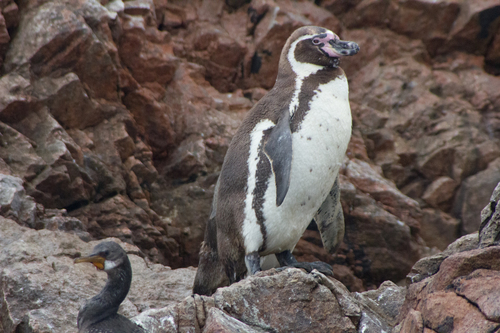
- aEntirely black head and throat
- bBold white ring around the dark eye
- cShort bill largely covered by black feathers
- dBlack back, white belly; short tail that often drags on the snow
- ePink feet
- Voice
- A loud, rhythmic, throbbing bray given with the head pointed skyward in the 'ecstatic display'; growls and gargles when squabbling.
- Not to be confused with
- Chinstrap penguin has a white face and throat crossed by a thin black chin strap. Gentoo penguin has an orange-red bill and a white stripe across the crown. Juvenile Adélies have a white throat but lack the chinstrap line and have a dark eye without the full white ring.
- Where to see it
- Cape Royds and Cape Adare (Ross Sea), Paulet Island and Hope Bay (Antarctic Peninsula)
- When
- Breeds at colonies October–February; winters at sea in the pack ice
Listen
Looking for field recordings…
Life & habits
- Diet
- Krill, fish and squid
- Habitat
- Antarctic coasts and pack ice
- Size
- About 70 cm; 3.6–6 kg
- Lifespan
- Up to about 20 years
Birds return to the same colony and often the same nest each October, walking up to tens of kilometres across sea ice to reach it.
Where it lives
Recorded sightings
—
geo-referenced records in GBIF, from museums, herbaria and field observers.
Native range
Coasts of Antarctica
Drag the globe to turn it. Dots are where records exist, not a range map; darker means more records.
In the old herbals & bestiaries
No plate in the Source Library names this exact species, so these show its closest relatives as the old naturalists drew them: same genus, or the same kind of animal. Click a plate to read the page it came from, with translation.


In the stacks
Searching the stacks…
Every page naming Pygoscelis adeliae in the Biodiversity Heritage Library →
Marginalia
Jules Dumont d'Urville named it in 1840 after his wife Adèle. George Murray Levick's notes on its sexual behaviour from Scott's 1910–13 expedition were considered too shocking to publish and appeared only in 2012.
Curiosity
Subfossil remains show that Adélie penguins have used some Ross Sea colony sites for thousands of years, letting scientists track past climate through their bones and eggshell.
Kinship
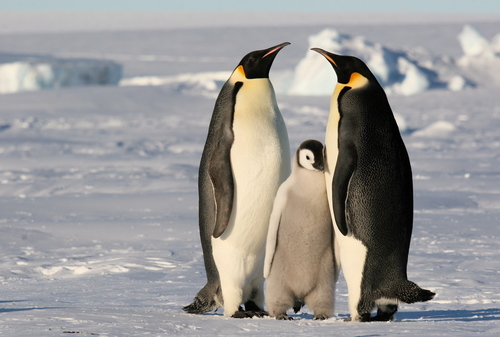
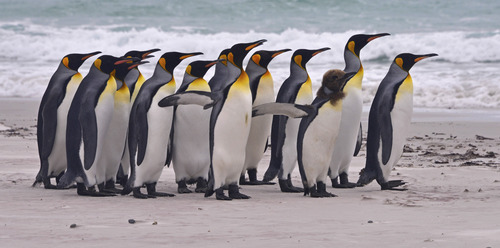
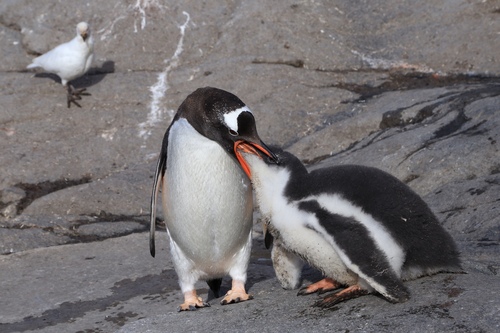
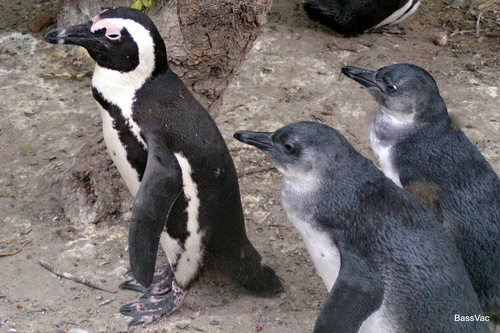

Photographs: iNaturalist contributors under the licences shown. Records: GBIF.org. Historical plates: Source Library (CC BY-SA 4.0; originals public domain). Summary text: Nature Library editors and Wikipedia (CC BY-SA). Medicinal and edibility notes are historical and educational, not advice. iNaturalist taxon 3810.