 NL·0731
Herbarium of the Nature Library
- Name
- Morus bassanus
- Family
- Sulidae
- Native to
- North Atlantic: breeds in Britain, Ireland, Iceland, Norway, France, Canada; winters south to West Africa and the Gulf of Mexico, and into the Mediterranean
- Habitat
- Open ocean, Coastal cliffs
On eBird ↗
Northern Gannet
Live sightings near you, the range map, bar charts of when it is seen, and Macaulay Library photos and recordings.
Northern gannet
Morus bassanus
Also calledSùlaire (Scottish Gaelic) · Basstölpel (German) · Fou de Bassan (French) · Alcatraz atlántico (Spanish) · Havsule (Norwegian) · Súla (Icelandic)
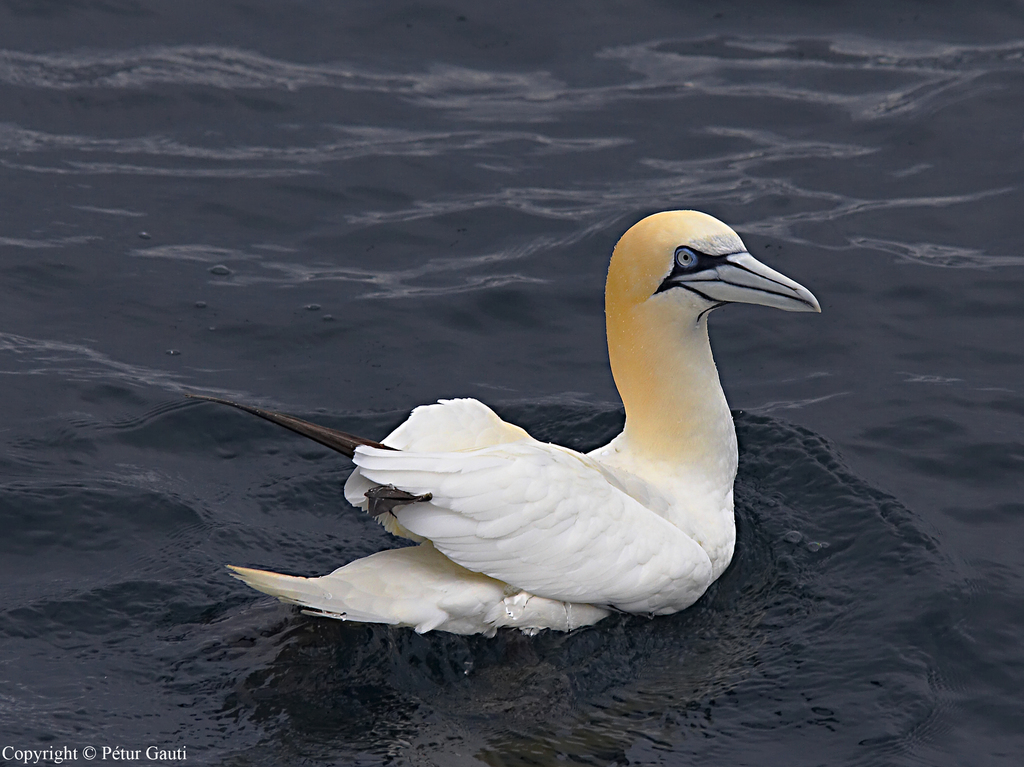
The largest seabird of the North Atlantic, a dazzling white diver with black wingtips and a buttery head. It plunges from height into the sea for fish and breeds in vast, crowded colonies on cliffs and stacks.
The northern gannet is a seabird, the largest species of the gannet family, Sulidae. It is native to the coasts of the North Atlantic Ocean, breeding in Western Europe and Northeastern North America. It is the largest seabird in the northern Atlantic. The sexes are similar in appearance. The adult northern gannet has a mainly white streamlined body with a long neck, and long and slender wings. It is 87–100 cm long with a 170–180 cm (67–71 in) wingspan. The head and nape have a buff tinge that is more prominent in breeding season, and the wings are edged with dark brown-black feathers. The long, pointed bill is blue-grey, contrasting with black, bare skin around the mouth and eyes. Juveniles are mostly grey-brown, becoming increasingly white in the five years it takes them to reach maturity. Wikipedia
What it can do
- iPlunge-dives from up to about 30 m, hitting the water at high speed
- iiAir sacs under the skin of the face and chest cushion the impact
- iiiHas no external nostrils, which stops water entering on impact
- ivForward-facing eyes give binocular vision for judging the strike
In the field
Field marks
- aLarge, cigar-shaped white seabird with long, narrow wings
- bBlack wingtips
- cYellow-buff head and nape in adults
- dDagger bill; juveniles dark brown with white speckles, whitening over four or five years
- Voice
- Silent at sea; colonies resound with harsh, grating 'urrah' calls.
- Not to be confused with
- Great black-backed and other large gulls have rounded wings and lack the pointed tail. Cory's shearwater is brown above. Distant juveniles can suggest brown boobies, which are only rare vagrants in European waters.
- Where to see it
- Bass Rock (Scotland), Bempton Cliffs (England), Grassholm (Wales), St Kilda, Little Skellig (Ireland), Bonaventure Island (Quebec); offshore passage along Atlantic coasts.
- When
- At colonies Jan–Oct; offshore passage in autumn; winter at sea
Listen
Looking for field recordings…
Life & habits
- Diet
- Shoaling fish such as mackerel, herring and sandeels
- Habitat
- Continental-shelf seas; breeds on islands and sea cliffs
- Size
- 87–100 cm; wingspan 165–180 cm; 2.3–3.6 kg
- Lifespan
- Often 15–20 years; some exceed 30
Pairs greet each other at the nest by 'sky-pointing' and fencing with their bills, and defend a tiny nest site fiercely.
Where it lives
Recorded sightings
—
geo-referenced records in GBIF, from museums, herbaria and field observers.
Native range
North Atlantic: breeds in Britain, Ireland, Iceland, Norway, France, Canada; winters south to West Africa and the Gulf of Mexico, and into the Mediterranean
Drag the globe to turn it. Dots are where records exist, not a range map; darker means more records.
In the old herbals & bestiaries
Woodcuts and engravings matched from the Source Library’s scanned books by name. Plates marked “relative” show a close kin rather than this exact species. Click a plate to read the page it came from, with translation.


In the stacks
Searching the stacks…
Every page naming Morus bassanus in the Biodiversity Heritage Library →
Marginalia
Its scientific name honours Scotland's Bass Rock, one of the largest northern gannet colonies in the world, and men from Ness on Lewis have for centuries made a licensed 'guga hunt' for young gannets on the rock of Sula Sgeir, though it has been suspended or refused in several years since the 2022 bird-flu outbreak.
Curiosity
After the 2022 avian influenza outbreak, many surviving gannets on Bass Rock had irises turned from pale blue to black.
Kinship





Fact-checked: 2 corrections made to this sheet. Photographs: iNaturalist contributors under the licences shown. Records: GBIF.org. Historical plates: Source Library (CC BY-SA 4.0; originals public domain). Summary text: Nature Library editors and Wikipedia (CC BY-SA). Medicinal and edibility notes are historical and educational, not advice. iNaturalist taxon 3802.