- Animals
- ›Arthropods
- ›Hexapods
- ›Insects
- ›Winged and Once-winged Insects
- ›True Bugs, Hoppers, Aphids, and allies
- ›True Hoppers
- ›Spittlebugs, Cicadas, Leafhoppers and Treehoppers
- ›Leafhoppers and Treehoppers
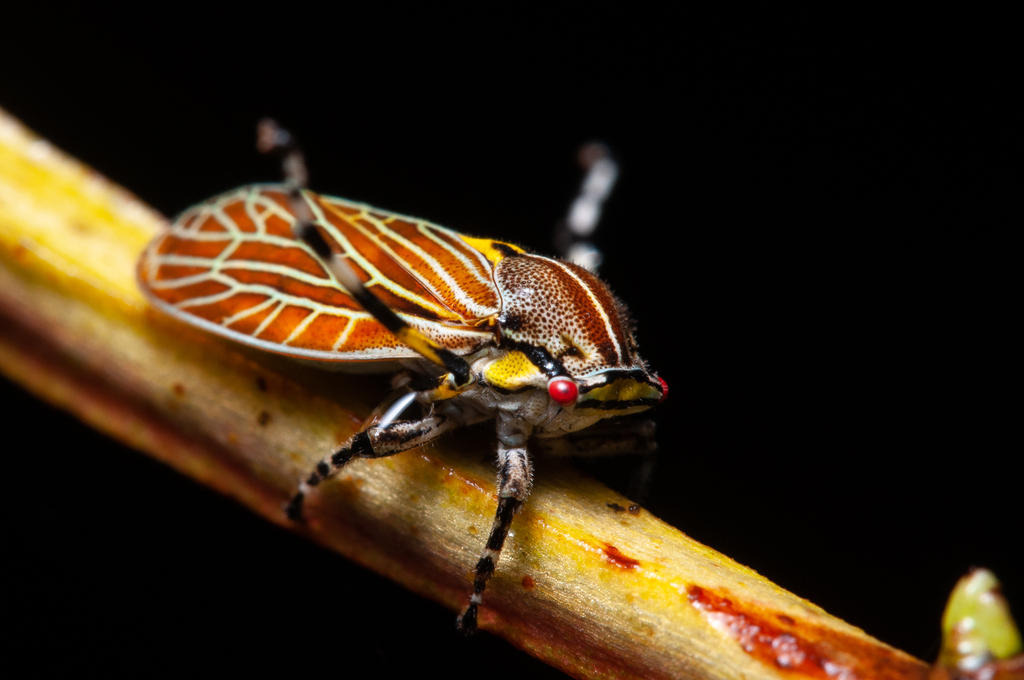
Aetalionid Treehoppers
Aetalionidae
Aetalionidae are a family of treehoppers in the superfamily Membracoidea. Aetalionidae are somewhat like Membracidae in that they have one to three rows of short spines on the hind tibia but differ in having the front femur fused to the trochanter and the scutellum is completely exposed. The females have finger-like protrusions on the genital capsule. The family is mostly Neotropical. The subfamily Biturritiinae is Neotropical while the subfamily Aetalioninae has a Neotropical genus Aetalion and the sole Old World representative genus Darthula with a single species Darthula hardwickii (which is eaten in parts of China and India).
They form aggregations on the branches of trees where they produce honeydew and are associated with ants and stingless bees. Aetalionid treehoppers are also known for their maternal care with females standing guard over their eggs.
3 branches of this family, most-observed first

Aetalioninae
subfamilyAetalioninae

Biturritiinae
subfamilyBiturritiinae
Tremembaetalion
genusTremembaetalion
Where it lives
Recorded sightings
—
geo-referenced records in GBIF, from museums, herbaria and field observers.
Drag the globe to turn it. Dots are where records exist, not a range map; darker means more records.
In the stacks
Searching the stacks…
Every page naming Aetalionidae in the Biodiversity Heritage Library →
This page is assembled live from iNaturalist, GBIF, Wikipedia, the Source Library and the Internet Archive. It is not yet part of the hand-edited codex. iNaturalist taxon 326316.