- Animals
- ›Arthropods
- ›Hexapods
- ›Insects
- ›Winged and Once-winged Insects
- ›True Bugs, Hoppers, Aphids, and allies
- ›Plant-parasitic Hemipterans
- ›Aphids and Allies
- ›Phylloxeroidea
- ›Phylloxerans
- ›Phylloxerinae
- ›Phylloxerini
- ›Daktulosphaira
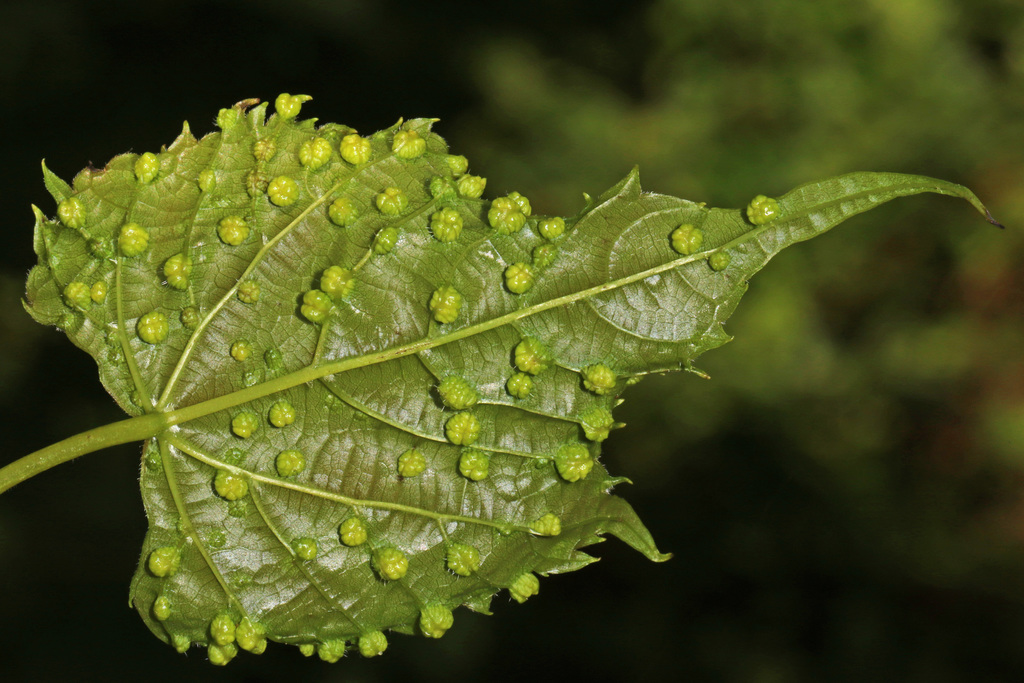
Grape Phylloxera
Daktulosphaira vitifoliae
Grape phylloxera is an insect pest of grapevines worldwide, originally native to eastern North America. Grape phylloxera (Daktulosphaira vitifoliae Fitch 1855) belongs to the family Phylloxeridae, within the order Hemiptera, bugs); originally described in France as Phylloxera vastatrix; it is equated to the previously described Daktulosphaera vitifoliae and Phylloxera vitifoliae. The insect is commonly just called phylloxera (; from Ancient Greek: φύλλον, leaf, and ξηρός, dry).
These almost microscopic, pale yellow, sap-sucking insects, related to aphids, feed on the roots and leaves of grapevines (depending on the phylloxera genetic strain). On Vitis vinifera, the resulting deformations on roots ("nodosities" and "tuberosities") and secondary fungal infections can girdle roots, gradually cutting off the flow of nutrients and water to the vine. Nymphs also form protective galls on the undersides of grapevine leaves of some Vitis species and overwinter under the bark or on the vine roots; these leaf galls are typically only found on the leaves of American vines.
Listen
Looking for field recordings…
Where it lives
Recorded sightings
—
geo-referenced records in GBIF, from museums, herbaria and field observers.
Drag the globe to turn it. Dots are where records exist, not a range map; darker means more records.
In the stacks
Searching the stacks…
Every page naming Daktulosphaira vitifoliae in the Biodiversity Heritage Library →
This page is assembled live from iNaturalist, GBIF, Wikipedia, the Source Library and the Internet Archive. It is not yet part of the hand-edited codex. iNaturalist taxon 324587.