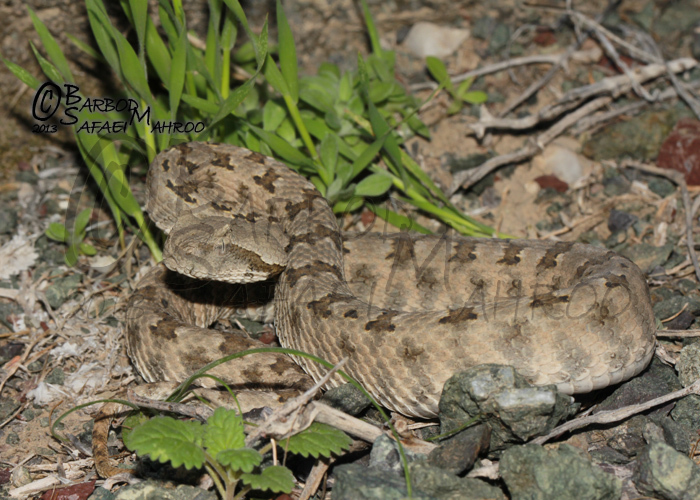
false-horned vipers
Pseudocerastes
Pseudocerastes is a genus of vipers endemic to the Middle East and Asia. It was originally created as a monotypic genus in 1896 by Boulenger for the species Pseudocerastes persicus, but three species are now recognised: the spider-tailed horned viper (P. urarachnoides); Persian horned viper (P. persicus) and Field's horned viper (P. fieldi). Like all other vipers, the members of this genus are venomous.
Pseudocerastes are often referred to as false-horned vipers because of the horn-like structures above their eyes that are made up of numerous small scales. This is in contrast to the "true" horned viper, Cerastes cerastes, which has similar supraorbital "horns", each consisting of a single elongated scale.
3 branches of this genus, most-observed first · about 3 known species

Persian Horned Viper
speciesPseudocerastes persicus
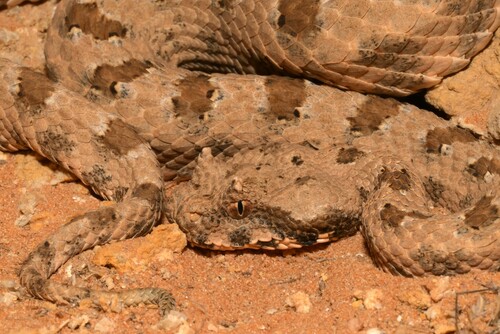
Field's Horned Viper
speciesPseudocerastes fieldi

Spider-tailed Horned Viper
speciesPseudocerastes urarachnoides
Where it lives
Recorded sightings
—
geo-referenced records in GBIF, from museums, herbaria and field observers.
Drag the globe to turn it. Dots are where records exist, not a range map; darker means more records.
In the stacks
Searching the stacks…
Every page naming Pseudocerastes in the Biodiversity Heritage Library →
This page is assembled live from iNaturalist, GBIF, Wikipedia, the Source Library and the Internet Archive. It is not yet part of the hand-edited codex. iNaturalist taxon 30991.