Dodos
Raphus
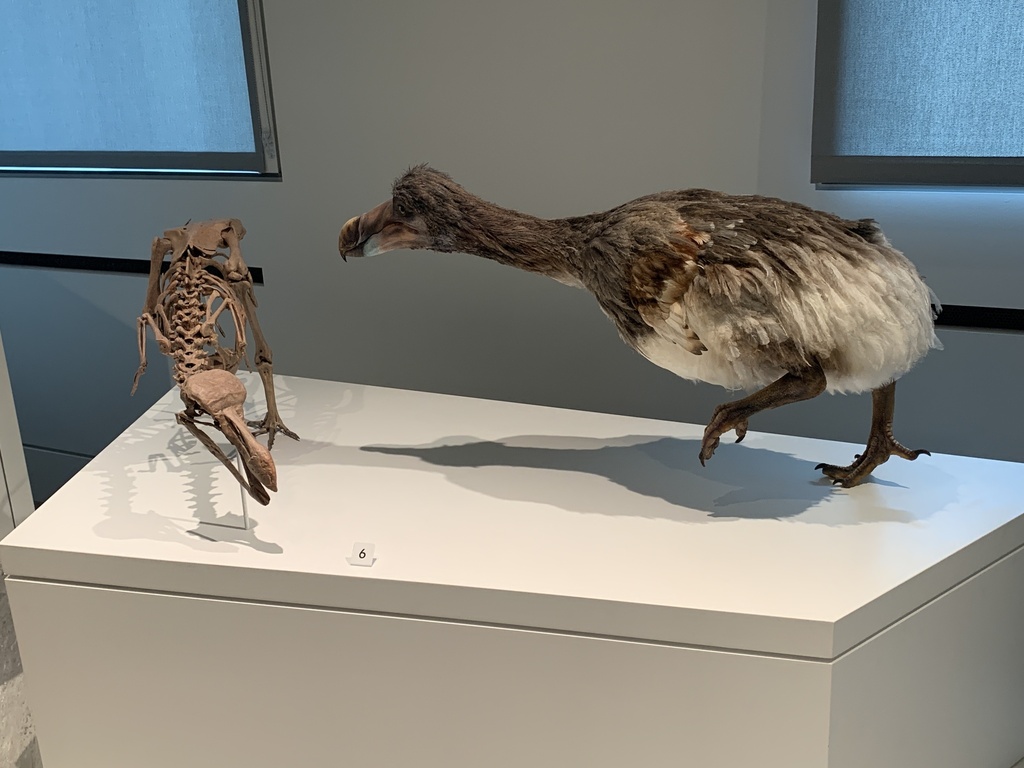
The dodo (Raphus cucullatus) is an extinct flightless bird that was endemic to Mauritius, an island east of Madagascar in the Indian Ocean. The dodo's closest relative was the also-extinct and flightless Rodrigues solitaire. The two formed the subtribe Raphina, a clade of extinct flightless birds that are a part of the group that includes pigeons and doves (the family Columbidae). The closest living relative of the dodo is the Nicobar pigeon. A white dodo was once thought to have existed on the nearby island of Réunion, but it is now believed that this assumption was merely confusion based on the also-extinct Réunion ibis and paintings of white dodos.
Subfossil remains show the dodo measured about 62.6–75 centimetres (2.05–2.46 ft) in height and may have weighed 10.6–17.5 kg (23–39 lb) in the wild. The dodo's appearance in life is evidenced only by drawings, paintings, and written accounts from the 17th century. Since these portraits vary considerably, and since only some of the illustrations are known to have been drawn from live specimens, the dodos' exact appearance in life remains unresolved, and little is known about its behaviour. It has been depicted with brownish-grey plumage, yellow feet, a tuft of tail feathers, a grey, naked head, and a black, yellow, and green beak. It used gizzard stones to help digest its food, which is thought to have included fruits, and its main habitat is believed to have been the woods in the drier coastal areas of Mauritius. One account states its clutch consisted of a single egg.
1 branches of this genus, most-observed first
See this branch on the Wheel of Life →
Where it lives
Recorded sightings
—
geo-referenced records in GBIF, from museums, herbaria and field observers.
Drag the globe to turn it. Dots are where records exist, not a range map; darker means more records.
In the old herbals & bestiaries

In the stacks
Searching the stacks…
Every page naming Raphus in the Biodiversity Heritage Library →
This page is assembled live from iNaturalist, GBIF, Wikipedia, the Source Library and the Internet Archive. It is not yet part of the hand-edited codex. iNaturalist taxon 2712.