- Animals
- ›Arthropods
- ›Hexapods
- ›Insects
- ›Winged and Once-winged Insects
- ›Beetles
- ›Water, Rove, Scarab, Long-horned, Leaf, and Snout Beetles
- ›Cucujiform Beetles
- ›Lady, Fungus, Scavenger, and Bark Beetles
- ›Lady Beetles
- ›Common Lady Beetles
- ›Black-spotted Lady Beetles
- ›Illeis
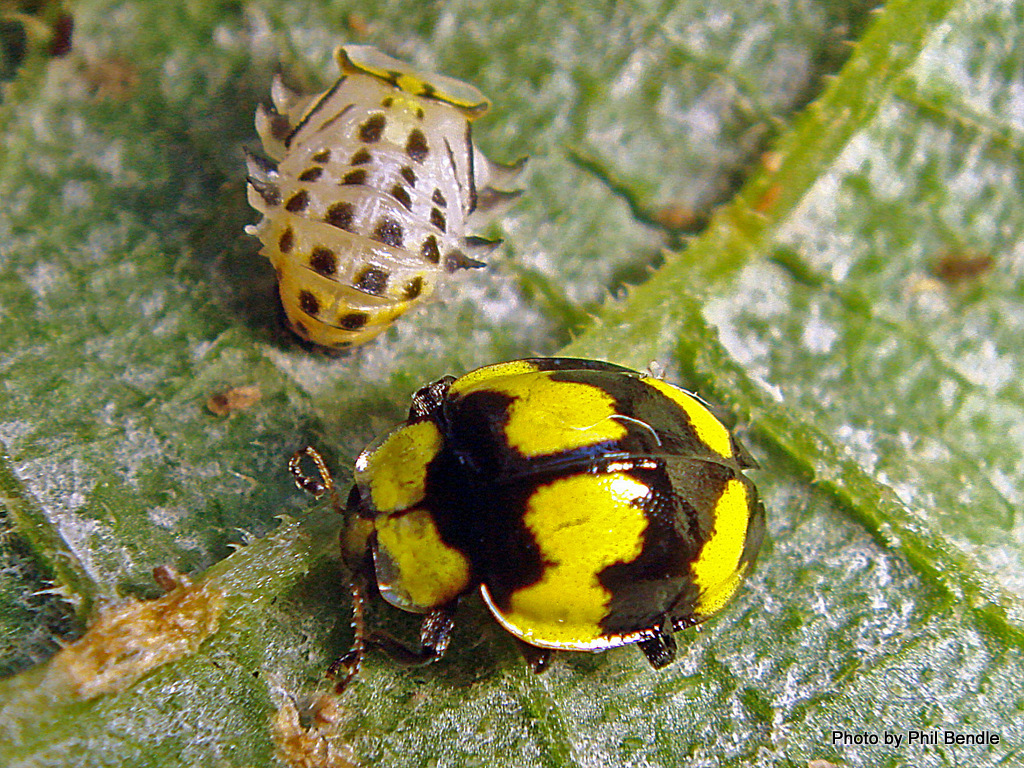
Fungus-eating ladybird
Illeis galbula
The Fungus-eating Ladybird (Illeis galbula) is a species of Coccinellidae. Adults are 4-5mm in size while the larvae are between 8 and 10mm. Adults are bright yellow with black markings, larvae and pupa are white with black dots. During the day it is fast moving and readily flies or drops when disturbed. Adults feed on black mold and other fungi. The pupa are active and often stand on end. They are found in Australia and are...
From the article Illeis galbula on Wikipedia (CC BY-SA), quoted section by section
Description
Adults are 4-5mm in size, while the larvae are between 8 and 10mm. Adults are black with bright yellow markings. Larvae are grey with black tubercles covered with short spines. The pupa is pale yellow with black tubercles and lateral spurs.
Range & habitat
This species is native to Eastern Australia. It is a non-native species in the North Island of New Zealand, first found in Auckland in 1985. They are also found in New Guinea.
Wikipedia: “Distribution”
What it does
During the day it is fast moving and readily flies or drops when disturbed. The pupa are active and often stand on end. Adult and larval fungus-eating ladybirds are often found in gardens where they eat powdery mildew on cucurbit crops like pumpkin and zucchini. In Australia, overwintering adults feed on pollen of wattles and privet species during spring.
Wikipedia: “Behaviour”
Listen
Looking for field recordings…
Where it lives
Recorded sightings
—
geo-referenced records in GBIF, from museums, herbaria and field observers.
Drag the globe to turn it. Dots are where records exist, not a range map; darker means more records.
In the stacks
Searching the stacks…
Every page naming Illeis galbula in the Biodiversity Heritage Library →
This page is assembled live from iNaturalist, GBIF, Wikipedia, the Source Library and the Internet Archive. It is not yet part of the hand-edited codex. iNaturalist taxon 207648.