- Animals
- ›Arthropods
- ›Hexapods
- ›Insects
- ›Winged and Once-winged Insects
- ›Ants, Bees, Wasps, and Sawflies
- ›Narrow-waisted Wasps, Ants, and Bees
- ›Proctotrupomorpha
- ›Gall Wasps and Allies
- ›Diplolepididae
- ›Rose Gall Wasps
- ›Diplolepis
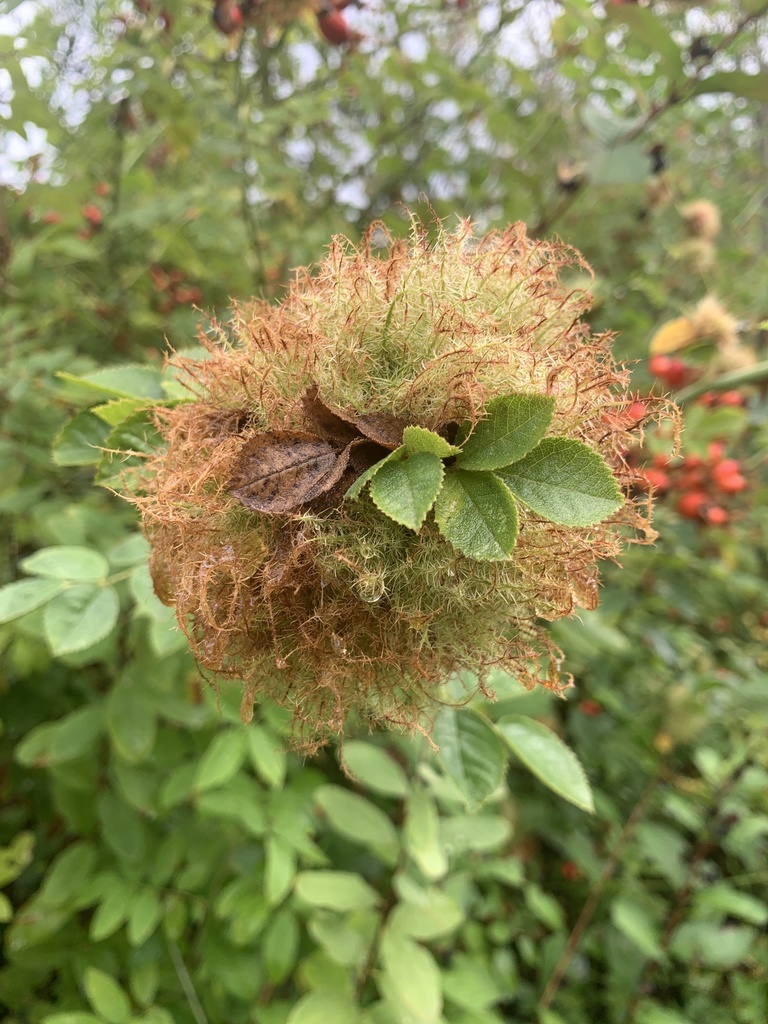
Mossy Rose Gall Wasp
Diplolepis rosae
Diplolepis rosae is a gall wasp which causes a gall known as the rose bedeguar gall, robin's pincushion, mossy rose gall, or simply moss gall. The gall develops as a chemically induced distortion of an unopened leaf axillary or terminal bud, mostly on field rose (Rosa arvensis) or dog rose (Rosa canina) shrubs. The female wasp lays up to 60 eggs within each leaf bud using her ovipositor. The grubs develop within the gall, and the wasps emerge in spring; the wasp is parthenogenetic with fewer than one percent being males.
A similar gall is caused by Diplolepis mayri, but this is much less common.
Listen
Looking for field recordings…
Where it lives
Recorded sightings
—
geo-referenced records in GBIF, from museums, herbaria and field observers.
Drag the globe to turn it. Dots are where records exist, not a range map; darker means more records.
In the stacks
Searching the stacks…
Every page naming Diplolepis rosae in the Biodiversity Heritage Library →
This page is assembled live from iNaturalist, GBIF, Wikipedia, the Source Library and the Internet Archive. It is not yet part of the hand-edited codex. iNaturalist taxon 205320.