- Animals
- ›Arthropods
- ›Hexapods
- ›Insects
- ›Winged and Once-winged Insects
- ›Ants, Bees, Wasps, and Sawflies
- ›Narrow-waisted Wasps, Ants, and Bees
- ›Proctotrupomorpha
- ›Chalcidoid Wasps
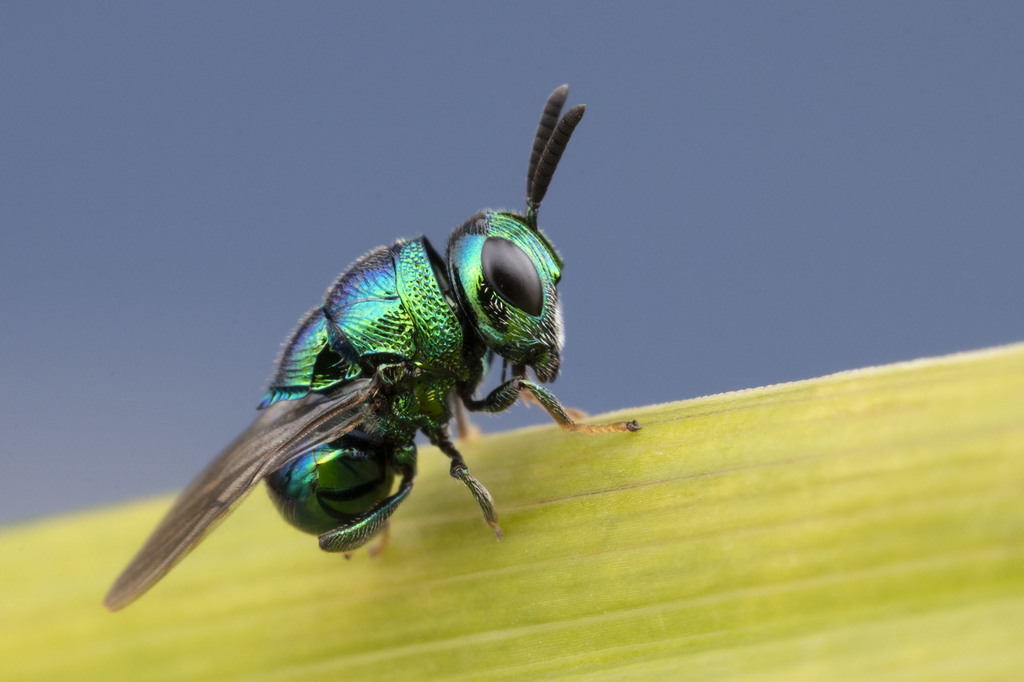
Perilampidae
The Perilampidae are a small family within the Chalcidoidea, composed mostly of hyperparasitoids. The family is closely related to the Eucharitidae, Chrysolampidae, and Eutrichosomatidae. As presently defined, six genera are described worldwide. They are often brilliantly metallic (especially blue or green), with robust mesosomae and a small, triangular metasomae. They are generally very strongly sculptured. The prothorax is typically very broad and disc-like, and the labrum is multidigitate, a feature shared with the Eucharitidae.
A feature shared by the Eucharitidae, Perilampidae, Chrysolampidae, and Eutrichosomatidae is that the first-instar larvae (called "planidia") are responsible for gaining access to the host, rather than the egg-laying females. Those species which are hyperparasitoids burrow into a secondary host's body and seek out endoparasitoid larvae, such as tachinid flies or ichneumonoid wasps, and attack them.
1 branches of this family, most-observed first
See this branch on the Wheel of Life →
Where it lives
Recorded sightings
—
geo-referenced records in GBIF, from museums, herbaria and field observers.
Drag the globe to turn it. Dots are where records exist, not a range map; darker means more records.
In the stacks
Searching the stacks…
Every page naming Perilampidae in the Biodiversity Heritage Library →
This page is assembled live from iNaturalist, GBIF, Wikipedia, the Source Library and the Internet Archive. It is not yet part of the hand-edited codex. iNaturalist taxon 203268.