- Animals
- ›Arthropods
- ›Hexapods
- ›Insects
- ›Winged and Once-winged Insects
- ›Butterflies and Moths
- ›Pyralid and Crambid Snout Moths
- ›Pyralid Snout Moths
- ›Knot-horn Moths
- ›Phycitini
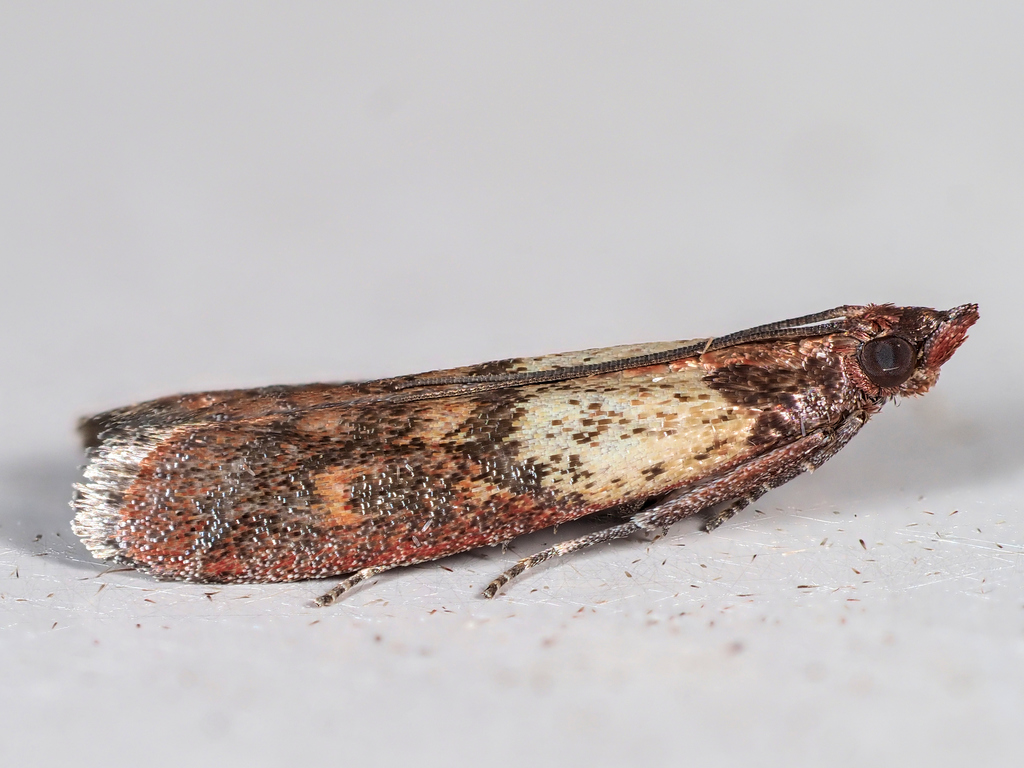
Plodia
The Indianmeal moth (Plodia interpunctella), also spelled Indian meal moth and Indian-meal moth, is a pyraloid moth of the family Pyralidae. Alternative common names are weevil moth, pantry moth, flour moth or grain moth. The almond moth (Cadra cautella) and the raisin moth (Cadra figulilella) are commonly confused with the Indianmeal moth due to similar food sources and appearance. The species was named for feeding on Indian meal (the cornmeal and maize flour from maize), with Indian in the New World sense; it does not occur natively in India. It is also not to be confused with the Mediterranean flour moth (Ephestia kuehniella), another common pest of stored grains.
P. interpunctella larvae (caterpillars) are commonly known as waxworms. They are not the same species as the waxworms often bred as animal feed. Rather, they are a common grain-feeding pest found around the world, consuming cereals, fruits, and similar products. Substantial efforts have been taken in the United States to control the moth's damage to grain crops.
3 branches of this genus, most-observed first
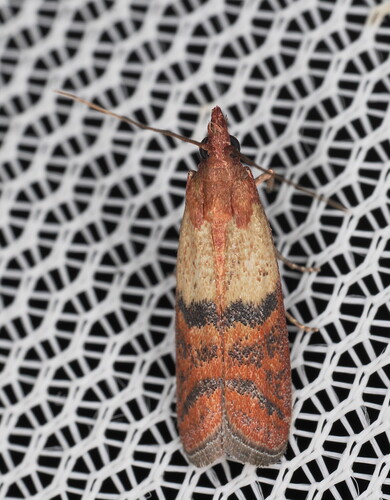
Indian-Meal Moth
speciesPlodia interpunctella
Plodia dolorosa
speciesPlodia dolorosa
Plodia gloriosa
speciesPlodia gloriosa
Where it lives
Recorded sightings
—
geo-referenced records in GBIF, from museums, herbaria and field observers.
Drag the globe to turn it. Dots are where records exist, not a range map; darker means more records.
In the stacks
Searching the stacks…
Every page naming Plodia in the Biodiversity Heritage Library →
This page is assembled live from iNaturalist, GBIF, Wikipedia, the Source Library and the Internet Archive. It is not yet part of the hand-edited codex. iNaturalist taxon 124186.