 NL·0614
Herbarium of the Nature Library
- Name
- Pavo cristatus
- Family
- Phasianidae
- Native to
- India, Sri Lanka, Nepal, Pakistan and Bangladesh; introduced widely
- Habitat
- Dry deciduous forest, Farmland, Village edges
On eBird ↗
Indian Peafowl
Live sightings near you, the range map, bar charts of when it is seen, and Macaulay Library photos and recordings.
Indian peafowl
Pavo cristatus
Also calledMor (Hindi/Urdu) · Mayil (Tamil) · Ṭāwūs (Arabic/Persian) · Kǒngquè (Chinese, peafowl) · Pavo real (Spanish)
A large pheasant of South Asia whose males raise and shiver a train of about 200 eye-spotted feathers. It is the national bird of India and has been carried as a royal ornament across the world for three thousand years.
The Indian peafowl, also known as the common peafowl, or blue peafowl, is a species of peafowl native to the Indian subcontinent. While it originated in the Indian subcontinent, it has since been introduced to many other parts of the world. Male peafowl are referred to as peacocks, and female peafowl are referred to as peahens, although both sexes are often referred to colloquially as a "peacock". Wikipedia
What it can do
- iTrain of elongated upper-tail coverts with iridescent structural-colour eyespots
- iiMales rattle the train to produce low-frequency infrasound during displays
- iiiKills and eats young cobras and other snakes
- ivLoud alarm calls warn other animals of tigers and leopards
In the field
Field marks
- aMale: iridescent blue neck and breast, long green train with eyespots
- bFan-shaped crest of spatula-tipped feathers
- cFemale brown with a green neck and white belly
- dLarge, often seen on the ground
- Voice
- A loud, wailing 'may-awe', often at dusk and before rain
- Not to be confused with
- Green peafowl (Southeast Asia) has a green, scaly neck and a tufted upright crest.
- Where to see it
- Ranthambore and Keoladeo (Bharatpur), India; Yala, Sri Lanka
- When
- Resident; males display most during the pre-monsoon and monsoon breeding season and shed the train afterwards
Listen
Looking for field recordings…
Life & habits
- Diet
- Seeds, grain, insects, small reptiles and snakes
- Habitat
- Forest edges, farmland and villages near water
- Size
- Males up to ~2.25 m including train; females ~1 m
- Lifespan
- Around 15–20 years
Peahens choose mates partly on the vigour of the train-rattling display.
Where it lives
Recorded sightings
—
geo-referenced records in GBIF, from museums, herbaria and field observers.
Native range
India, Sri Lanka, Nepal, Pakistan and Bangladesh; introduced widely
Drag the globe to turn it. Dots are where records exist, not a range map; darker means more records.
In the old herbals & bestiaries
Woodcuts and engravings matched from the Source Library’s scanned books by name. Plates marked “relative” show a close kin rather than this exact species. Click a plate to read the page it came from, with translation.


In the stacks
Searching the stacks…
Every page naming Pavo cristatus in the Biodiversity Heritage Library →
Marginalia
The peacock is Kartikeya's mount in Hindu tradition and Melek Taus, the Peacock Angel, in Yazidi faith; Mughal emperors sat on the Peacock Throne. Greeks said Hera set the hundred eyes of Argus on its tail.
Curiosity
Darwin wrote that 'the sight of a feather in a peacock's tail, whenever I gaze at it, makes me sick', because natural selection alone could not explain it.
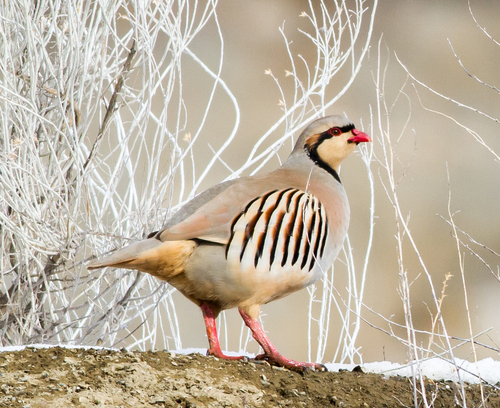
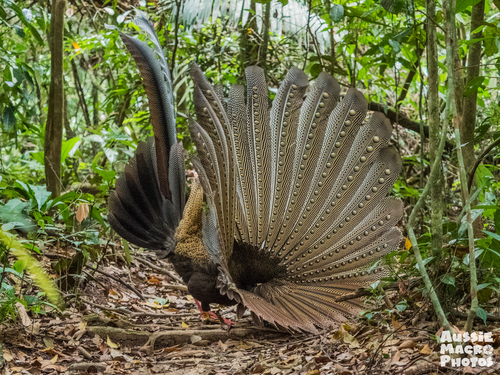
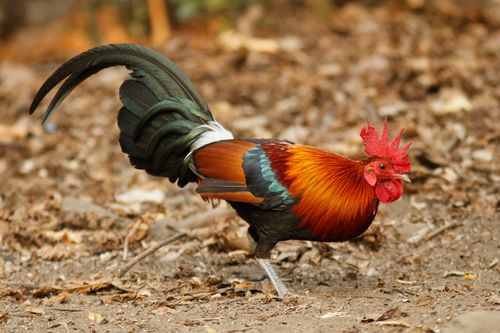
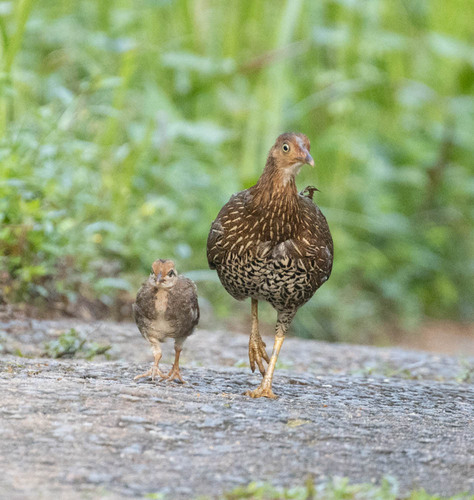
Kinship


Photographs: iNaturalist contributors under the licences shown. Records: GBIF.org. Historical plates: Source Library (CC BY-SA 4.0; originals public domain). Summary text: Nature Library editors and Wikipedia (CC BY-SA). Medicinal and edibility notes are historical and educational, not advice. iNaturalist taxon 1204.