- Animals
- ›Arthropods
- ›Hexapods
- ›Insects
- ›Winged and Once-winged Insects
- ›True Bugs, Hoppers, Aphids, and allies
- ›True Bugs
- ›Cimicomorph Bugs
- ›Reduvioidea
- ›Assassin Bugs
- ›Ambush Bugs
- ›Phymatini
- ›Phymata
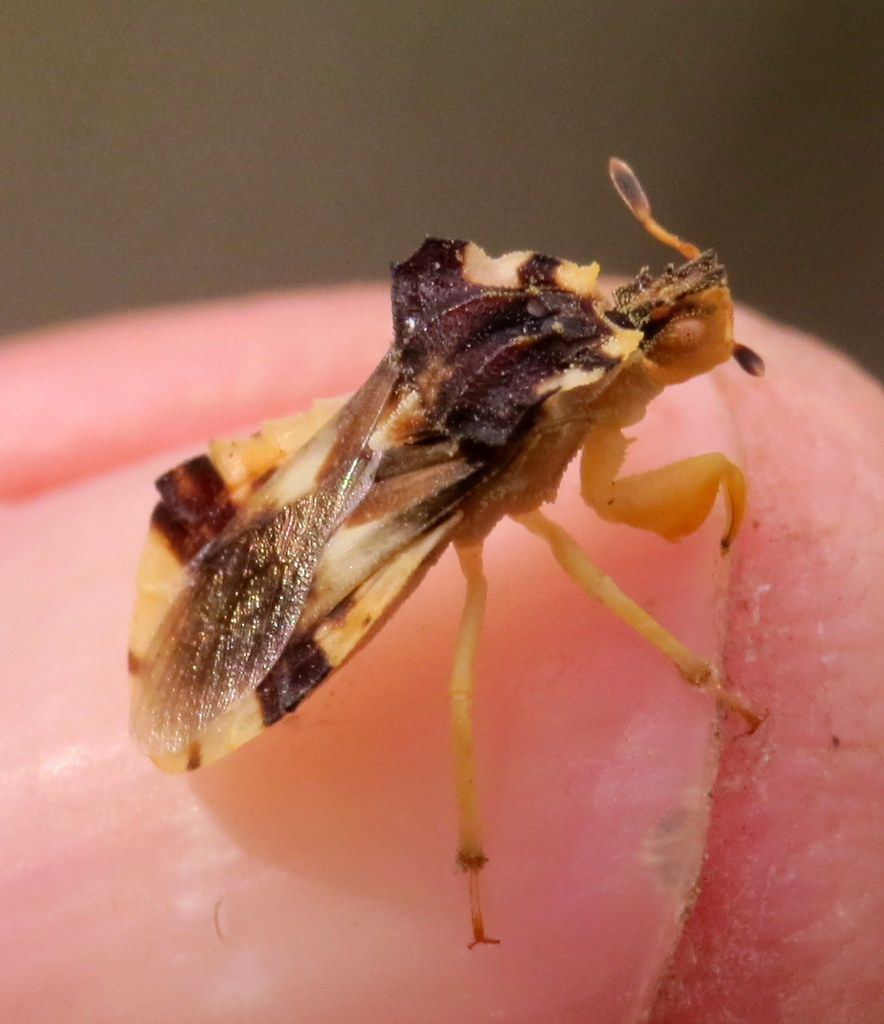
Jagged Ambush Bug
Phymata americana
Phymata americana, known as the ambush bug, is a Phymatinae, or ambush bug in the family Reduviidae. It can be found on the flowers of various plants in Central America and North America, where it waits to prey on other insects.
From the article Phymata americana on Wikipedia (CC BY-SA), quoted section by section
Range & habitat
Phymata americana are found in open fields of flowering plants near rural forest edges, farms, and urban areas.
Wikipedia: “Habitat”
What it does
Phymata americana feed on a wide variety of prey, most often including small bees, moths, and flies. As their common name suggests, P. americana are sit-and-wait ambush predators, resting on flower heads where they grab visiting insects with large raptorial foreleg weapons. Females can be larger than males, and often have disproportionately longer weapons. Sexual dimorphism in weapon morphology in P. americana may have evolved due to sex differences in prey capture strategies, with females capturing prey from underneath flower heads and males either eating prey already captured by females or capturing smaller prey on plant stems while searching for mates. Females tend to capture larger prey species than males due to their larger weapons, potentially decreasing intersexual resource competition.
Wikipedia: “Diet and predation behavior”
Listen
Looking for field recordings…
Where it lives
Recorded sightings
—
geo-referenced records in GBIF, from museums, herbaria and field observers.
Drag the globe to turn it. Dots are where records exist, not a range map; darker means more records.
In the stacks
Searching the stacks…
Every page naming Phymata americana in the Biodiversity Heritage Library →
This page is assembled live from iNaturalist, GBIF, Wikipedia, the Source Library and the Internet Archive. It is not yet part of the hand-edited codex. iNaturalist taxon 119533.