- Animals
- ›Arthropods
- ›Hexapods
- ›Insects
- ›Winged and Once-winged Insects
- ›Dragonflies and Damselflies
- ›Dragonflies
- ›Gomphoidea
- ›Clubtails
- ›Progomphus
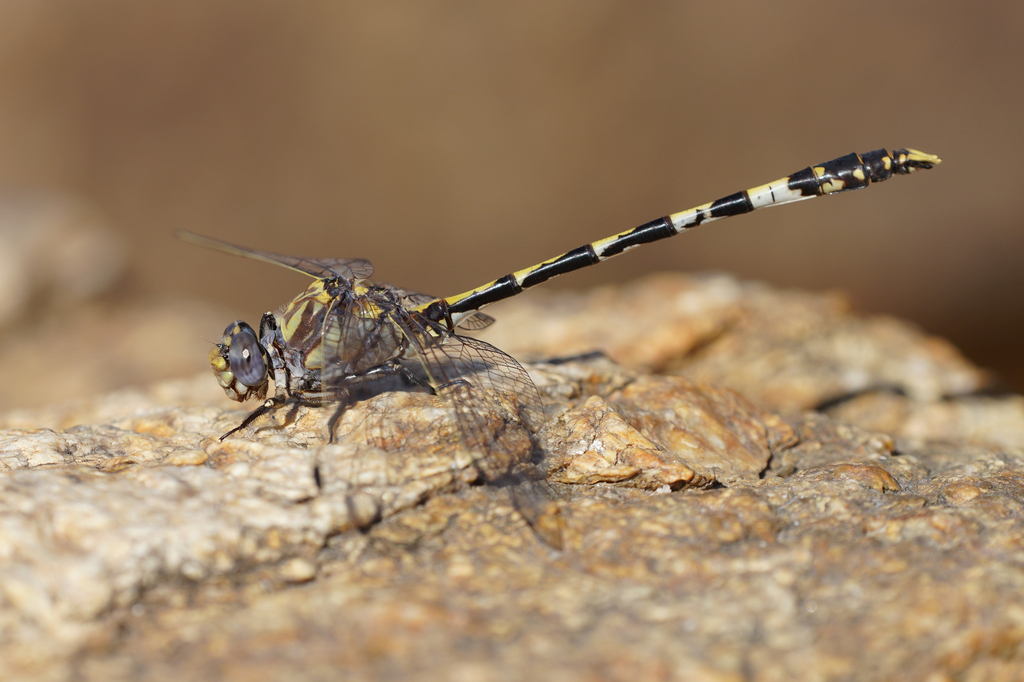
Gray Sanddragon
Progomphus borealis
Progomphus borealis is a species of dragonfly in the family Gomphidae. This dragonfly species is commonly known as the gray sanddragon.
From the article Gray sanddragon on Wikipedia (CC BY-SA), quoted section by section
Range & habitat
Gray sanddragons can be found in Arizona, California, Chihuahua, Idaho, Jalisco, New Mexico, Oregon, Texas, U.S. Virgin Islands, and Washington. In Idaho these dragonflies can be found at desert streams in the southwest corner of the state.
Wikipedia: “Distribution”
What it does
Nymphs can be very selective in choosing their habitat choices and will often occur only in certain stretches of a particular river or stream. The upturned tip of their abdomen is exposed when they burrow into the sand. This strategy allows them to breathe while buried by pumping water in and out of the tip of the abdomen. Unlike most other species, the gray sanddragon nymphs emerge as adults during the day. Although many records are sparse, the adults are believed to fly from early June to September. Gray sanddragons can't tolerate cooler temperatures and are rarely seen flying on cool or cloudy days.
Wikipedia: “Ecology”
Listen
Looking for field recordings…
Where it lives
Recorded sightings
—
geo-referenced records in GBIF, from museums, herbaria and field observers.
Drag the globe to turn it. Dots are where records exist, not a range map; darker means more records.
In the stacks
Searching the stacks…
Every page naming Progomphus borealis in the Biodiversity Heritage Library →
This page is assembled live from iNaturalist, GBIF, Wikipedia, the Source Library and the Internet Archive. It is not yet part of the hand-edited codex. iNaturalist taxon 110613.