 NL·0617
Herbarium of the Nature Library
- Name
- Tragopan melanocephalus
- Family
- Phasianidae
- Native to
- Western Himalaya: Kohistan and Kashmir in northern Pakistan, Jammu & Kashmir, Himachal Pradesh and western Uttarakhand in India
- Habitat
- Montane forest
On eBird ↗
Western Tragopan
Live sightings near you, the range map, bar charts of when it is seen, and Macaulay Library photos and recordings.
Western tragopan
Tragopan melanocephalus
Also calledJujurana (Himachali; 'king of birds') · Hēi tóu jiǎo zhì 黑头角雉 (Chinese)
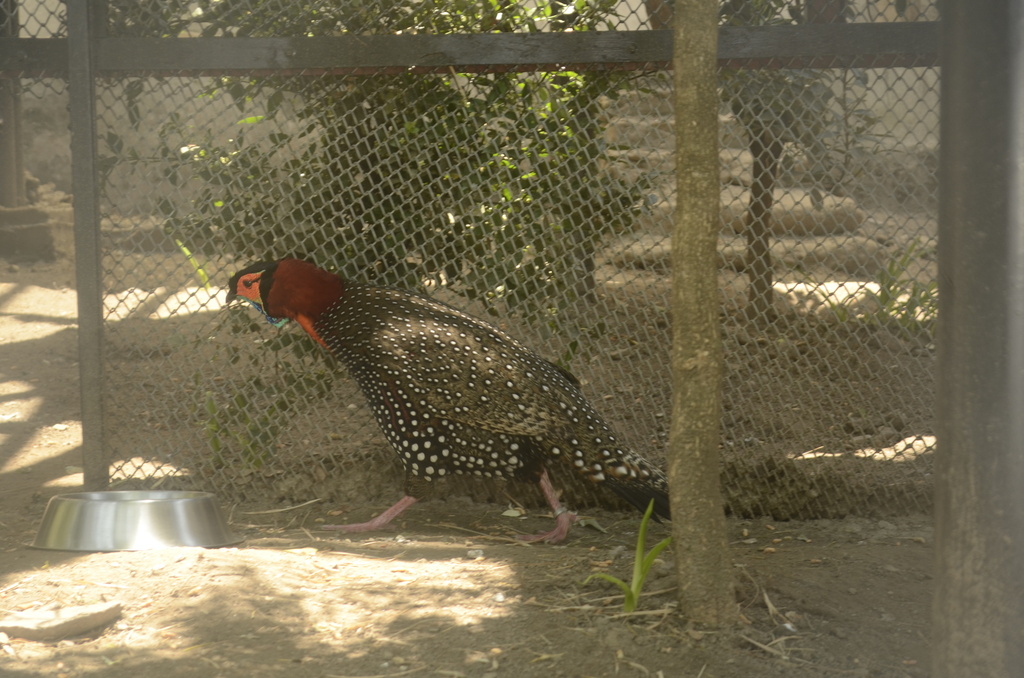
Perhaps the rarest pheasant of the western Himalaya, the male is black and crimson, spangled with white spots, and in display inflates a vivid blue-and-pink throat lappet and two fleshy blue horns. It lives in a narrow belt of temperate forest in Pakistan and India.
The western tragopan or western horned tragopan is a medium-sized brightly plumed landfowl found along the range of Western Himalayas from north-eastern districts of Khyber Pakhtunkhwa province in northern Pakistan in the west to Uttarakhand within India to the east. The species is highly endangered and globally threatened. Wikipedia
What it can do
- iMale inflates a bib-like lappet of bare skin and erects fleshy 'horns' during courtship display
- iiSurvives on leaves, buds and seeds through snowy Himalayan winters
- iiiUnusually for a pheasant, often feeds and roosts in trees
In the field
Field marks
- aMale: black head and breast with crimson neck, the body covered in white, black-edged spots
- bMale: bare red facial skin, blue throat lappet and fleshy blue horns visible in display
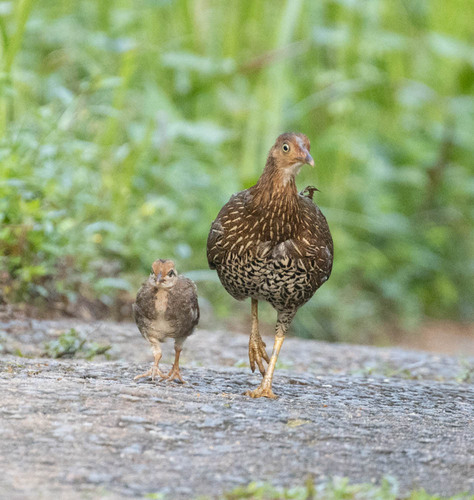
- cFemale: grey-brown, finely vermiculated and spotted with white
- dHeavy, short-tailed pheasant shape
- Voice
- A loud, wailing, goat-like 'waa-waa-oo-a', given mostly at dawn in spring
- Not to be confused with
- Satyr tragopan (central and eastern Himalaya) is overall deep red with white spots and a red breast; the ranges barely meet, and the Western's black-and-grey body and crimson neck separate it.
- Where to see it
- Great Himalayan National Park and Daranghati Sanctuary in Himachal Pradesh; Palas Valley in Kohistan, Pakistan
- When
- Resident; males call April–June; moves lower in winter
Listen
Looking for field recordings…
Life & habits
- Diet
- Leaves, shoots, buds, seeds, acorns and some invertebrates
- Habitat
- Dense temperate and sub-alpine forest of oak, fir and rhododendron with thick undergrowth, about 1,750–3,600 m
- Size
- Males about 55–72 cm long (published figures vary)
Extremely shy and seldom seen; males call from steep, forested slopes in spring and display hidden from view.
Where it lives
Recorded sightings
—
geo-referenced records in GBIF, from museums, herbaria and field observers.
Native range
Western Himalaya: Kohistan and Kashmir in northern Pakistan, Jammu & Kashmir, Himachal Pradesh and western Uttarakhand in India
Drag the globe to turn it. Dots are where records exist, not a range map; darker means more records.
In the stacks
Searching the stacks…
Every page naming Tragopan melanocephalus in the Biodiversity Heritage Library →
Marginalia
As the 'jujurana' it is the state bird of Himachal Pradesh, and a captive breeding programme at Sarahan in Himachal has bred the species since the 1990s.
Curiosity
The fleshy 'horns' that give tragopans their name (Greek for 'goat-Pan') are bare skin that the male erects only during display.
Kinship


Fact-checked: 1 correction made to this sheet. Photographs: iNaturalist contributors under the licences shown. Records: GBIF.org. Historical plates: Source Library (CC BY-SA 4.0; originals public domain). Summary text: Nature Library editors and Wikipedia (CC BY-SA). Medicinal and edibility notes are historical and educational, not advice. iNaturalist taxon 1057.