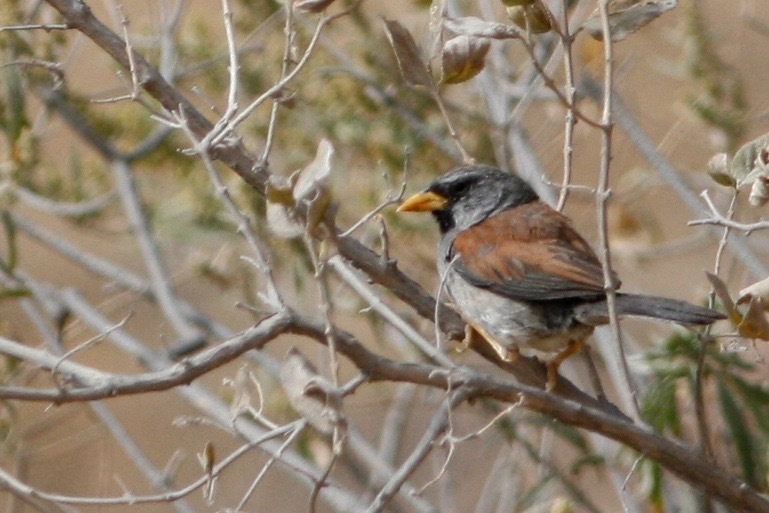
Inca-Finches
Incaspiza
The Inca finches form the genus Incaspiza, of finch-like birds in the tanager family Thraupidae. They were traditionally placed in the family Emberizidae, but molecular phylogenetic studies have shown that they belong in Thraupidae instead. Both their scientific and common name refer to the Incan civilization.
They are endemic to arid scrub in central and northern Peru. Buff-bridled, gray-winged and little Inca finches are restricted to the Marañón Valley. The rufous-backed Inca finch occurs either on the west slope of the Andes and both slopes of the Marañón Valley and is restricted to higher elevations, compared to great Inca finch which only occurs on the west slope of the Andes, but generally lower than the rufous-backed Inca finch. They are rather terrestrial, and typically forage within dense plant growth on the ground, but commonly perch higher, for example on the top of a tall cactus or in a small tree, when singing. They are typically seen singly or in pairs, but sometimes in small groups outside the breeding season. They normally do not take part in mixed-species flocks.
5 branches of this genus, most-observed first · about 5 known species
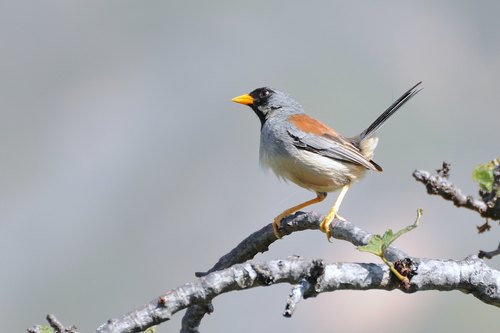
Buff-bridled Inca-Finch
speciesIncaspiza laeta

Great Inca-Finch
speciesIncaspiza pulchra
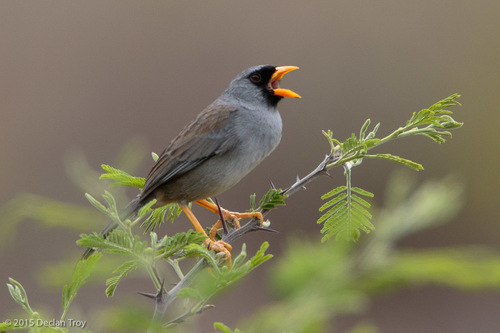
Gray-winged Inca-Finch
speciesIncaspiza ortizi
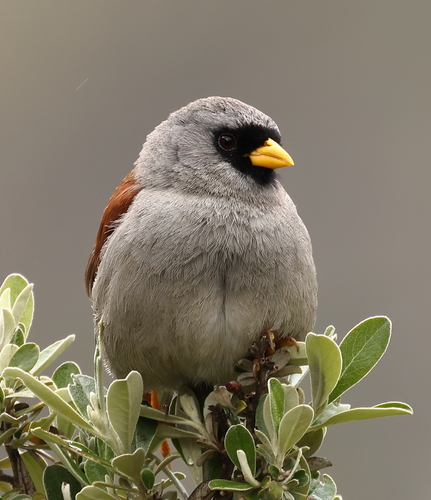
Rufous-backed Inca-Finch
speciesIncaspiza personata
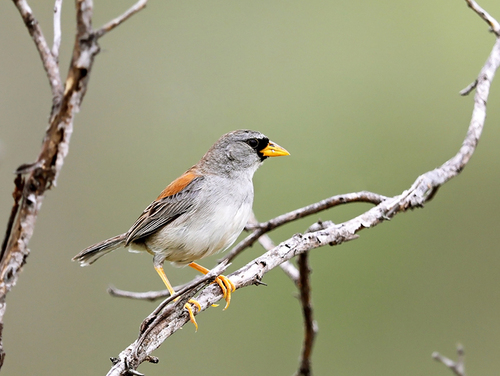
Little Inca-Finch
speciesIncaspiza watkinsi
Where it lives
Recorded sightings
—
geo-referenced records in GBIF, from museums, herbaria and field observers.
Drag the globe to turn it. Dots are where records exist, not a range map; darker means more records.
In the stacks
Searching the stacks…
Every page naming Incaspiza in the Biodiversity Heritage Library →
This page is assembled live from iNaturalist, GBIF, Wikipedia, the Source Library and the Internet Archive. It is not yet part of the hand-edited codex. iNaturalist taxon 10545.