 NL·0740
Herbarium of the Nature Library
- Name
- Macrotermes michaelseni
- Family
- Termitidae
- Native to
- Southern and East Africa, including Namibia, Botswana and Kenya
- Habitat
- Savanna, Semi-arid grassland
Mound-building termite
Macrotermes michaelseni
Also calledTermite mound builder (English) · Rysmier (Afrikaans, termite) · Omutundu (Otjiherero, termite mound)
A southern African termite whose colonies raise mounds several metres high above an underground nest. The mound acts like a lung, exchanging gases with the outside air while the colony farms fungus inside.
Macrotermes michaelseni is a species of termite in the family Termitidae, found in sub-Saharan Africa. It is associated with the fungus Termitomyces schimperi. Wikipedia
What it can do
- iBuilds tall mounds with tunnel networks that use daily temperature swings to drive airflow
- iiFarms Termitomyces fungus to digest wood and grass
- iiiCreates nutrient-rich islands that support distinct plants and animals
- ivWorkers sense and repair breaches in the mound wall within hours
In the field
Field marks
- aTall earthen mounds with a central chimney, often several metres high
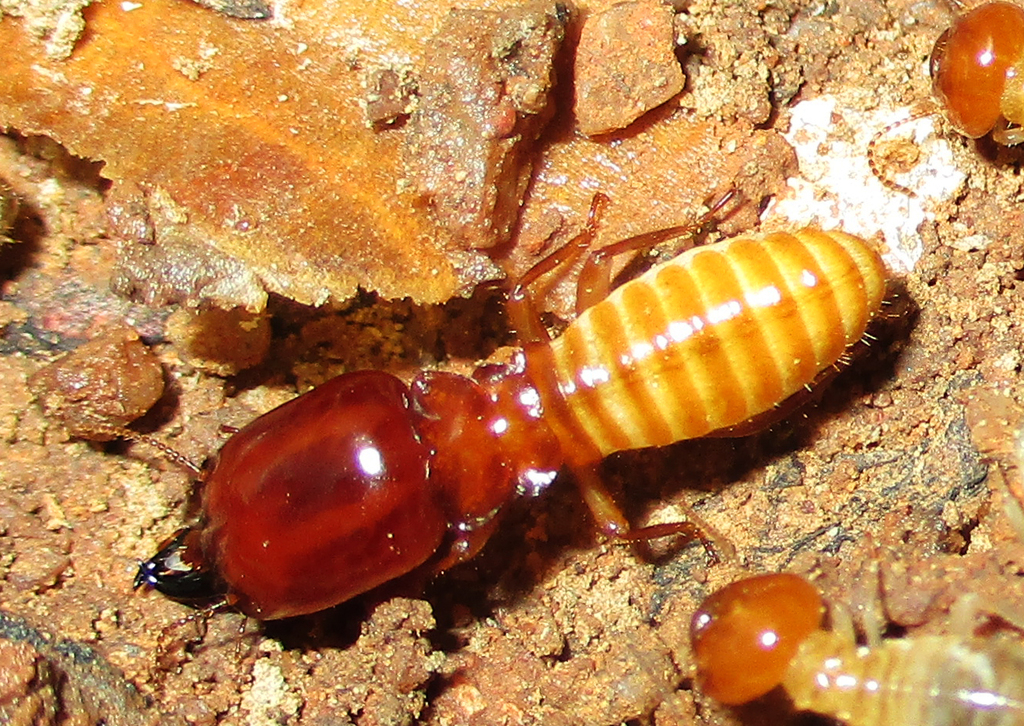
- bSmall pale workers and larger soldiers with dark heads and strong jaws
- cMounds built of reddish or pale soil matching the local ground
- Where to see it
- Savanna of northern and central Namibia, where the mounds have been studied near Otjiwarongo
- When
- Mounds visible all year; winged reproductives swarm after the first heavy summer rains
Listen
Looking for field recordings…
Life & habits
- Diet
- Dead grass, wood and leaf litter, digested via fungus gardens
- Habitat
- Savanna and dry grassland
- Size
- Workers ~5 mm; queen several cm when swollen
- Lifespan
- Colonies can persist for decades
The queen can lay many thousands of eggs a day, attended by workers in a sealed royal chamber.
Where it lives
Recorded sightings
—
geo-referenced records in GBIF, from museums, herbaria and field observers.
Native range
Southern and East Africa, including Namibia, Botswana and Kenya
Drag the globe to turn it. Dots are where records exist, not a range map; darker means more records.
In the stacks
Searching the stacks…
Every page naming Macrotermes michaelseni in the Biodiversity Heritage Library →
Marginalia
J. Scott Turner's studies of this species' mounds in Namibia reshaped ideas of how termite mounds ventilate, and inspired 'biomimetic' building designs. Termitomyces mushrooms that sprout from mounds are a prized food across Africa.
Curiosity
The mound itself is not where termites live; it is an air-conditioning structure over the nest below.
Kinship




Photographs: iNaturalist contributors under the licences shown. Records: GBIF.org. Historical plates: Source Library (CC BY-SA 4.0; originals public domain). Summary text: Nature Library editors and Wikipedia (CC BY-SA). Medicinal and edibility notes are historical and educational, not advice. iNaturalist taxon 673978.